What Is a Resistor? Types, Uses, and Simple Guide
2025-09-16
21199
Catalog

Figure 1. Resistors
What is a Resistor?
A resistor is a small electronic part that controls the flow of electric current in a circuit. It reduces or limits how much electricity passes through, which helps protect other components and keep the circuit working properly. Resistors are measured in ohms (Ω) and are found in almost every electronic device, from phones and TVs to cars and computers.
Classifications of Resistors
Fixed Resistors
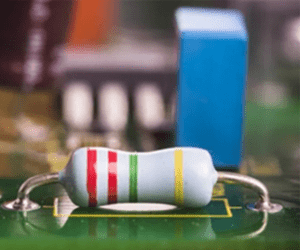
Figure 2. Fixed Resistors
Fixed resistors are the most common type of resistor. Their resistance value is set when they are made and cannot be changed. Even though they look simple, fixed resistors come in different types, each designed for specific uses.
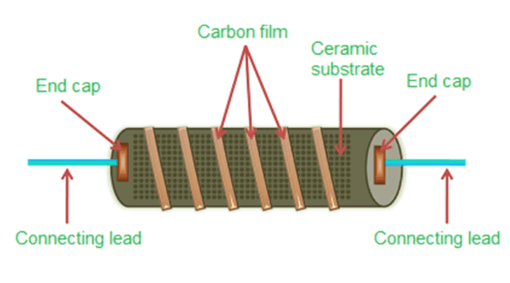
Figure 3. Carbon Film Resistors
Carbon film resistors are cheap and easy to make, so they are applied in small home appliances or basic electronic devices where very high accuracy is not required. Metal film resistors are more precise and stable, making them great in sensitive equipment such as medical devices. Metal oxide resistors can handle high temperatures, operated in industrial machines and automation systems that run for long hours.
Variable Resistors

Figure 4. Variable Resistors
A Variable Resistor is a type of resistor whose value can be changed. Unlike fixed resistors, they do not stay the same. You can adjust them by turning a knob, moving a slider, or using other controls. This makes them good in devices where you need to change the current or voltage.
There are different kinds of variable resistors. Adjustable resistors are found in places where quick changes are needed, like turning the volume up or down on a speaker. Graduated potentiometers have a scale, which allows more accurate changes, and they are found in lab equipment and measuring tools. Multi-turn potentiometers are made for very fine control. They need several turns to change resistance, which is why they are great in scientific and high-precision machines.
Special Resistors

Figure 5. Special Resistors
Special resistors are designed for specific tasks that regular resistors cannot do. They not only control current but also respond to changes in temperature, light, or other conditions. For example, thermistors change their resistance with temperature and are seen in devices like air conditioners, heaters, and car engines. Light-dependent resistors (LDRs) change their resistance based on light levels and are operated in streetlights, cameras, and solar lamps. Precision resistors are made with very accurate values and are used in scientific instruments. There are also fusible resistors, which act like both a resistor and a fuse, protecting circuits by safely burning out if the current is too high.
Roles of Resistors in Circuits
Limiting Current - Resistors protect parts of a circuit by reducing how much current flows. For example, LED needs a resistor so it doesn’t burn out from too much current.
Adjusting Voltage - Resistors can divide voltage into smaller levels. Variable resistors, like knobs or sliders, let you adjust things such as volume or screen brightness.
Distributing Energy - Resistors help share current and voltage evenly between different parts of a circuit. This keeps everything running smoothly and prevents overloads.
Stabilizing Voltage - Resistors help keep voltage steady. This is required in sensitive systems like medical machines or computer servers, where unexpected changes may occur.
Temperature Compensation - Some resistors, like thermistors, change their resistance with temperature. They are applied in heaters, cars, and sensors to adjust circuits when it gets hotter or colder.
Filtering and Attenuation - When combined with capacitors, resistors filter out noise or interference in signals. This makes sound clearer in audio systems and makes communication devices work better.
Calibration and Matching - Precision resistors are made to check and set accurate values in measuring tools. They also match signals in radios and communication systems so everything works efficiently.
Resistor Materials and Construction
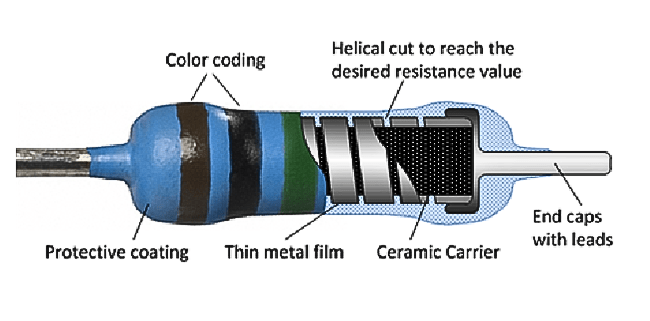
Figure 6. Resistor Materials and Construction
Resistors are made from different materials, and the material decides how they perform in a circuit. Some are made from carbon, which is cheap and used in simple devices. Others use metal film or metal oxide, which make them more accurate, stable, and able to handle higher heat, so they are needed in medical tools, industrial machines, and power supplies. Wirewound resistors are built by winding a special wire around a ceramic core, and they can handle very high power but are usually bigger in size. There are also thick-film and thin-film resistors, which are small and common in everyday electronics like phones and computers. And some resistors use special materials that react to the environment, such as thermistors that change with temperature and light-dependent resistors (LDRs) that change with light. No matter the type, every resistor has a strong base (often ceramic), a resistive material, metal ends to connect to the circuit, and a protective coating to keep it safe from damage.
Conclusion
Resistors are more than just parts that reduce electricity. They keep circuits safe, stable, and working the way they should. Different types of resistors are made for different jobs, from simple devices in our homes to precise tools in science and industry. By knowing their types, roles, and materials, you can see better how resistors make electronic devices reliable and useful.
 ABOUT US
Customer satisfaction every time. Mutual trust and common interests.
ABOUT US
Customer satisfaction every time. Mutual trust and common interests.
function test. The highest cost-effective products and the best service is our eternal commitment.
Hot Article
- LM358 Dual Operational Amplifier Comprehensive Guide: Pinouts, Circuit Diagrams, Equivalents, Useful Examples
- Are CR2032 and CR2016 Interchangeable?
- Understanding the Differences ESP32 and ESP32-S3 Technical and Performance Analysis
- BC547 Transistor Basics: Pinout, Application Circuits, Alternative/Complementary Models
- Choosing the Right Battery: A Guide to AG4, LR626, LR66, 177/376/377, SR626, and SR626SW Equivalents
- NPN vs. PNP: What's the Difference?
- esp32 vs stm32: which microcontroller is better for you?
- What Is a MOSFET and How It Works?
- Electrical Relay Basic: Working Operation, Types and Uses
- PNP Transistors: Structure, Working Principle and Application
 What Is Resistance? An Electrical Resistance Guide
2023-11-14
 LR44 Battery Specifications, Equivalents, and Applications
2025-04-18
Frequently Asked Questions [FAQ]
1. What is the symbol of a resistor in circuit diagrams?
In circuit diagrams, a resistor is shown as either a zigzag line (American standard) or a small rectangle (European standard). Both symbols represent the same component and are used to indicate resistance in a circuit.
2. What happens if a resistor fails?
When a resistor fails, it may short, open, or drift from its rated value. This can cause too much current to flow, overheating of components, or even total circuit failure. In safety circuits, it can lead to dangerous conditions.
3. What is the tolerance of a resistor?
Tolerance is the margin of error between the actual and labeled resistance. For example, a 100 Ω resistor with ±5% tolerance may measure anywhere between 95 and 105 Ω. Lower tolerance means more accuracy, which is needed in precision devices.
4. Can a resistor increase current?
No, resistors cannot increase current. Their role is to slow or reduce current flow. To increase current, other components such as power supplies or amplifiers are perfect. Resistors are only used for control and protection.
5. How do you choose the right resistor for a circuit?
When choosing a resistor, you need to consider its resistance value, tolerance, power rating, and material type. The right resistor ensures the circuit works safely, prevents overheating, and provides accurate performance.
Hot Part Number
 TP13067BDW
 TRJE107M020RRJ
 TPS2113APWR
 TPA2000D2PW
 ST4SI2M0020TPIFW
 T491X157K016AT
 08052C392KAZ2A
 LB11961-MPB-H
 TAP226M025SRS
 CY28548ZXC
- GRM1555C1E5R4DA01D
- HMC564LC4TR
- LC4256V-75TN100C
- GRM319R71H333KA01J
- AD8231ACPZ-R7
- TLC2543IDBRG4Q1
- TL074BCD
- TPSD686M020R0200
- STL50DN6F7
- GRM1555C1H511JA01D
- CDCVF2509PWR
- RT1206BRD07127RL
- CY14E256LA-SZ45XI
- UPD78F1166AGF-GAS-AX
- TLV2763IDGSRG4
- XC95288XL-6BGG256C
- MIC5504-1.2YM5-TR
- W78E052C40FL
- ADS7958QDBTRQ1
- T491A225K010AT
- 6RI75G-160B
- AP4835GM
- CY241V8ASXC-02T
- DSM-8081
- IDT74FCT3811PYGI8
- LTC1759CG
- PI74FCT162244TVA
- SA57026FD
- TMF529G0057D
- WL1251AZQZR
- XC2C64-VQG100C
- BA232B1M1BA-1D-F
- SCL711KC1FUE2
- UPC4074G2-E2
- VC0858SUNB
- SC11954CQA
- SPV7100E-HLEB2
- SIS169LE
- TC55VL818FF-83