Understanding Insulated Gate Bipolar Transistors (IGBTs)
2025-07-30
21239
Catalog

Figure 1. IGBT (Insulated Gate Bipolar Transistor) Modules
What is an IGBT?
An IGBT, or Insulated Gate Bipolar Transistor, is a power semiconductor device used to switch or control large amounts of electrical energy. IGBT has three terminals: collector, emitter, and gate.
The IGBT works like a mix of two other devices: a MOSFET and a BJT. IGBT uses a small voltage at the gate to control a larger current between the collector and emitter. This makes it a voltage-controlled switch.
When you apply a positive voltage to the gate, the IGBT turns on, and current flows. When there is no voltage, it turns off, and the current stops. This makes it a fast and easy-to-use device for controlling power.
History of IGBT
The IGBT was first thought of in 1979 by Dr. B. Jayant Baliga. He wanted to make a better part for controlling power in machines. In the early 1980s, other scientists worked on this idea and made it better. By 1982, the design was almost ready to be used.
In 1983, companies like General Electric and Siemens made the first IGBTs you could buy. At first, they had some problems, they were a bit slow and could get hot easily. But over time, they fixed these issues and made them work faster and more safely.
As they improved, IGBTs started being used in many things like electric cars, solar power systems, trains, and factory equipment. Today, IGBT are a basic part of many machines that need to control power in a smart and safe way.
Circuit Symbol of IGBT

Figure 2. IGBT Circuit Symbol
This image shows how the IGBT works in a circuit. The Gate is the control terminal where a small voltage, called Vge (Gate-to-Emitter voltage), is applied to turn the device on or off. When a positive voltage is applied to the Gate, the IGBT turns on, allowing current (Ic) to flow from the Collector to the Emitter. This current flow is shown by the downward arrow in the middle of the symbol. The voltage across the Collector and Emitter is labeled as Vce. When the IGBT is off (no voltage at the Gate), this current does not flow. The Emitter is the output terminal, and current Ie flows out through it.
Structure of IGBT

Figure 3. IGBT Structure
This IGBT Basic Structure looks a lot like a power MOSFET, but with one difference, it has an extra P+ layer at the bottom, called the injecting layer. The IGBT has several layers made from different types of material. At the top, there are N+ regions called the source, and at the bottom is the collector, where the current flows out. The gate, which controls the device, sits on top and is made from metal, oxide, and semiconductor layers, just like in a MOSFET. There are two main types of IGBTs: PT IGBT (Punch-Through) - This type has an extra N+ buffer layer, which helps it switch faster and work better with high voltages. NPT IGBT (Non-Punch-Through) - This type does not have the buffer layer.
Advantages & Disadvantages of IGBT
Advantages of IGBT:
• Easy to Control - Needs only a small voltage at the gate to turn on or off.
• Handles High Power - Can control large amounts of current and voltage.
• High Efficiency - Wastes less power during switching, which reduces heat.
• Fast Switching - Turns on and off quickly, useful for modern power systems.
• Combines Best Features - Offers the control of a MOSFET and the power of a BJT.
Disadvantages of IGBT:
• Not as Fast as MOSFETs – IGBT’s are slightly slower in switching compared to MOSFETs.
• More Heat at High Frequency - Can get hot if used in very fast switching circuits.
• Cost – IGBT can be more expensive than other switching devices.
• Latching Problem - In rare cases, it may get stuck in the "on" position under certain fault conditions.
Applications of IGBT
IGBTs are found in machines and systems that need to control strong electricity instantly and safely. They are common in:
Electric Vehicles (EVs) - IGBTs used in motor control and battery charging systems.
Solar Power Systems - IGBTs help convert solar energy into usable electricity through inverters.
Wind Turbines - IGBTs manage the power generated and send it to the grid.
Trains and Subways - IGBTs Control motors for smooth and efficient movement.
Industrial Machines - IGBTs is great in welding machines, motor drives, and automation systems.
UPS (Uninterruptible Power Supplies) - IGBTs ensure a steady power supply during blackouts.
Air Conditioners and Refrigerators - IGBTs help improve energy efficiency through better motor control.
Different Types of IGBT

Figure 4. IGBT Types
Punch-Through IGBT (PT IGBT) - Punch-Through IGBT includes an extra part inside called a buffer layer. It helps the device work easily and smoothly with medium power. PT IGBTs are used in systems like small motors and basic power tools where fast response is required.
Non-Punch-Through IGBT (NPT IGBT) - Non-Punch-Through IGBT doesn’t have the buffer part. Instead, it has a thicker section that lets it handle stronger voltage and rougher conditions. NPT types are used in heavy machines and large power systems because they are tough and reliable.
Field-Stop IGBT - This is a newer kind made to be more efficient. Field-Stop IGBT has a special layer that controls the electric field, which helps it work faster and use less energy. You’ll find this in things like solar panels, electric cars, and home appliances.
Trench IGBT - Trench IGBTs use a different design where the gate is placed vertically in a "trench" shape. This design makes better use of space and allows more current to flow with less loss. They are very efficient, compact, and fast, which makes them ideal for high-speed and high-current systems like power converters and advanced motor drives.
IGBT Packaging Formats
Insulated Gate Bipolar Transistors (IGBTs) come in different package types, each designed for specific uses and working conditions. Choosing the right package is requisite because it affects the IGBT's performance, reliability, cooling, and how easily it can be placed into a circuit.
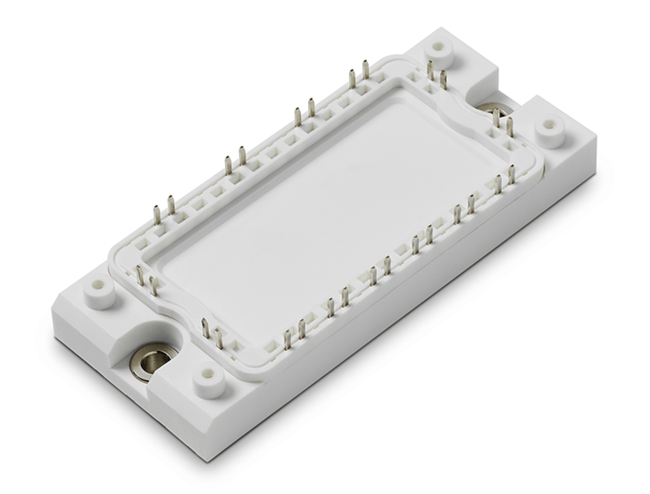
Figure 5. Standard Device Packages
Standard Device Packages - IGBTs typically appear in formats like TO-247, TO-220, and similar packages. These types handle high-power tasks effectively and are suitable for applications such as motor drives, inverters, and power control systems. Their larger size supports better heat dissipation and allows easy mounting to heat sinks. These designs accommodate high currents and voltages, making them ideal for industrial-grade operations.
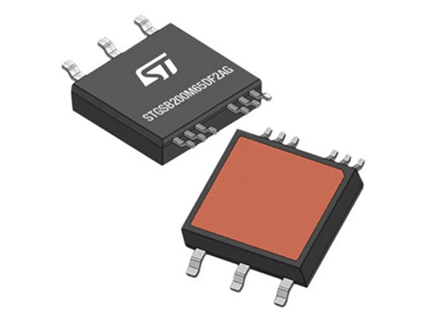
Figure 6. Surface-Mount Packages
Surface-Mount Packages - When space is limited, surface-mount versions such as SC-74 and SOT-457 come into play. These compact packages are designed for automated production lines and help reduce circuit board space. They appear frequently in low- to medium-power systems, including portable electronics, compact power units, and other space-saving designs.
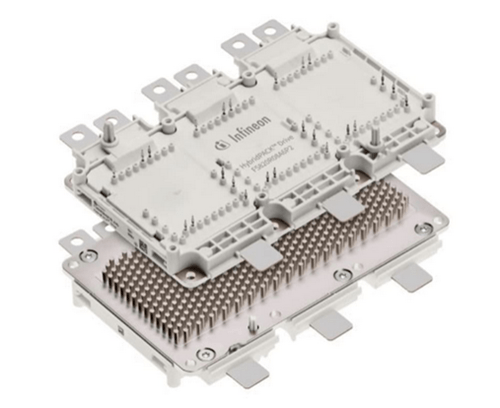
Figure 7. IGBT Modules Format
IGBT Modules - In very high-power systems, you can use IGBT modules. These are bigger blocks that hold several IGBTs in one body. They come in different setups, like half-bridge, dual, or booster circuits, depends on your need. Modules are perfect for solar power, wind turbines, electric trains, and factory machines.
IGBT modules make things easier. They combine many parts into one unit, which means fewer wires and less chance of problems. Many of them also have built-in cooling layers to remove heat better. This lets them handle more power without overheating, which is great for heavy-duty jobs.
IGBT vs. MOSFET
|
Feature |
IGBT |
MOSFET |
|
Full Name |
Insulated
Gate Bipolar Transistor |
Metal-Oxide-Semiconductor
Field-Effect Transistor |
|
Best For |
High
voltage and high current applications |
Low
voltage and fast-switching circuits |
|
Switching
Speed |
Slower
than MOSFET |
Very fast
switching |
|
Power
Handling |
Handles
high power and large loads |
Better for
lower power |
|
Voltage
Range |
Ideal for
>400V |
Ideal for
<250V |
|
Current
Handling |
Handles
high current well |
Moderate
current capacity |
|
Applications |
Motor
drives, inverters, UPS, welding machines, electric trains |
Power
supplies, chargers, converters, computer hardware |
|
On-State
Voltage Drop |
Slightly
higher (causes some power loss) |
Lower
resistance when ON (less power loss at low voltage) |
|
Gate Drive
Power |
Requires
less drive power |
Also
requires low gate drive power |
|
Gate Input |
Voltage-controlled |
Voltage-controlled |
|
Body Diode |
Weak
(external diode often needed) |
Strong
built-in body diode |
|
Thermal
Performance |
Can run
hot under high switching conditions |
Better at
handling heat in fast-switching low-power setups |
|
Paralleling
Ability |
More
difficult due to current sharing issues |
Easier to
parallel multiple devices |
|
Cost |
Generally
more expensive |
Cheaper |
|
Reliability |
High
reliability in high-voltage designs |
High
reliability in low-voltage applications |
Conclusion
IGBTs are best in systems that need to control strong power safely. They are easy to use and work well in many devices. Even if they are a bit slower than MOSFETs, they are great for high-power jobs.
 ABOUT US
Customer satisfaction every time. Mutual trust and common interests.
ABOUT US
Customer satisfaction every time. Mutual trust and common interests.
function test. The highest cost-effective products and the best service is our eternal commitment.
Hot Article
- LM358 Dual Operational Amplifier Comprehensive Guide: Pinouts, Circuit Diagrams, Equivalents, Useful Examples
- Are CR2032 and CR2016 Interchangeable?
- Understanding the Differences ESP32 and ESP32-S3 Technical and Performance Analysis
- Choosing the Right Battery: A Guide to AG4, LR626, LR66, 177/376/377, SR626, and SR626SW Equivalents
- BC547 Transistor Basics: Pinout, Application Circuits, Alternative/Complementary Models
- NPN vs. PNP: What's the Difference?
- esp32 vs stm32: which microcontroller is better for you?
- What Is a MOSFET and How It Works?
- Electrical Relay Basic: Working Operation, Types and Uses
- PNP Transistors: Structure, Working Principle and Application
 Antenna Tuner (ATU) Basics
2024-08-27
 Electrical Resistivity: Materials, Formula and Equation
2025-08-07
Frequently Asked Questions [FAQ]
1. How does an IGBT differ from a regular transistor?
Unlike regular transistors, IGBTs combine the easy control of a MOSFET and the high power capability of a BJT, making them better for handling strong currents in power devices.
2. Can IGBT be used in AC or DC circuits?
Yes, IGBTs can work in both AC and DC systems, but they are most commonly used in DC-to-AC inverters, like in solar power or motor control.
3. What happens if an IGBT fails?
When an IGBT fails, IGBT can either stay stuck ON (short-circuit) or OFF (open-circuit). This can cause system errors, motor stops, or even overheating if not protected properly.
4. How do IGBT modules improve performance?
IGBT modules contain multiple IGBTs in one package, reducing wiring, improving heat control, and simplifying high-power circuit design.
5. How is an IGBT controlled?
IGBTs are voltage-controlled devices. A small voltage applied to the gate controls a much larger current flowing between the collector and emitter.
Hot Part Number
 CX0805MRX7R8BB223
 CGA2B2X8R1H152M050BE
 08055U101KAT4A
 CC0603JRX7R8BB224
- 08055U5R6BAT2A
 06035U5R6CAT2A
 12065C105JAT2A
 GRM1886S1HR90CD01D
 TBJD476K016LSSB0023
 BDW84C
- X1205S8I
- VE-220-IY
- VI-JWB-MZ
- KP236N6165XTMA1
- MCC40-10I08
- T491D336K025ATAUTO7280
- TRSF3243CPWR
- AM5728BABCXEA
- LC75833W-TBM-E
- UCC2892PWR
- CDC337DWR
- T491C475K025AT2478
- TPS2044BD
- STM32L071RBT6TR
- TPS5410MDREP
- TS5A22364DGSR
- ADT7421ARMZ
- AK4340ET
- ATD97SC3202-X1AC
- CS5532ASZ
- CY14E256LA-SZ25X
- HD155141
- LM4880MX
- M60089H-0201Y
- MB89615-150
- S-93C56BD0I-T8T1GE
- VT261WFQR-ADJ
- MIP2K40MSSCF
- IC41C16100S-50K
- LV1605ML-MPB-E
- PSN76025A0
- BQ40Z80RSMT
- VT1622AG
- ANA37326B
- AND0241RM27Q7
- CXD2913AQ
- CY7C1382D-200BZXC
- GD25Q64CFIG
- RGTVX6TS65DGC11