Strain Gauge Sensors: Construction, Working, and Common Uses
2026-01-05
4545
Catalog
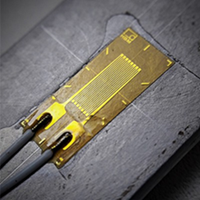
Strain Gauge Basics
A strain gauge is a sensor used to measure strain, which is the deformation of a material when an external force is applied. This force may result from tension, compression, bending, pressure, or torque. When a load acts on a material, it creates internal resistance called stress and causes a small change in shape.
A strain gauge is bonded directly to the surface of the material so it deforms together with the structure. As the material stretches or compresses, the electrical resistance of the gauge changes in proportion to the deformation. This predictable and repeatable behavior makes it possible to measure extremely small strains that cannot be seen with the eye.
Strain vs. Stress
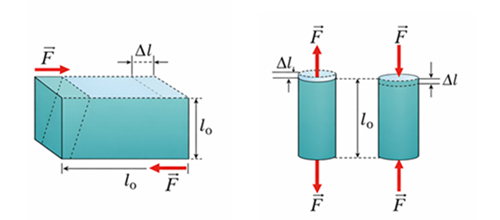
Figure 2. Strain and Stress Behavior in Materials
|
Strain |
Stress |
|
Strain is the relative
deformation of a material due to applied stress. |
Stress is the internal force per
unit area within a material caused by an external load. |
|
Calculated as change in length
divided by original length (ε = ΔL / L). |
Calculated as force divided by
cross-sectional area (σ = F / A). |
|
Indicates how much the material
deforms. |
Indicates how strongly internal
forces act within a material. |
|
Dimensionless quantity, often
expressed in microstrain (με). |
Measured in pascals (Pa). |
|
Used to study material behavior
and calculate stress indirectly. |
Used to evaluate material
strength and safety limits. |
|
Measured indirectly using strain
gauges. |
Cannot be measured directly. |
Strain Gauge Components
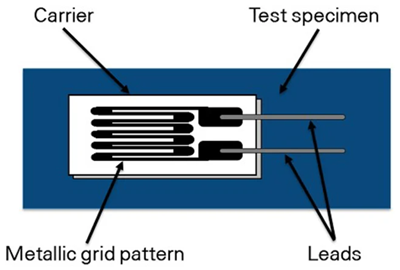
Figure 3. Labeled Diagram of a Strain Gauge Bonded to a Test Specimen
Carrier: The carrier is the thin backing material that supports the strain gauge. It holds the sensing grid in place and allows the gauge to bond securely to the surface of the test specimen.
Metallic grid pattern: This is the sensing element of the strain gauge. It is made of a thin metallic foil arranged in a serpentine pattern to increase sensitivity. When the specimen deforms, this grid stretches or compresses, causing a change in electrical resistance.
Leads: The lead wires connect the strain gauge to external measurement equipment. They transmit the resistance change from the sensing grid to a bridge circuit or signal conditioner.
Test specimen: This is the material or structure being measured. The strain gauge is bonded directly to its surface so it deforms at the same rate as the specimen under load.
Strain Gauge Construction
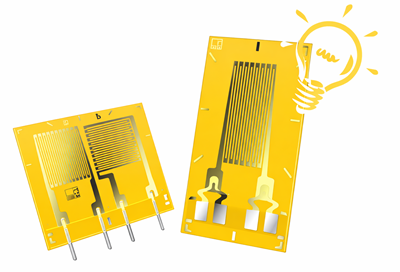
Figure 4. Core Structural Elements of a Strain Gauge
Protective laminate layer- Protects the gauge from moisture, dust, and mechanical damage while providing electrical insulation.
Metallic sensing element- A thin metallic foil arranged in a grid pattern to increase sensitivity. Common materials include constantan and karma alloys due to their stable electrical characteristics.
Base or carrier layer- Usually made from polyimide or similar polymers, this layer supports the sensing element and ensures uniform strain transfer from the test surface.
Strain Gauge Working Principle
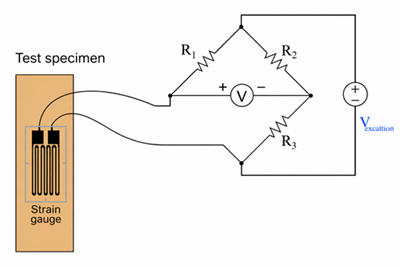
Figure 5. Strain Gauge Working Principle
Strain gauges operate by converting mechanical deformation into a change in electrical resistance. When the bonded surface experiences stress, the gauge deforms at the same rate. Stretching increases resistance, while compression decreases it.
For metallic foil strain gauges, this resistance change is dominated by geometric effects, specifically changes in the length and cross-sectional area of the sensing element. The intrinsic piezoresistive effect of the material contributes only a small portion of the total resistance change. This distinction is important when comparing metallic gauges to semiconductor strain sensors.
Strain Gauge Equation and Gauge Factor
The relationship between strain and resistance change is given by:
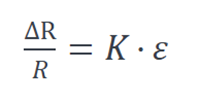
Figure 6. Basic Strain Gauge Equation
where ΔR is the change in resistance, R is the original resistance, K is the gauge factor, and ε is strain.
For most metallic foil strain gauges, the gauge factor typically ranges from 2.0 to 2.2, offering a balance between sensitivity and long-term stability.
Signal Measurement Using a Wheatstone Bridge
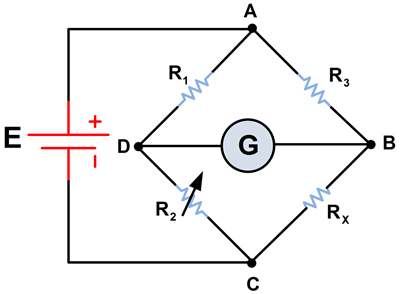
Figure 7. Strain Gauge Measurements
The resistance changes produced by strain gauges are extremely small, making direct measurement impractical. A Wheatstone bridge circuit is used to convert these changes into a measurable voltage signal.
A Wheatstone bridge consists of four resistive elements arranged in a diamond configuration. When all resistances are equal, the bridge is balanced and the output voltage is zero. Any resistance change caused by strain unbalances the bridge, producing a voltage proportional to the applied strain.
Common Bridge Configurations
• Quarter bridge: One active strain gauge with three fixed resistors. Used for simple, single-direction measurements.
• Half bridge: Two active gauges, typically arranged so one is in tension and the other in compression. Improves temperature compensation and signal output.
• Full bridge: Four active strain gauges. Provides maximum sensitivity, excellent temperature stability, and strong noise rejection. Commonly used in load cells.
Signal Conditioning
Bridge output signals require amplification and filtering. Signal conditioning electronics amplify the signal, reduce noise, compensate for temperature effects, and convert the analog signal into digital data for monitoring or recording.
Common Strain Gauge Types
|
Classification
|
Strain
Gauge Type |
Working
Principle |
Features |
Applications |
|
Based on Working Principle |
Mechanical Strain Gauge |
Measures physical movement using
a scale and pointer |
No electrical components, simple
visual indication |
Crack monitoring in buildings and
bridges |
|
Electrical Strain Gauge |
Resistance changes when stretched
or compressed |
Accurate, reliable, widely used |
Load measurement, stress
analysis, testing |
|
|
Piezoelectric Strain Gauge |
Generates voltage when strain is
applied |
Very high sensitivity, dynamic
response |
Vibration, shock, impact
measurements |
|
|
Based on Mounting Method |
Bonded Strain Gauge |
Gauge bonded directly to surface
with adhesive |
Direct strain transfer, high
accuracy |
Structural testing, load cells |
|
Unbonded Strain Gauge |
Wire stretched between fixed and
movable frames |
Not attached to surface, stable
setup |
Load cells, pressure transducers |
|
|
Based on Construction |
Foil Strain Gauge |
Metal foil grid bonded to
insulating backing |
Durable, stable, cost-effective |
Industrial and laboratory
measurements |
|
Semiconductor Strain Gauge |
Uses piezoresistive effect of
silicon or germanium |
Very high sensitivity,
temperature sensitive |
Small strain measurement, sensors |
|
|
Photoelectric Strain Gauge |
Uses light beam and optical
gratings |
Extremely high resolution,
delicate |
Precision laboratory and research
work |
Strain Gauge Arrangements
• Linear strain gauges measure strain along a single axis when load direction is known
• Diaphragm strain gauges measure deformation in thin surfaces and are common in pressure sensors
• Rosette strain gauges measure strain in multiple directions when principal strain orientation is unknown
• Torsion and shear strain gauges detect torque on rotating shafts
• Dual parallel strain gauges improve bending measurements by comparing tension and compression
• Tee rosette strain gauges measure biaxial strain when principal directions are known
Uses of Strain Gauges
- Structural and mechanical engineering for load distribution and fatigue analysis
- Load and force measurement in load cells and torque sensors
- Pressure and flow measurement using diaphragms and piping
- Research and experimental stress analysis
- Aerospace, automotive, and energy industries for durability and safety monitoring
- Industrial condition monitoring for predictive maintenance
Strain Gauge Installation Challenges
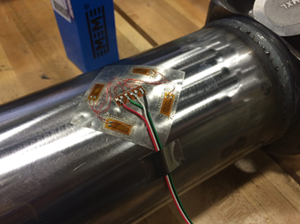
Figure 8. Strain Gauge Installation Challenges
Temperature Effects
Strain gauges are sensitive to temperature changes. As temperature varies, the electrical resistance of the gauge material can change, creating measurement drift that is not related to actual strain. Without proper temperature compensation or control, this effect can reduce accuracy. Selecting the right gauge material and using compensation techniques helps minimize thermal influence.
Environmental Exposure
Environmental conditions can interfere with strain gauge performance. Moisture and humidity can weaken adhesive bonds, while vibration and electromagnetic interference can introduce signal noise. Protective coatings, proper shielding, and controlled installation environments help reduce these risks, especially in industrial or outdoor applications.
Bonding Quality
Secure bonding is importantl for accurate strain measurement. The strain gauge must be firmly attached so it deforms exactly with the surface being measured. Poor surface preparation, uneven materials, or incorrect adhesive selection can cause signal instability or inaccurate readings. Careful cleaning, surface preparation, and proper bonding procedures ensure reliable strain transfer.
Achieving Reliable Measurements
Addressing these challenges requires proper installation techniques, calibration, and environmental control. When strain gauges are installed correctly, they deliver accurate and dependable data that supports structural analysis, performance testing, and long term monitoring applications.
Pros and Cons of Strain Gauges
Pros
High accuracy and sensitivity
Reliable load measurement when used in load cells
Easy integration with electronic systems
Suitable for real-time and long-term monitoring
Cons
Sensitive to temperature variations
Installation requires precision and experience
Performance affected by harsh environments
Very small signals require amplification
Limited reusability due to permanent bonding and calibration constraints
Conclusion
Strain gauges provide precise and reliable measurements of strain for load, stress, and structural monitoring. Their accuracy depends on proper selection, installation, and signal conditioning. When applied correctly, strain gauges remain important tools in engineering, research, and industrial measurement systems.
 ABOUT US
Customer satisfaction every time. Mutual trust and common interests.
ABOUT US
Customer satisfaction every time. Mutual trust and common interests.
function test. The highest cost-effective products and the best service is our eternal commitment.
Hot Article
- LM358 Dual Operational Amplifier Comprehensive Guide: Pinouts, Circuit Diagrams, Equivalents, Useful Examples
- Are CR2032 and CR2016 Interchangeable?
- Understanding the Differences ESP32 and ESP32-S3 Technical and Performance Analysis
- Choosing the Right Battery: A Guide to AG4, LR626, LR66, 177/376/377, SR626, and SR626SW Equivalents
- BC547 Transistor Basics: Pinout, Application Circuits, Alternative/Complementary Models
- NPN vs. PNP: What's the Difference?
- esp32 vs stm32: which microcontroller is better for you?
- What Is a MOSFET and How It Works?
- Electrical Relay Basic: Working Operation, Types and Uses
- PNP Transistors: Structure, Working Principle and Application
 What’s the Difference Between PCB and PCBA?
2026-01-05
 SJOOW vs SOOW: Which Cable Should You Choose?
2026-01-05
Frequently Asked Questions [FAQ]
1. How accurate are strain gauges?
Strain gauges offer very high accuracy when properly installed and calibrated, often detecting strain changes as small as a few microstrain.
2. How long do strain gauges last?
With correct installation and environmental protection, strain gauges can last for years, especially in controlled or indoor applications.
3. Can strain gauges be used outdoors?
Yes, strain gauges can be used outdoors if protective coatings and proper sealing are applied to prevent moisture, temperature, and environmental damage.
4. What materials can strain gauges be attached to?
Strain gauges can be bonded to metals, composites, plastics, and concrete, provided the surface is properly prepared.
5. Do strain gauges work under cyclic or repeated loading?
Yes, strain gauges are well suited for cyclic loading and fatigue testing when installed correctly and within their strain limits.
6. Can strain gauges measure both tension and compression?
Yes, the same strain gauge can measure both tension and compression by detecting increases or decreases in electrical resistance.
7. What causes strain gauge measurement errors?
Common causes include poor bonding, temperature changes, electrical noise, improper wiring, and surface preparation issues.
8. Are strain gauges reusable after removal?
No, strain gauges are generally not reusable because removal damages the sensing element and bonding surface.
Hot Part Number
 C1608X7R1E474K080AB
 C2012X5R0J225K085AA
 GRM0225C1E4R1CDAEL
 CC0603ZRY5V6BB474
 UMK316B7474ML-T
 08051U150GAT2A
 GRM1886S1H1R1CZ01D
 T495D476K010ATE080
 TPSE106M050R0500
 APA600-PQ208
- MT47H64M8CF-25E:G
- MC9S12XA512VAL
- IS42S16160B-6TL
- SI8233AD-D-IS
- RT0402DRD072K49L
- CY8C20140-SX2I
- VLF4012AT-100MR79
- SKM150GAL128D
- MC100ELT21DR2G
- MC14040BDTR2G
- LT3971AIMSE#PBF
- T491D107K006ZT7280
- UCC3818N
- INA240A2PW
- IXFP22N65X2M
- LT1999CMS8-50F#PBF
- SN74LVC32ADR
- AD5262BRUZ20-RL7
- ATMXT1666T2-C2U
- BU20360-48L
- ICS950218AFT
- MAX1779EUE+TG104
- MAX202ECWE-T
- MAX8860EUA27
- G5LA-1A4-12V
- HN29V256AOBBP-30
- M66445M1FA
- NFP-2200-A3
- PCD8010H/E31/4
- PEAD22653AFV1QH14NAR
- 6MBP150RTM060
- S29GL032A90FAIR43
- TMR3-1211
- T6TD7XBG-0001
- CS242C001PZ-TRSV
- IBMPPCBWY-GES72914
- SDINBDG4-8G-XI1
- XFL4020-332MEC
- GMOV-14D500K