Practical Applications of 2SC2328 Transistor
2024-07-22
5477
Catalog
Types of Transistors

Figure 1: Bipolar Junction Transistor (BJT)
Bipolar Junction Transistor (BJT) - A BJT consists of three layers of semiconductor material, arranged as either PNP or NPN. It amplifies current by using a small current at the base terminal to control a larger current between the collector and emitter terminals. This makes BJTs effective for switching and amplification tasks.

Figure 2: Field-effect transistor (FET)
Field-effect transistor (FET) - An FET controls the conductivity of a channel in a semiconductor material using an electric field. There are two types of FETs: Junction FET (JFET): Utilizes a reverse-biased junction to regulate the flow of charge carriers through the channel. Metal-Oxide-Semiconductor FET (MOSFET): Controls current flow by applying voltage to a metal gate, which is insulated from the semiconductor material by a thin oxide layer.
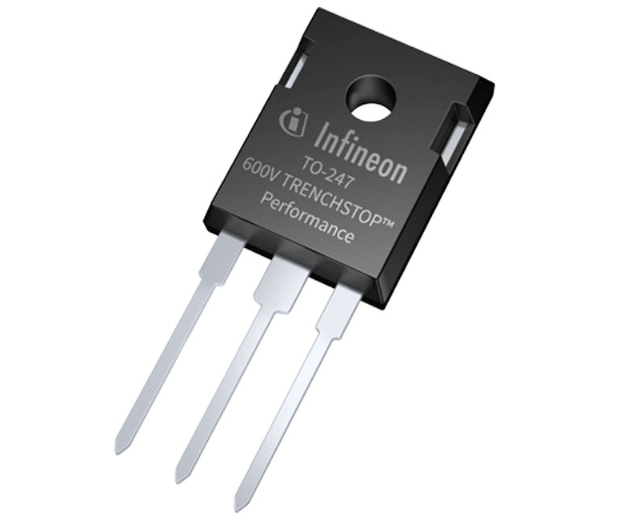
Figure 3: Insulated Gate Bipolar Transistor (IGBT)
Insulated Gate Bipolar Transistor (IGBT) - The IGBT combines features of both BJTs and MOSFETs. It uses an insulated gate to manage the high current-carrying region, allowing for efficient and rapid switching at high voltages and currents. This makes IGBTs ideal for applications requiring high power and speed.
What Is a 2SC2328 Transistor?
The 2SC2328 is an NPN bipolar junction transistor (BJT) commonly used in audio frequency amplifiers and switching circuits. Its ability to handle moderate levels of voltage and current makes it suitable for various low to medium-power applications.
Collector-Emitter Voltage (Vceo): This is the maximum voltage that can be safely applied across the collector-emitter junction when the base-emitter junction is open.

Figure 4: Collector-Emitter Voltage (Vceo)
Collector Current (Ic): This is the maximum current that the collector can handle.

Figure 5: Collector Current (Ic)
Power Dissipation (Pc): This indicates the maximum power the transistor can dissipate without exceeding its operational temperature limit.
Gain Bandwidth Product (fT): This measures the frequency at which the transistor's gain drops to unity.
An NPN transistor uses both electrons and holes as charge carriers. It consists of a layer of p-type semiconductor (the base) between two layers of n-type semiconductor (the collector and the emitter).
When a positive voltage is applied to the base relative to the emitter, electrons flow from the emitter to the collector, which is connected to a higher positive voltage. This setup allows a larger current to flow through the collector than the base, thanks to the transistor's ability to amplify the current.
The NPN transistor operates efficiently with electrons as the primary carriers, which move from the emitter to the collector. This design makes NPN transistors widely used in electronic circuits because electrons move faster than holes, enabling quicker operation and better performance in various electronic applications.
2SC2328 Transistor Applications
The 2SC2328 transistor finds great use in consumer electronics, such as audio devices used in audio frequency amplifiers, like the pre-amplifier stages of high-fidelity audio systems, and television video processing circuits to amplify signals. In the automotive industry, it is employed in electronic control units (ECUs) to amplify sensor signals and in-car audio amplifiers to boost audio signal strength before it reaches the speakers. In telecommunications, it amplifies weak signals received by antennas. In industrial and power electronics, the 2SC2328 is used in motor control circuits to adjust motor speeds and switch regulators for efficient power management and distribution. In medical equipment, it is focal in diagnostic instruments such as ECG machines, where maintaining signal integrity is required. In computing and networking, the 2SC2328 is utilized in the power supply units of computers and networking equipment to regulate voltage and current.
Technical Specifications of 2SC2328 Transistor
|
|
Specification |
Description |
|
Type |
NPN |
Type
of transistor |
|
Collector-Emitter
Voltage (Vceo) |
Around
120V |
Maximum
voltage between collector and emitter with the base open |
|
Collector
Current (Ic) |
Maximum
around 50 mA |
Maximum
current that can flow through the collector |
|
Emitter-Base
Voltage (Vebo) |
Maximum
around 5V |
Maximum
voltage between emitter and base |
|
Collector
Dissipation (Pc) |
Around
0.4 W |
Maximum
power dissipation by the collector |
|
DC
Current Gain (hFE) |
Varies,
often 100-320 |
The
gain factor for DC |
|
Transition
Frequency (fT) |
Above
100 MHz |
The
frequency at which the gain drops to 1 |
Why Choose The 2SC2328 Transistor?
The 2SC2328 is designed for rapid signal switching, making it ideal for circuits requiring quick transitions, such as digital computing and pulse circuits. This transistor can handle relatively high voltages, making it suitable for voltage amplification tasks in audio amplifiers and signal processing equipment. With a decent current gain (beta value), the 2SC2328 effectively amplifies weak signals, which is required for applications like audio pre-amplifiers and radio transceivers. As a general-purpose transistor, it can be used in various electronic circuits, from simple DIY projects to complex industrial applications. Its low saturation voltage reduces power loss when the transistor is in the "on" state, elevating efficiency in switching applications. Available in a small package, the 2SC2328 is suitable for compact electronic devices and space-constrained applications. Known for its reliability and durability, the 2SC2328 ensures the longevity and performance of electronic devices.
Alternatives to the 2SC2328 Transistor
2N3904 - The 2N3904 is a general-purpose NPN transistor that handles slightly lower voltages and currents than the 2SC2328. It is popular due to its availability and low cost, making it suitable for various applications.
BC547 - The BC547 is another NPN transistor that manages similar voltages but slightly lower currents compared to the 2SC2328. It is commonly used for small signal amplification and switching tasks.
2N2222 - This transistor has similar voltage ratings to the 2SC2328 but can handle higher currents and power dissipation. This makes it suitable for more demanding applications.
BC337 - The BC337 is comparable to the 2SC2328 in terms of voltage and current ratings and can serve as a direct replacement in most circuits. It is widely used for general-purpose amplification and switching.
SS9014 - The SS9014 is a general-purpose NPN transistor with similar characteristics to the 2SC2328, making it suitable for low-power applications.
Safe and Efficient Use of 2SC2328 Transistor
Firstly, always refer to the datasheet for the maximum ratings of voltage, current, and power. Exceeding these ratings can damage the transistor and potentially cause circuit failure.
Secondly, ensure acceptable heat sinking for the transistor. Overheating can reduce its lifespan or cause immediate failure. Use thermal compound if required to improve heat transfer to the heat sink.
Then, proper biasing helps achieve ideal performance and prevents thermal runaway conditions. Set the base-emitter and base collector voltages according to the specifications.
Also, place resistors in the circuit to limit the base current. This protects the transistor from excessive current, which can cause damage.
Next, ensure the transistor is securely mounted. Loose connections can lead to unstable operation or physical stress damage.
If the transistor's case is internally connected to any leads, ensure it is properly isolated from the heatsink or any conducting surface to prevent short circuits.
It is noteworthy that use high-quality complementary components to avoid issues from component failures, such as leaking capacitors or drifting resistors.
Finally, regularly inspect the transistor and its surrounding components for signs of stress, overheating, or aging. Replace components as required to maintain circuit integrity and performance.
Conclusion
Transistors, demonstrated by the detailed analysis of the 2SC2328 model, are major in the field of modern electronics and digital computation, arranging the flow of power and data that drives today's technology-driven world. The technical exploration reveals how transistors, through their ability to amplify and switch, become intact to everything from basic consumer electronics to industrial systems. The article not only unloads the operational core and diverse types of transistors but also illustrates their practical implementations across various sectors, underscoring their versatility and robustness. As we consider the future of transistor technology, the ongoing advancements and adaptations will undoubtedly continue to shape and redefine the electronic landscape.
Frequently Asked Questions [FAQ]
1. How do you determine if a transistor is NPN or PNP?
To determine if a transistor is NPN or PNP, use a multimeter set to diode test mode. Place the red probe on the middle pin (base) and the black probe on one of the outer pins (emitter or collector). For an NPN transistor, the multimeter will show a reading (usually 0.6 to 0.7 V) when the red probe is on the base and the black probe is on the emitter. Reverse probe connections should show no reading. For a PNP transistor, the conditions reverse no reading with the red on the base and black on the emitter, but a reading when reversed.
2. How to know which transistor to use?
When selecting a transistor, consider the current and voltage requirements of your circuit, as well as switching speed, power dissipation, and physical size. Start by checking the maximum current and voltage that the transistor needs to handle. Ensure the transistor's maximum ratings exceed these values. If high-speed switching is required, look for transistors with high frequency and low capacitance.
3. Can I use an NPN instead of a PNP transistor?
You can use an NPN instead of a PNP transistor, but this requires circuit modifications. NPN and PNP transistors operate with different biasing; an NPN transistor requires a positive base-emitter voltage, whereas a PNP needs a negative base-emitter voltage. You must adjust the circuit, particularly the direction of current flow and biasing voltages, to accommodate these differences.
4. How do you test or determine a good transistor?
To test a transistor, use a multimeter in diode test mode and test each junction (base-emitter and base-collector) separately. For a functional NPN, expect a forward voltage drop (around 0.6V) when the positive lead is on the base and the negative on the emitter or collector. Reverse connections should give no reading. PNP readings will be the opposite.
5. How do you identify an open, shorted, and leakage transistor?
No continuity in one or more junctions when tested with a multimeter;
Shows continuity or very low resistance readings between any two pins (base, collector, emitter) in both directions;
Shows some unexpected, usually small, voltage or resistance readings in the reverse biased condition of any junction, indicating it is not completely blocking the flow as it should.
 ABOUT US
Customer satisfaction every time. Mutual trust and common interests.
ABOUT US
Customer satisfaction every time. Mutual trust and common interests.
function test. The highest cost-effective products and the best service is our eternal commitment.
Hot Article
- LM358 Dual Operational Amplifier Comprehensive Guide: Pinouts, Circuit Diagrams, Equivalents, Useful Examples
- Are CR2032 and CR2016 Interchangeable?
- Understanding the Differences ESP32 and ESP32-S3 Technical and Performance Analysis
- Choosing the Right Battery: A Guide to AG4, LR626, LR66, 177/376/377, SR626, and SR626SW Equivalents
- BC547 Transistor Basics: Pinout, Application Circuits, Alternative/Complementary Models
- NPN vs. PNP: What's the Difference?
- esp32 vs stm32: which microcontroller is better for you?
- What Is a MOSFET and How It Works?
- Electrical Relay Basic: Working Operation, Types and Uses
- PNP Transistors: Structure, Working Principle and Application
 TIP120 Darlington Transistor: Features, Working Principle, and Applications
2024-07-22
 What is Oscilloscope? Definition, Components, Types
2025-06-18
Hot Part Number
 C1608X7R1E474K080AB
 C2012X5R0J225K085AA
 GRM0225C1E4R1CDAEL
 CC0603ZRY5V6BB474
 UMK316B7474ML-T
 08051U150GAT2A
 GRM1886S1H1R1CZ01D
 T495D476K010ATE080
 TPSE106M050R0500
 APA600-PQ208
- MT47H64M8CF-25E:G
- MC9S12XA512VAL
- IS42S16160B-6TL
- SI8233AD-D-IS
- RT0402DRD072K49L
- CY8C20140-SX2I
- VLF4012AT-100MR79
- SKM150GAL128D
- MC100ELT21DR2G
- MC14040BDTR2G
- LT3971AIMSE#PBF
- T491D107K006ZT7280
- UCC3818N
- INA240A2PW
- IXFP22N65X2M
- LT1999CMS8-50F#PBF
- SN74LVC32ADR
- AD5262BRUZ20-RL7
- ATMXT1666T2-C2U
- BU20360-48L
- ICS950218AFT
- MAX1779EUE+TG104
- MAX202ECWE-T
- MAX8860EUA27
- G5LA-1A4-12V
- HN29V256AOBBP-30
- M66445M1FA
- NFP-2200-A3
- PCD8010H/E31/4
- PEAD22653AFV1QH14NAR
- 6MBP150RTM060
- S29GL032A90FAIR43
- TMR3-1211
- T6TD7XBG-0001
- CS242C001PZ-TRSV
- IBMPPCBWY-GES72914
- SDINBDG4-8G-XI1
- XFL4020-332MEC
- GMOV-14D500K