Exploring TDA2030 Features, Replacement Options, and Pinout
2024-09-13
32353
Catalog

Figure 1. TDA2030
What Is TDA2030?
The TDA2030 is a compact, high-efficiency audio amplifier IC housed in a 5-pin, single in-line plastic package with a V-type pin configuration. This layout is user-friendly for technicians, especially when working with space-limited audio systems like car stereos or home audio units. The IC comes in two forms—H-type and V-type—where the main difference lies in the pin shape, offering flexibility during design and assembly. When integrating the TDA2030 into medium-power audio systems, its combination of small size and high output power stands out. The IC effectively manages the balance between physical space constraints and delivering strong audio output. It reduces harmonic distortion and crossover distortion, common problems in audio amplification that can affect sound quality if left unchecked. The short-circuit and overheat protection is another practical feature that plays a role during extended use, especially in high-fidelity audio setups. For instance, during long periods of operation, the built-in thermal protection automatically adjusts the system's performance to prevent overheating, protecting the IC and prolonging its lifespan.
Several manufacturers, including SGS, RCA, Hitachi, and NEC, produce versions of the TDA2030. These versions are designed with standardized pin layouts, allowing technicians to easily swap or replace them without alterations to the circuit. This standardization not only simplifies repair but also streamlines inventory management for hardware engineers. The subtle consistency across brands makes it easier to source replacements and maintain system performance over the long term. In both professional and consumer audio systems, the TDA2030 offers a robust, reliable solution, combining power and protection to deliver consistent audio quality.
TDA2030 Technical Features
The TDA2030 prioritizes both operational efficiency and ease of use, making it an ideal choice for audio systems. Here's a breakdown of its features in practical terms:
Smooth power-on with minimal shock: When powering on audio equipment, voltage spikes can cause sudden noise or speaker damage. The TDA2030 avoids this by using a soft-start feature that ensures a controlled and seamless startup. This eliminates the need for extra circuitry to manage voltage spikes, saving time and components during installation.
Fewer external components: The simplicity of the TDA2030's circuit design is one of its standout benefits. Fewer external components not only make it easier to assemble but also reduce the number of potential failure points. This is especially useful in compact designs like car stereos, where space is limited.
High output power (18W at RL = 4Ω): The TDA2030 delivers a solid 18 watts of power with a 4-ohm load, enough to drive medium-power speakers in both car audio and home setups. This ensures clear, powerful sound, even at higher volumes.
Compact TO-220 package: The TO-220 package is a standard in the audio industry because it’s both compact and effective at heat dissipation.
Integrated protection circuits: With built-in short-circuit and thermal protection, the TDA2030 safeguards against common failures, such as overheating or accidental shorts in the speaker wiring. If any of these issues occur, the IC automatically reduces power to avoid permanent damage. This self-protection means fewer service calls and longer device lifespans.
TDA2030 Parameters
|
Type |
Parameter |
Type |
Parameter |
|
Mount |
Through Hole |
Mounting Type |
Through Hole |
|
Package / Case |
Pentawatt-5 (Vertical, Bent and Staggered
Leads) |
Number of Pins |
5 |
|
Operating Temperature |
-40°C ~ 150°C TJ |
Packaging |
Tube |
|
JESD-609 Code |
e3 |
Feature |
Short-Circuit and Thermal Protection |
|
Part Status |
Obsolete |
Moisture Sensitivity Level (MSL) |
1 (Unlimited) |
|
Termination |
Through Hole |
ECCN Code |
EAR99 |
|
Type |
Class AB |
Terminal Finish |
Matte Tin (Sn) |
|
Subcategory |
Audio/Video Amplifiers |
Max Power Dissipation |
20W |
|
Voltage - Supply |
12V ~ 36V ±6V ~ 18V |
Terminal Position |
ZIG-ZAG |
TDA2030 Typical Uses
The TDA2030 is versatile and operates across a range of audio systems due to its flexibility and simplicity. Here's how it works in practical applications:

Figure 2. TDA2030 Audio Amplifier Circuit Diagram
Audio signal amplification: The TDA2030 is commonly used to boost weak audio signals to a level that can drive speakers. In a car stereo, for example, the signal from the radio or Bluetooth module is often too weak for direct speaker output. The TDA2030 amplifies these signals without distortion, producing clear sound. Technicians value its ability to consistently amplify signals without needing complex circuitry.
High-power amplification: For systems requiring prominent output, such as home theater or PA systems, the TDA2030 is a reliable choice. It efficiently drives larger speakers, ensuring powerful sound even at high volumes. Technicians frequently pair it with speakers that match the IC’s impedance to maximize power output and maintain system reliability.
Dual or split power supply operation: The TDA2030 can operate on both single and dual power supplies, offering flexibility during installation. In dual-supply setups, the IC can amplify signals with balanced voltage rails, which often results in lower noise and improved sound quality. For systems where space or cost is limited, a single supply can be used with minimal performance loss.
Speaker cascading: The TDA2030 excels in setups where multiple amplifiers are linked together, such as multi-room audio systems. This cascading ensures that sound is evenly distributed across different zones or speakers, whether handling woofers or tweeters. During installation, balancing the output of each amplifier is required to maintaining uniform sound, and the TDA2030 handles this seamlessly.
How Does TDA2030 Work in Audio Amplification Circuits?
The TDA2030 is a Class AB audio amplifier with three stages that ensure clear and powerful sound:
Input Stage
Audio signals from devices like media players or microphones are fed into Pin 1, the non-inverting input. A capacitor is typically placed between the source and the pin to filter out DC components, allowing only the audio signal to pass. A resistor, often 10K or 22K, is grounded to prevent noise. For installers, choosing the correct resistor and capacitor values ensures signal clarity, reducing the need for troubleshooting later.
Voltage Amplification Stage
The amplified signal is further increased using a push-pull configuration of transistors. This setup ensures both halves of the audio signal are amplified equally, reducing crossover distortion. During installation, technicians can refer to the IC's internal schematic to understand how to optimize signal amplification or replace faulty transistors.
Output Stage
At this stage, the signal is boosted with additional current through Pin 4, which drives the speaker. Proper heat dissipation is required here, as power transistors generate heat when driving high loads. Adequate heat sinks are used to prevent thermal issues, ensuring the system runs smoothly during prolonged use.
TDA2030 Pin Configuration
The TDA2030 has 5 pins, each playing a major role in the amplifier's function:
|
Pin Number |
Name |
Description |
|
1 |
IN |
Signal Input |
|
2 |
NF |
Negative Feedback |
|
3 |
Vee/GND |
Negative Power/Ground |
|
4 |
OUT |
Output |
|
5 |
Vcc |
Positive Power |
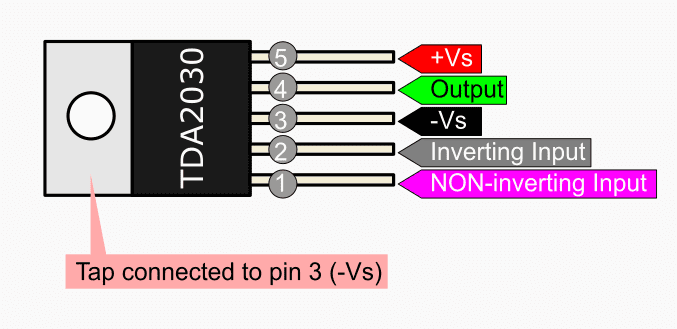
Figure 3. TDA2030 Pin Number
- Pin 1 (IN): This is where the audio signal enters the IC. Careful attention to signal quality at this pin is required, as any interference will be amplified through the system. A capacitor is often used to block DC components, and proper grounding prevents unwanted noise.
- Pin 2 (NF): Negative feedback stabilizes the gain and helps control the overall output. By connecting external resistors and capacitors here, technicians can fine-tune the amplification for optimal sound quality.
- Pin 3 (Vee/GND): This pin serves as the ground or negative power connection. Ensuring solid grounding is required to prevent noise that could degrade the output.
- Pin 4 (OUT): This is where the amplified signal exits to the speaker. Given the current carried by this pin, quality wiring and proper heat management helps avoid power loss and ensuring sound integrity.
- Pin 5 (Vcc): The positive power input pin. Voltage selection is required here, as too high a voltage can damage the IC, while too low a voltage results in weak amplification.
TDA2030 Replacement Options
The TDA2030 has several equivalents, including:
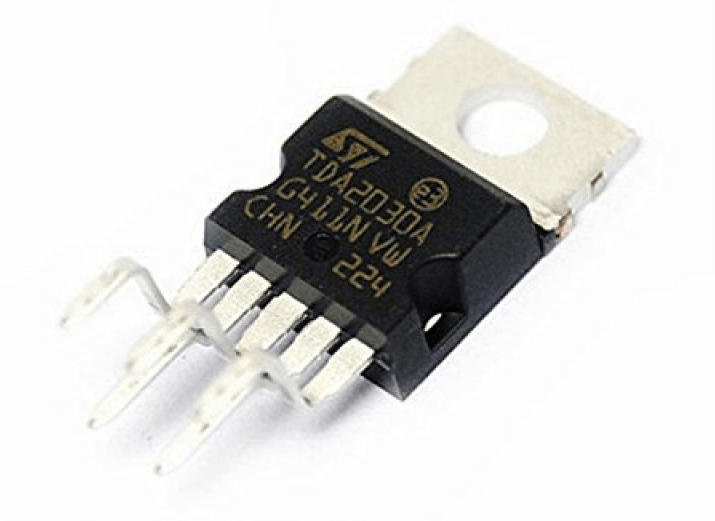
Figure 4. TDA2030A
TDA2030A: This version supports higher voltage and power output, but the TDA2030 can replace the TDA2030A in most setups. However, the reverse is not always true, as the TDA2030A requires stricter power conditions
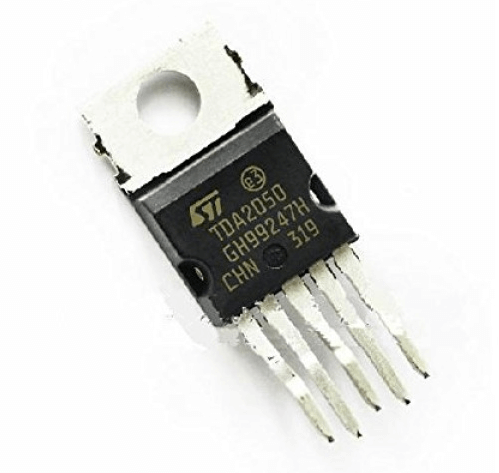
Figure 5. TDA2050
TDA2050: Offering even more power, the TDA2050 can drive up to 50W with proper cooling. It’s suitable for more demanding audio setups, but requires careful power and thermal management.
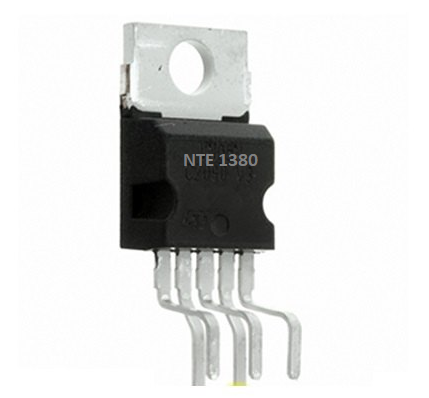
Figure 6. NTE1380
NTE1380: A lower-power alternative, the NTE1380 is commonly used in small, portable devices. While pin-compatible, it doesn’t provide the same output as the TDA2030.
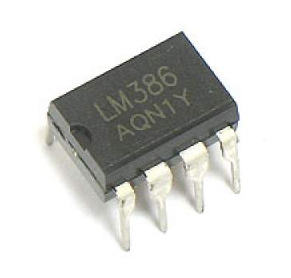
Figure 7. LM386
LM386: Used for very low-power applications like handheld radios, the LM386 is not a direct replacement for the TDA2030. It's ideal for battery-operated devices where efficiency is more required than high output.
Conclusion
The TDA2030 stands out as a reliable and adaptable component in the world of audio amplification, offering robust performance with minimal complexity. Whether it's providing clean signal amplification, managing high power outputs, or ensuring system reliability through its integrated protection circuits, this IC remains the best tool for audio engineers and technicians alike. With its multiple equivalents and flexibility in operation, the TDA2030 is an invaluable resource in a variety of audio systems, from car stereos to commercial setups. By following proper installation guidelines and understanding its pinout and operational parameters, users can ensure optimal performance and longevity, making the TDA2030 a go-to choice for audio applications.
 ABOUT US
Customer satisfaction every time. Mutual trust and common interests.
ABOUT US
Customer satisfaction every time. Mutual trust and common interests.
function test. The highest cost-effective products and the best service is our eternal commitment.
Hot Article
- LM358 Dual Operational Amplifier Comprehensive Guide: Pinouts, Circuit Diagrams, Equivalents, Useful Examples
- Are CR2032 and CR2016 Interchangeable?
- Understanding the Differences ESP32 and ESP32-S3 Technical and Performance Analysis
- Choosing the Right Battery: A Guide to AG4, LR626, LR66, 177/376/377, SR626, and SR626SW Equivalents
- BC547 Transistor Basics: Pinout, Application Circuits, Alternative/Complementary Models
- NPN vs. PNP: What's the Difference?
- esp32 vs stm32: which microcontroller is better for you?
- What Is a MOSFET and How It Works?
- Electrical Relay Basic: Working Operation, Types and Uses
- PNP Transistors: Structure, Working Principle and Application
 OP07 Operational Amplifier IC: Pin Configuration, Specifications, and Applications
2024-09-18
 2.2K Resistors Explained: Color Codes, Uses, and Advantages
2024-09-12
Frequently Asked Questions [FAQ]
1. Can I replace TDA2030 with LM1875?
Yes, you can replace the TDA2030 with the LM1875, but there are major differences to consider. The LM1875 offers higher output power (up to 25W compared to TDA2030's 18W) and better sound quality, making it ideal for more demanding audio systems. However, the LM1875 requires a higher voltage supply and better heat management due to the increased power output. Replacing TDA2030 with LM1875 may require modifying the power supply and adding a more robust heat sink to handle the extra heat generated during operation.
2. What is the difference between TDA2030 and UTC2030?
The TDA2030 and UTC2030 are prominently equivalent in function, as the UTC2030 is a clone of the original TDA2030. Both share the same pin configuration, power output, and features like thermal and short-circuit protection. However, operational differences may arise in the build quality, where the UTC2030 may have slightly different performance characteristics depending on the manufacturer.
3. How do I connect the TDA2030 in a circuit?
To connect the TDA2030 in a circuit, start by wiring Pin 1 (IN) to the input audio signal, ensuring it passes through a capacitor to block DC. Connect Pin 2 (NF) with a resistor and capacitor to set up the negative feedback loop for gain control. Attach Pin 3 (Vee/GND) to ground or the negative power supply in a dual-supply setup. Pin 4 (OUT) routes the amplified output to the speaker, and Pin 5 (Vcc) is connected to the positive power supply. Proper grounding and using heat sinks for thermal management are required for stability and sound quality.
4. How do you test the functionality of a TDA2030 IC?
To test the TDA2030, first visually inspect for physical damage or signs of overheating. Then, using a multimeter, check the voltage at Pin 5 (Vcc) to ensure the power supply is within the IC's operating range. Feed an audio signal into Pin 1 (IN) and measure the amplified output from Pin 4 (OUT) while checking for distortion or irregularities in the signal. Ensure proper grounding at Pin 3 (GND) to avoid interference. If the IC overheats or produces distorted sound, it may indicate a fault, requiring further inspection of the components around the IC.
5. Can the TDA2030 handle overvoltage and short circuit conditions?
Yes, the TDA2030 is equipped with built-in protections for overvoltage and short circuits. In the event of a short circuit in the speaker wiring or an overvoltage spike from the power supply, the IC will automatically limit the current or power to prevent damage. However, during applications, technicians should still ensure the power supply stays within the recommended voltage range and use appropriate heat sinks to manage thermal conditions during prolonged high-power use.
Hot Part Number
 CX0805MRX7R8BB223
 CGA2B2X8R1H152M050BE
 08055U101KAT4A
 CC0603JRX7R8BB224
- 08055U5R6BAT2A
 06035U5R6CAT2A
 12065C105JAT2A
 GRM1886S1HR90CD01D
 TBJD476K016LSSB0023
 BDW84C
- X1205S8I
- VE-220-IY
- VI-JWB-MZ
- KP236N6165XTMA1
- MCC40-10I08
- T491D336K025ATAUTO7280
- TRSF3243CPWR
- AM5728BABCXEA
- LC75833W-TBM-E
- UCC2892PWR
- CDC337DWR
- T491C475K025AT2478
- TPS2044BD
- STM32L071RBT6TR
- TPS5410MDREP
- TS5A22364DGSR
- ADT7421ARMZ
- AK4340ET
- ATD97SC3202-X1AC
- CS5532ASZ
- CY14E256LA-SZ25X
- HD155141
- LM4880MX
- M60089H-0201Y
- MB89615-150
- S-93C56BD0I-T8T1GE
- VT261WFQR-ADJ
- MIP2K40MSSCF
- IC41C16100S-50K
- LV1605ML-MPB-E
- PSN76025A0
- BQ40Z80RSMT
- VT1622AG
- ANA37326B
- AND0241RM27Q7
- CXD2913AQ
- CY7C1382D-200BZXC
- GD25Q64CFIG
- RGTVX6TS65DGC11