How ECM Motors Work: Components, Benefits, and HVAC Applications
2025-05-20
11267
Catalog

Figure 1. Electronically Commutated Motor (ECM)
What is Electronically Commutated Motor (ECM)?
An Electronically Commutated Motor (ECM) is a brushless DC motor that uses electronic control to manage its speed & torque. Unlike traditional motors, which rely on mechanical brushes, ECM motor use electronic circuits to switch current through the motor windings.
This brushless DC motor is designed for variable-speed operation & high energy efficiency. Their ability to adjust performance based on real-time demands makes them ideal for systems that require quiet operation & energy savings. ECM motor is a smart motor widely use in various industries.
It is one of the HVAC motors used in HVAC systems, refrigeration units, and both industrial & residential appliances. The built-in control system allows ECMs to respond to changing loads & environmental conditions, helping reduce power consumption & improve reliability.
Components of Electronically Commutated Motors

Figure 2. Parts of Electronically Commutated Motors
Below are the main components of ECM motor and how they work together:
• Motor Control Module. Mounted at the rear of the motor, this module manages electrical conversion & control. It starts by converting standard alternating current (AC) power—either 120V or 240V—into direct current (DC). Then, it uses a method called pulse-width modulation (PWM) to produce a three-phase DC signal. This signal determines how fast & how forcefully the motor spins, based on commands from the HVAC system's control board. The control module ensures the motor responds smoothly and efficiently to changing airflow or temperature needs.
• Motor Stator. The stator is the stationary section of the motor that surrounds the rotor. It contains a series of tightly wound copper coils. These coils receive the three-phase DC output from the control module. As current flows through the coils in a timed sequence, it generates a rotating magnetic field inside the stator. This rotating field is what drives the rotor to spin, creating the core mechanical movement of the motor.
• Permanent Magnet Rotor. Positioned inside the stator, the rotor holds a set of permanent magnets. When the stator’s magnetic field rotates, it interacts directly with the magnetic poles on the rotor, causing it to spin. This movement is aligned with the timing of the electronic signals, ensuring controlled, efficient rotation. The rotor is mechanically linked to the shaft, so its rotation directly drives connected components like fans or blowers.
• Shaft. The shaft of ECM motor is a solid rod that runs through the center of the motor & connects to the rotor. As the rotor spins, the shaft rotates with it. This spinning shaft delivers mechanical energy to external parts, such as fan blades, pushing air through ducts in HVAC systems. It’s the key link between the motor’s internal motion and the equipment it powers.
• Endshield. Also known as the motor cap, the endshield covers the back end of the motor. It supports internal alignment by holding the shaft & bearings in place, reducing wear and maintaining precise spacing between components. In addition to structural support, it helps protect the motor's interior from dust & mechanical stress.
• Motor Bolts. These fasteners hold the motor’s components together—securing the control module, stator, endshield, and other internal parts. By keeping the assembly tight, the bolts reduce vibration & prevent misalignment during operation.
Electronically Commutated Motors Working Operation
An Electronically Commutated Motor (ECM) uses a built-in microprocessor to automatically adjust speed & torque based on system demands. Unlike traditional motors, an ECM continuously responds to real-time changes in airflow & static pressure. When airflow is restricted—such as by clogged filters or increased cooling demand on hot days—static pressure rises. The ECM detects this & increases motor speed to maintain consistent airflow, measured in cubic feet per minute (CFM). This real-time adjustment improves energy efficiency, reduces strain on the system, & helps maintain performance during high-demand periods. By keeping airflow steady even under challenging conditions, the ECM enhances both reliability & overall HVAC efficiency.
To better understand how this adaptive performance is triggered, let's take a look at how the ECM motor starts & receives signals within a typical HVAC setup.

Figure 3. ECM Motor Working Process Diagram
Control and Start-Up Sequence in HVAC Systems
The flowchart above shows the typical control path for how an Electronically Commutated Motor (ECM) operates in an HVAC system. It begins with the thermostat (T’Stat). When there is a demand for heating or cooling, the thermostat closes the circuit & sends a 24-volt signal to the circuit board. This board processes the input & sends instructions to the ECM module, which controls motor behavior.
The ECM module then activates the three-phase motor, setting it to a programmed speed or airflow rate. Instead of starting abruptly, the motor ramps up gradually over 5 to 8 minutes. This soft-start approach reduces mechanical stress & promotes smoother operation. Once the thermostat's target temperature is reached, the motor slows down & stops, and the fan switch returns to automatic mode. This sequence ensures energy-efficient and reliable HVAC performance.
Different Types of ECM Motor
ECM Motors can be categorized based on their construction & control configuration.
• Inner Rotor Electronically Commutated Motor - In this type, the rotor sits inside the stator. It’s commonly used in high-speed applications like pumps and axial fans. Its compact design supports efficient cooling & stable performance at high RPMs.
• Outer Rotor Electronically Commutated Motor - An Outer Rotor ECM features a rotor that wraps around the stator, providing high torque at low speeds and quiet operation. It’s commonly used in ECM blower motors for HVAC systems, where it efficiently controls airflow based on demand. This design makes it ideal for blowers, fans, & other air-moving applications, offering energy savings and smooth performance.
• Integrated ECM (Motor + Controller) - This version integrates the electronic controller into the motor housing. It simplifies installation & wiring, making it popular in HVAC systems, refrigerators, and ventilation units. The compact design reduces space & streamlines control.
• Separate ECM (External Controller) - In this setup, the controller is external to the motor. This allows easier maintenance and flexible upgrades, making it suitable for industrial systems that require precise control & integration.
• Single-Phase Electronically Commutated Motor - Designed for standard household AC power, single-phase ECM motors are used in home appliances such as air conditioners, refrigerators, & fans. They offer efficient performance with broad residential compatibility.
• Three-Phase Electronically Commutated Motor - These motors operate on three-phase AC power and are used in commercial & industrial settings. They deliver higher efficiency, greater power output, & are ideal for heavy-duty equipment like large HVAC systems and manufacturing machinery.
Below are their comparison table:
|
Type |
Rotor
Placement |
Controller
Setup |
Applications |
Key
Advantage |
|
Inner Rotor ECM |
Inside stator |
Internal or external |
Pumps, axial fans |
Compact, efficient cooling |
|
Outer Rotor ECM |
Around stator |
Usually internal |
HVAC blowers, cross-flow fans |
High torque, quiet operation |
|
Integrated ECM |
Varies |
Built-in |
HVAC, appliances |
Easy installation, space-saving |
|
Separate ECM |
Varies |
External |
Industrial systems |
Flexible control, easy maintenance |
|
Single-Phase ECM |
Varies |
Varies |
Home appliances |
Works with standard AC power |
|
Three-Phase ECM |
Varies |
Varies |
Industrial HVAC, machinery |
High performance and efficiency |
Where to Use Electronically Commutated Motor?
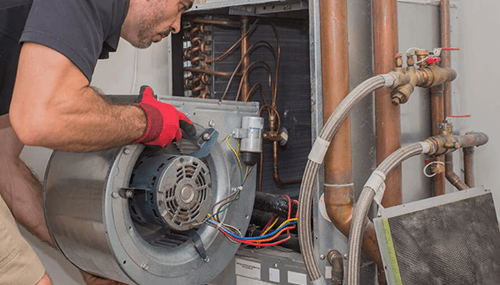
Figure 4. Installing an ECM Blower Motor Inside an HVAC Air Handler Unit
Electronically Commutated Motors (ECM) are widely used in applications that demand high energy efficiency, quiet operation, & variable speed control. Their adaptability and low maintenance make them ideal for both residential & industrial use.
HVAC Systems
This brushless DC motors are commonly used in heating, ventilation, and air conditioning systems. They power blowers & fans, adjusting speed automatically to maintain consistent airflow while reducing energy consumption.
Refrigeration Units
In commercial and residential refrigeration, EC motors help maintain stable temperatures & improve efficiency by adapting to cooling demands.
Industrial Equipment
Industries use ECM motor in pumps, conveyors, & automated systems where precise speed control and reduced energy costs are essential.
Home Appliances
Modern appliances like washing machines, dishwashers, & dryers use EC motors to deliver smooth, quiet operation and optimized performance across different load conditions.
Automotive Applications
ECM motor support functions such as electric power steering, cooling fans, & HVAC blowers, enhancing vehicle efficiency and reducing mechanical wear.
Renewable Energy Systems
They're well-suited for solar & wind power applications, offering efficient, reliable performance with minimal maintenance.
Why Use Electronically Commutated Motor?
Below are some of the benefits of ECM motors & why its preferred choice in many industries:
• Higher Efficiency – In a typical home HVAC system, switching to an ECM motor can cut the energy used by the fan by more than 50%. This is because ECMs use energy more efficiently and can change their speed based on what the system needs. ECM motors are about 80% efficient, while standard PSC motors are only about 60% efficient. This better efficiency helps the whole HVAC system work more effectively, including parts like air handlers, furnaces, & condensers.
• Cooler Operation - Electronically commutated motors run cooler, so they add less heat to the airflow. This makes the system more efficient & helps maintain a more comfortable indoor temperature.
• Better Humidity Control - When programmed with lower or variable air speeds during cooling cycles, ECM motor help reduce indoor humidity more effectively than constant-speed motors.
• Smooth Start and Stop - ECM motor ramp up slowly at startup & down at shutdown. This soft operation reduces strain on mechanical parts like blower wheels and fan blades, avoids sudden airflow bursts, & makes the system quieter. The cycling is so smooth, many users won’t notice when the system turns on or off.
• Durable Bearings - ECM motor use standard ball bearings, offering long service life & the ability to handle heavier loads.
• Flexible Speed Control - You can fine-tune ECM motor speeds across a wide range to match heating, cooling, or condenser pressure needs. This flexibility ensures consistent performance in various conditions.
• Precise Airflow Settings - Most ECM motors are factory-set to deliver 400 CFM per ton, but they can be easily adjusted—such as to 350 CFM per ton—for better moisture removal. Condenser fan applications often require higher airflow, which ECMs can also support.
• Improved Air Filtration - Slower or variable air speeds help air filters capture more dust. While this improves air quality, it also means filters may clog faster & need regular replacement. High air speeds, on the other hand, can push dust past the filter.
• Compensates for Minor Duct Issues - Although not designed for poor ductwork, ECM motor can still maintain good airflow in slightly undersized ducts, helping avoid system inefficiencies.
Electronically Commutated Motor vs. Traditional Motors
|
Feature |
ECM
(Electronically Commutated Motor) |
Traditional
Motor (PSC / Induction) |
|
Type |
Brushless DC motor with electronic
control |
AC motor using mechanical or capacitor
start |
|
Efficiency |
Highly efficient (up to 80% or more) |
Lower efficiency (usually around 60%) |
|
Speed Control |
Variable & precise via electronic
control |
Fixed or limited-speed operation |
|
Energy Use |
Adjusts power based on demand, saving
energy |
Consumes full power regardless of load |
|
Noise Level |
Runs quietly due to smooth electronic
switching |
Louder operation due to constant high
speed |
|
Durability |
Long-lasting, with fewer moving parts |
Shorter life due to mechanical wear |
|
Heat Output |
Generates less heat, improving overall
system performance |
Produces more heat, which can reduce
system efficiency |
|
Upfront Cost |
Higher initial cost |
Lower purchase cost |
|
Maintenance Needs |
Minimal maintenance; fewer wear
components |
Requires more frequent maintenance
(e.g., brushes, caps) |
|
Common Applications |
HVAC systems, fans, blowers,
refrigeration, energy-saving designs |
Older HVAC models, basic appliances |
Conclusion
ECM are powerful & smart motors that use less energy, make less noise, and last longer than traditional motors. They can change their speed to keep systems running smoothly, even when conditions change. Because of these benefits, ECM motors are now used in many homes & industries.
 ABOUT US
Customer satisfaction every time. Mutual trust and common interests.
ABOUT US
Customer satisfaction every time. Mutual trust and common interests.
function test. The highest cost-effective products and the best service is our eternal commitment.
Hot Article
- LM358 Dual Operational Amplifier Comprehensive Guide: Pinouts, Circuit Diagrams, Equivalents, Useful Examples
- Are CR2032 and CR2016 Interchangeable?
- Understanding the Differences ESP32 and ESP32-S3 Technical and Performance Analysis
- BC547 Transistor Basics: Pinout, Application Circuits, Alternative/Complementary Models
- Choosing the Right Battery: A Guide to AG4, LR626, LR66, 177/376/377, SR626, and SR626SW Equivalents
- NPN vs. PNP: What's the Difference?
- esp32 vs stm32: which microcontroller is better for you?
- What Is a MOSFET and How It Works?
- Electrical Relay Basic: Working Operation, Types and Uses
- PNP Transistors: Structure, Working Principle and Application
 Finding the Best Multimeter for Your Projects: Analog VS Digital Multimeter
2024-06-24
 The Essential Guide to 1K Ohm Resistors: Characteristics and Uses
2024-06-21
Frequently Asked Questions [FAQ]
1. What does an ECM motor in an air handler do?
An Electronically Commutated Motor (ECM) in an air handler controls the fan speed to move air efficiently. It adjusts airflow based on the system’s needs, helping maintain consistent temperature & save energy.
2. Why are ECM motors often used in fans?
ECM motors are energy-efficient, quiet, and can vary speed easily. These features make them ideal for driving fans in HVAC systems, where airflow needs to change based on demand.
3. What are the two main roles of an ECM motor?
The two key functions are: controlling fan speed to match system requirements & reducing energy use while maintaining performance.
4. How is an ECM motor different from a motor with a VFD?
An ECM has a built-in controller, while a motor with a Variable Frequency Drive (VFD) needs a separate controller. ECMs are compact and ready to install, while VFD systems offer more customization but require more setup.
5. What's the most common problem with ECM motors?
The most frequent failure is in the control module, often caused by power surges, moisture, or overheating.
Hot Part Number
 CGA9N3X7S2A106K230KB
 C3216X7S0G476M160AB
 CL05B562KA5NNNC
 CGA3E3X8R2A333M080AD
 1206PC473KAT2A
- CL10C151GB8NNWC
 GCM1555C1H391JA16D
 GRM1885C2A8R0DA01J
 GQM2195C1H470GB01D
 GRM0336R1E1R2CD01D
- T510E108M004AS4115
- BZT52C5V1T-7
- 843252AGLFT
- RTC-72421B
- LAN9514-JZX-TR
- XRT86VX38IB256-F
- VI-JT3-EW
- EP1S25F1020C5
- S912B32E4VFUE8R
- V48C12C150B
- V300A48M500BL
- 6MBI35S-140-50
- NCV2903DMR2G
- CAT3200ZI-GT3
- ADG721BRMZ-REEL
- T491D106M035AT7128
- F6KA2G605A4LA-Z
- AD9226ARSZRL
- ADS8341EB
- LC898212XD-SH
- TPS2541RTET
- LP2953IM-3.3
- ADF4106BRUZRL
- ATAR862N-087-TNQ38
- BCM5751MKFBG
- BQ20881DBTR
- EL2120CS
- K4B4G1646E-BCK0
- M5M5V108DKV-70HI
- MC14051BCP
- MPC993FA
- PI3HDMI2410-AFFE
- XCS20XL5TQ144C
- APA2621RI-TRG
- DS24B33S+T&R
- IDT71V321L25TFI
- RTL8366S-VS-GR
- SKKT215/16E
- EXO-3C16MHz