Can I Use CR2025 to Replace CR2016
2023-11-17
53749
In the whirlwind of modern technology, miniature electronic devices have not just entered but pervaded every nook and cranny of our daily existence. They're ubiquitous, silently embedding themselves as indispensable. This omnipresence has birthed an urgent, almost desperate need for power sources that are both efficient and reliable. Amidst a plethora of energy options, button batteries emerge; small yet mighty in their efficiency, they have captured a widespread and growing favor.
Catalog

Figure 1: CR2025 Battery
Now, our focus narrows. This article delves deep into two stars in the coin cell battery universe: the CR2016 and CR2025. We embark on a journey starting from their basic characteristics, weaving through the labyrinth of their definitions, exploring the similarities and contrasts that define them, and finally, unraveling their unique roles across a diverse array of devices. Our detailed analysis, not just skimming the surface but diving into the depths, will encompass nomenclature, delve into chemical compositions, and dissect aspects like voltage and capacity. Our goal? To arm you with a comprehensive, nuanced understanding, guiding you to select the most suitable battery with confidence and clarity.

Figure 2: CR2016 Battery
The Crucial Role of Button Batteries in Modern Electronics
Button batteries, these tiny powerhouses, are pivotal in the realm of modern electronic devices. Non-rechargeable, compact, yet mighty in their application, they have infiltrated almost every aspect of our electronic lives. From the wristwatch ticking on your arm to the remote control lying on your coffee table, even extending their reach to life-saving medical devices, their small stature is paradoxically their greatest strength. It allows for sleek, portable designs in an array of compact devices.
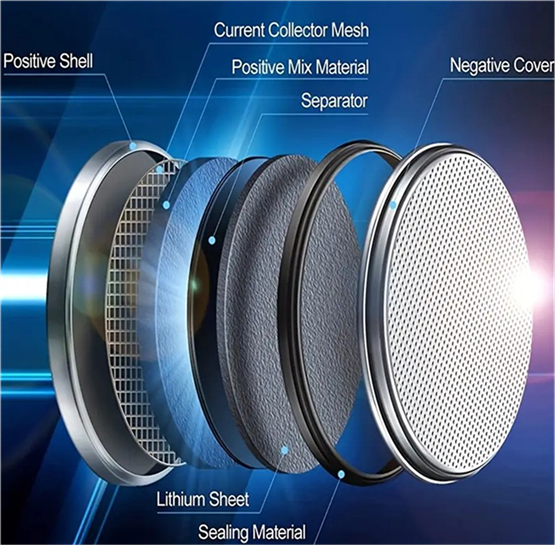
Figure 3: Internal Structure of Button Battery
Consider the medical industry, a field where precision is paramount. Here, microsensors and drug delivery systems lean heavily on the diminutive size and unwavering energy output of these batteries. It's a world where size matters, but smaller is better.
Diving into the vast ocean of button batteries, the CR2016 and CR2025 types emerge as distinctive players. The CR2016 battery, known for its endurance and stable voltage, is a hero in devices demanding prolonged battery life. Security alarm systems and high-performance remote controls are its typical playgrounds. Reliability and durability are not just features but necessities for these applications. The CR2016 battery rises to the occasion.
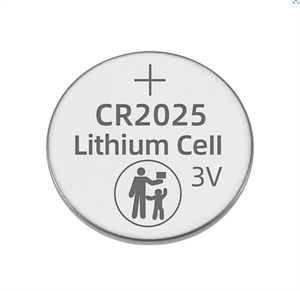
Figure 4: CR2025 Battery
In contrast, the CR2025 thrives where higher current output is the call of the day. With its larger capacity, it finds its niche in high-end smartwatches and health monitoring gadgets. These devices don't just need a constant energy supply; they demand bursts of high current in fleeting moments.
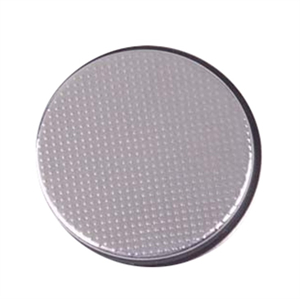
Figure 5: CR2025 Battery
But the story of button batteries doesn't end with small gadgets. They are unsung heroes in the computer world. Take, for instance, their role in maintaining the real-time clock and CMOS settings on a computer motherboard. They stand guard, ensuring that even when the main power supply takes a hiatus, the computer's vital configuration data and system clock beat on. This unassuming role is a cornerstone in maintaining the computer system's stability and reliability, highlighting the outsized importance of these miniature marvels.
What Is CR2016 Battery?
CR2016 battery, this kind of lithium coin battery, occupies a non-negligible position in the micro battery market, mainly due to its high energy density, long life and stable voltage output. This round battery is about 20 mm in diameter and only 1.6 mm thick. "CR" in the name stands for lithium (Lithium) battery, and "2016" reveals its size. CR2016 batteries using lithium as the negative electrode material can operate stably in a wide temperature range, so they are very suitable for use in various environmental conditions.

Figure 6: CR2016 Battery Size
CR2016 batteries have applications far beyond traditional clocks and calculators. In personal digital assistant (PDA) devices, it provides long-lasting backup power to keep data safe when the main battery is exhausted. In the field of medical equipment, such as portable blood glucose monitors and thermometers, CR2016 batteries have become the first choice due to their reliability and long-term stable power output. In addition, this type of battery is also common in children's toys and small remote controls. Their small size and long-lasting battery life make the toy design more flexible and improve the user experience.
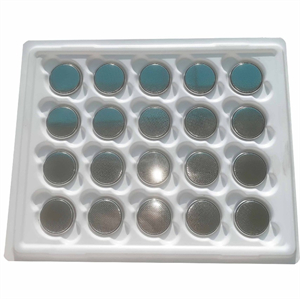
Figure 7: CR2016 Battery
Technological development has led to the continuous expansion of CR2016 battery application fields. In smart home devices, such as wireless curtain controllers and sensors for smart security systems, CR2016 batteries are widely used because of their stability and long life. Modern wearable devices, such as fitness trackers and smart rings, are also beginning to use CR2016 batteries to meet the demand for compact power sources.
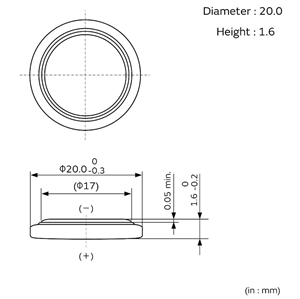
Figure 8: CR2016 Battery Size
What Is CR2025 Battery?
CR2025 batteries, distinguishable as round lithium coin cells, overshadow their CR2016 counterparts in both size and capacity. These batteries, measuring 20 mm in diameter and 2.5 mm in thickness, are not just larger; they're more potent. They boast a stable voltage output of 3 volts. Capacity-wise, they generally range between 160mAh and 170mAh, though slight variances exist among different brands. This augmented capacity positions the CR2025 as the preferred choice in devices where extended battery life is not a luxury, but a necessity.
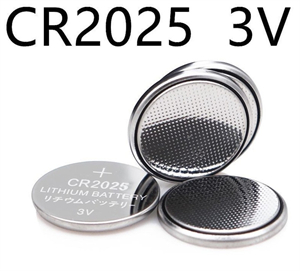
Figure 9: CR2025 Battery
The larger capacity of the CR2025 batteries carves them a niche in various devices. They're the unsung heroes in complex remote controls and sophisticated calculators, providing the much-needed longevity of power. Medical devices, too, benefit from their prowess. Consider high-performance blood pressure monitors and digital thermometers; these are not just devices. They are critical tools that depend on stable voltage and sufficient capacity to function over long periods.
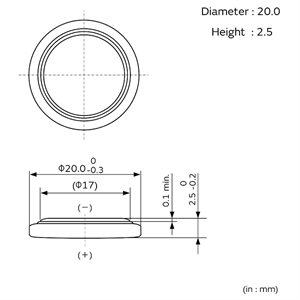
Figure 10: CR2025 Battery Size
As we stride further into the age of technological advancement, the applications for CR2025 batteries only broaden. In the burgeoning field of smart wearable devices, particularly certain smartwatch models, these batteries are pivotal. They deliver the endurance these gadgets demand. Similarly, in the expanding domain of home automation, CR2025 batteries are increasingly essential. From smart door locks to various wireless sensors, these applications require not just continuous energy output but also batteries that don't frequently call for replacement. The CR2025 rises to these challenges, exemplifying how essential they have become in our technologically driven lives.
CR2016 vs CR2025 Batteries: Unraveling Commonalities
In the world of lithium coin cells, CR2016 and CR2025 batteries stand as close relatives, showcasing notable similarities in both design and nomenclature. The 'CR' prefix in their names is a beacon, indicating their type - lithium coin cells. The numbers that follow are not random; they are precise indicators of the battery's dimensions. This systematic naming convention is more than mere labeling. It's a guide, simplifying the differentiation and identification process for users.
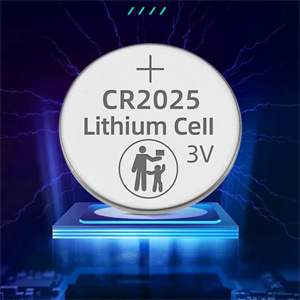
Figure 11: CR2025 Battery
Delving deeper, both batteries boast a chemistry of lithium manganese dioxide. This is no trivial detail. It's a choice that imbues these batteries with high energy density and a stable voltage output of 3 volts. In practical terms, this similarity makes them often interchangeable in a variety of devices.
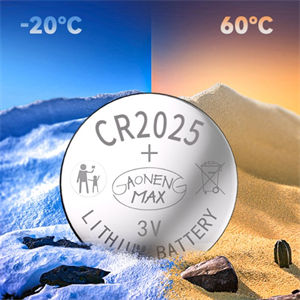
Figure 12: CR2025 Battery
But, let's take smartwatches as a case in point. Here, the nuances of design and power consumption requirements come into play, nudging the decision towards either CR2016 or CR2025 batteries. Size does matter, albeit slightly, between the two. Yet, their identical voltage and chemical composition often render them interchangeable in many contexts. Designers, eyeing longer battery life, might lean towards CR2025 batteries, capitalizing on their larger capacity. On the flip side, in scenarios where size and weight tip the scales, the slimmer CR2016 batteries emerge as the more fitting choice. Thus, while they share common ground, the CR2016 and CR2025 cater to distinct needs, dictated by the intricacies of device design.
CR2016 vs CR2025 Battery: The Impact of Thickness Difference
The difference in thickness between the CR2016 and CR2025 batteries is obvious: the CR2025 battery is 2.5mm thick, which is nearly double the CR2016 battery’s 1.6mm thickness. While this difference may seem numerically insignificant, in the design of tiny electronic devices, its impact is significant.
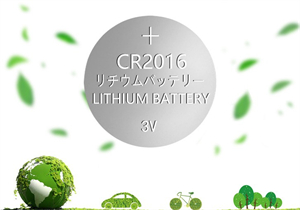
Figure 13: CR2016 Battery
This difference in thickness determines the respective application scenarios of these two batteries in different devices. In those designs that pursue the ultimate in thinness and lightness, such as particularly compact health monitoring devices or mini remote controls, the CR2016 battery becomes a more suitable choice due to its thinner design. The challenge with these devices is to provide sufficient power while maintaining a small size.

Figure 14: CR2025 Battery
On one hand, devices with a greater tolerance for thickness, yet hungry for prolonged battery life - such as certain smartwatches or sophisticated remote controls - find a more suitable ally in CR2025 batteries. Yes, this battery is thicker, but therein lies its advantage: a larger capacity. It's a trade-off that pays off by extending the energy support for devices over a longer stretch, curtailing the often tedious frequency of battery replacements. For users, this translates into a seamless, more convenient experience.
CR2016 vs CR2025: A Comparative Look at Capacity
Capacity-wise, the CR2025 is a heavyweight, boasting up to 165mAh. This is a stark contrast to the modest 90mAh offered by the CR2016. Doubling down, the CR2025's capacity nearly doubles that of its counterpart, a fact that significantly influences both the battery's longevity and its range of applications.

Figure 15: CR2025 Battery
This disparity in capacity doesn't just sit on paper; it plays out in real-world scenarios. Under similar usage conditions and energy demands, the CR2025 outlasts the CR2016. Consider high-drain devices like some smartwatches or advanced medical equipment. Here, the CR2025 becomes a game-changer, dramatically reducing battery replacement intervals. This means users enjoy a more convenient, enduring experience.
However, device designers are often at a crossroads: balancing capacity with size. The CR2025's generous capacity comes with the trade-off of a larger footprint, potentially unsuitable for compact devices with stringent space constraints. Conversely, the CR2016, with its smaller stature, fits snugly into space-limited applications, even if it means compromising on capacity. This dichotomy compels designers to weigh their options carefully, aligning their choice with the device's specific needs and limitations.
Divergent Paths: CR2016 vs CR2025 in Varied Applications
CR2025 batteries, champions of capacity, find their niche in devices where extended battery life is paramount. Their domain includes high-end watches and pocket calculators, devices not just demanding long-lasting energy but also a steadfast maintenance of voltage over prolonged periods. Take, for instance, sophisticated smartwatches, brimming with sensors and multifunctionality. Here, the CR2025 stands out as the go-to choice, its longevity aligning seamlessly with the watches' intensive energy demands.

Figure 16: CR2025 Battery 10-Year Shelf Life
On the flip side, CR2016 batteries carve out their own space in simpler, less energy-intensive products. This includes a range of items from high-performance pens adorned with LED lights or displays, to the everyday car key remote, fitness trackers, and even certain niche medical devices. Consider portable blood glucose monitors. Their compact design calls for a battery like the CR2016 - small yet sufficient, preserving the device's sleek form.
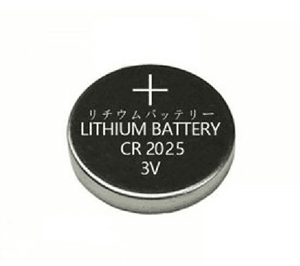
Figure 17: CR2025 Battery
These contrasting scenarios illuminate the distinct design philosophies behind the CR2016 and CR2025 batteries. The CR2016's smaller size is a perfect match for compact devices, where space is at a premium. Meanwhile, the CR2025's larger capacity takes center stage in devices designed for prolonged usage. The decision between these two battery types hinges on the specific requirements of the device in question. Factors such as size, weight, battery life, and energy consumption play pivotal roles in tipping the scales towards either the CR2016 or the CR2025. This nuanced selection process underscores the importance of aligning battery characteristics with device needs, ensuring optimal functionality and user experience.
Navigating Charging and Safety: CR2016 vs CR2025 Batteries
CR2016 and CR2025 batteries, defined as single-use lithium coin cells, come with a clear directive: one-time use only. This non-rechargeable nature stems from their chemical composition and design, elements that simply aren't cut out for the rigors of repeated charging and discharging.
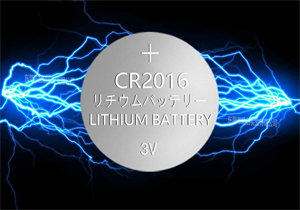
Figure 18: CR2016 Battery
Despite claims from some market devices touting the ability to recharge these batteries, the truth is starkly different—and far more perilous. Resorting to such charging methods is akin to playing with fire. Batteries may overheat, leak, or in extreme cases, explode. The absence of adequate monitoring and protective measures only heightens these risks. Charging a battery is no trivial task; it's a complex ballet of chemical reactions, one for which disposable batteries were never choreographed.
Given this backdrop, the emphasis on safe usage of these disposable batteries becomes paramount. When faced with a depleted CR2016 or CR2025 battery, the only responsible action is proper disposal and replacement. To attempt recharging is to venture into dangerous territory. This protocol of correct disposal and replacement isn't just about preserving device performance; it's fundamentally about user safety. Understanding and respecting the design limitations of these batteries is crucial, ensuring that their use remains within the bounds of safety and efficiency.
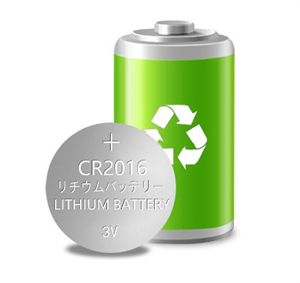
Figure 19: CR2016 Battery
Interchangeability of CR2016 and CR2025 Batteries: Navigating Brand Equivalents
When venturing into the world of battery replacement, particularly for CR2016 or CR2025 models, brand-specific constraints need not be a barrier. Users often find themselves in situations where the exact brand of a CR2016 or CR2025 battery is elusive. In such cases, opting for equivalent batteries from other reputable brands becomes a viable path, tailored to the device's needs. Despite minor variations in capacity and durability across brands, these batteries share a kinship in size, voltage, and overall design, making them highly interchangeable.
In the realm of batteries, names like Duracell, Energizer, Kodak, Maxell, Rayovac, and Sony echo with familiarity, each offering their own versions of CR2016 and CR2025 batteries. Take Duracell's CR2016 and CR2025, for instance: these batteries are celebrated for their exceptional quality and reliability. Energizer, on the other hand, is lauded for the enduring life of its equivalent products.
The journey to select a suitable battery replacement weaves through a labyrinth of specifications. Size and voltage are paramount; they must mirror those of the original. The plot thickens when we consider that quality and performance are variables across different brands. Thus, opting for batteries from reputable brands can be a beacon of reliability and safety in this maze.
Consider the smart watch, a device that thrives on small, high-efficiency batteries. Typically equipped with a specific brand of CR2025 battery, it opens a door for users to venture into a world of alternatives. Brands like Energizer or Duracell come into play, offering different capacities or extended lifespans, yet adhering to the necessary size and voltage. This choice is a pivotal moment, for it directly influences the watch's battery life and its overall performance.
Conclusion
Delving into the intricate world of CR2016 and CR2025 batteries, our comprehensive analysis unveils a curious tapestry of similarities and contrasts. Size, voltage, and chemical composition often march in unison between these two battery types, yet they diverge in thickness, capacity, and charging capabilities, not to mention their specific applications. These nuances are far from trivial; they are pivotal in the art of battery selection and usage.
At first blush, one might be tempted to deem these batteries interchangeable. However, the devil lies in the details: the peculiarities of device design and the disparities in battery capacities weave a complex narrative, advising against such casual substitutions.
Choosing a battery is not merely a matter of fitting a piece into a puzzle; it demands a deep understanding of these differences to ensure compatibility and peak performance. Furthermore, in the realm of replacement batteries, knowledge is power. Being aware of each battery's equivalent product is akin to having a key to an ever-ready supply, guaranteeing that the right battery for your device is always within reach, regardless of your location.
Frequently Asked Questions [FAQ]
1. Can I use a CR2025 in place of a CR1616?
Swapping a CR2025 for a CR1616 is not advisable. Both are coin cell batteries, yet they differ significantly in size. The CR2025, being thicker, might not snugly fit in a device tailored for the sleeker CR1616. It's crucial to adhere to the manufacturer's recommended battery size.
2. What happens if I use a CR2032 instead of CR2025?
Opting for a CR2032 over a CR2025 brings its own set of challenges. Despite sharing voltage similarities, the CR2032's increased thickness could hinder a perfect fit in devices designed specifically for the slimmer CR2025.
3. Is CR2016 a common battery?
The CR2016: a prevalent choice. Its widespread use spans from powering small electronic devices like calculators and watches to energizing key fobs.
4. Can I use CR2025 to replace cr2016?
Contemplating a CR2025 as a substitute for a CR2016? Generally, it's ill-advised. The CR2025's larger thickness poses a fitting issue in devices crafted for the thinner CR2016.
5. What battery can replace cr2016?
Seeking a substitute for the CR2016? Ideally, another CR2016 should be your go-to choice. However, in certain scenarios, if the dimensions and contacts are compatible, a CR1620 or CR1616 could suffice. Yet, this heavily depends on the specific requirements of the device's battery compartment and its power needs. Compatibility, as per the device's specifications, is key.
 ABOUT US
Customer satisfaction every time. Mutual trust and common interests.
ABOUT US
Customer satisfaction every time. Mutual trust and common interests.
function test. The highest cost-effective products and the best service is our eternal commitment.
Hot Article
- LM358 Dual Operational Amplifier Comprehensive Guide: Pinouts, Circuit Diagrams, Equivalents, Useful Examples
- Are CR2032 and CR2016 Interchangeable?
- Understanding the Differences ESP32 and ESP32-S3 Technical and Performance Analysis
- BC547 Transistor Basics: Pinout, Application Circuits, Alternative/Complementary Models
- Choosing the Right Battery: A Guide to AG4, LR626, LR66, 177/376/377, SR626, and SR626SW Equivalents
- NPN vs. PNP: What's the Difference?
- esp32 vs stm32: which microcontroller is better for you?
- What Is a MOSFET and How It Works?
- Electrical Relay Basic: Working Operation, Types and Uses
- PNP Transistors: Structure, Working Principle and Application
 1N4148 Diode vs 1N4007 Diode Comparison Guide
2023-11-18
 Comprehensive Guide to LR41 Battery Equivalent, Specifications and Uses
2025-08-26
Hot Part Number
 V300A48M500BL
 T510E108M004AS4115
 S912B32E4VFUE8R
 TAJD108M002RNJ
 C3216X7S0G476M160AB
 T491D106M035AT7128
 GRM0336R1E1R2CD01D
 TPS2541RTET
 CGA9N3X7S2A106K230KB
 NCV2903DMR2G
- CL05B562KA5NNNC
- GQM2195C1H470GB01D
- CL10C151GB8NNWC
- CAT3200ZI-GT3
- ADG721BRMZ-REEL
- 843252AGLFT
- AD9226ARSZRL
- EP1S25F1020C5
- VI-JT3-EW
- LP2953IM-3.3
- F6KA2G605A4LA-Z
- 1206PC473KAT2A
- LAN9514-JZX-TR
- CGA3E3X8R2A333M080AD
- RTC-72421B
- V48C12C150B
- GRM1885C2A8R0DA01J
- LC898212XD-SH
- XRT86VX38IB256-F
- GCM1555C1H391JA16D
- ADS8341EB
- 6MBI35S-140-50
- ADF4106BRUZRL
- ATAR862N-087-TNQ38
- BCM5751MKFBG
- BQ20881DBTR
- EL2120CS
- K4B4G1646E-BCK0
- M5M5V108DKV-70HI
- MC14051BCP
- MPC993FA
- PI3HDMI2410-AFFE
- XCS20XL5TQ144C
- APA2621RI-TRG
- DS24B33S+T&R
- IDT71V321L25TFI
- RTL8366S-VS-GR
- SKKT215/16E
- EXO-3C16MHz