What You Should Know About 10 Gauge Wire and Its Amp Limits
2025-11-11
10427
Catalog
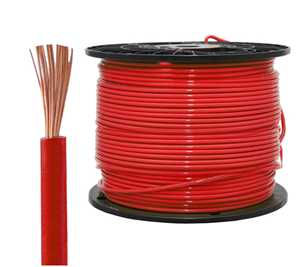
Amp Rating Guide for 10 Gauge Wire
The ampacity of 10 gauge wire depends on the conductor material, insulation rating, and equipment temperature limits. NEC tables provide base values under standard conditions (30°C ambient and up to three current-carrying conductors).
10 AWG Copper
30 A at 60°C
35 A at 75°C
40 A at 90°C
10 AWG Aluminum or CCA
25 A at 60°C
30 A at 75°C
35 A at 90°C
Even though higher temperature insulation supports higher ampacity, most equipment is limited to 60°C or 75°C terminations. For general branch circuits, NEC small conductor rules limit 10 AWG copper to a 30 A breaker and 10 AWG aluminum to 25 A.
When Ampacity Must Be Reduced?
You must lower a wire’s ampacity when certain conditions cause it to heat up more than normal. One common situation is when several current carrying wires are bundled together. If there are 4 to 6 wires, the ampacity is reduced to 80 percent of its normal value. If there are 7 to 9 wires, it drops to 70 percent. High temperature areas, such as attics or mechanical rooms, can also force a correction because the extra heat affects how much current the wire can safely carry. Even after making these adjustments, the breaker size must still follow the equipment limits and the small conductor rules.
Ratings for 10 Gauge Cable
Voltage- Most 10 AWG cable is rated for 600 V, suitable for residential and commercial applications.
Temperature- PVC insulation used in NM-B and UF-B cable is typically rated for 60°C or 75°C, while XLPE insulation found in XHHW-2 and USE-2 is rated for operation up to 90°C.
Environmental Use- NM-B is used for indoor dry locations, while UF-B and USE-2 are suitable for wet, damp, or underground areas. THHN, THWN-2, and XHHW-2 are common in conduit, and USE-2 or RHW-2 is often used for outdoor exposed installations.
Watt Capacity of 10 Gauge Wire
Use the formula:
Watts = Volts × Amps
Copper 10 AWG wire can carry up to 30 amps, which gives you about 3,600 watts at 120 volts and 7,200 watts at 240 volts.
Aluminum 10 AWG wire is rated for 25 amps, which provides about 3,000 watts at 120 volts and 6,000 watts at 240 volts.
Continuous loads (running 3+ hours) should be limited to 80% of rating.
Different Kinds of 10 Gauge Cable
THHN / THWN-2- Used in conduit for dry, damp, or wet locations. Rated 600 V and supports 90°C operation. Ideal for residential and commercial feeders and branch circuits.
NM-B (Romex)- Indoor-only, dry-location cable used for appliances and general wiring. Not suitable for wet areas or outdoors.
UF-B- Direct-burial cable with a moisture-resistant jacket. Common for exterior feeders, pumps, and landscape power.
XHHW-2- Cross-linked polyethylene insulation handles heat well and works in wet or dry locations. Great for long runs or hot spaces like attics.
USE-2 / RHH / RHW-2- Outdoor-rated, sunlight-resistant conductors often listed for direct burial. Frequently used in solar, exterior feeders, and underground runs.
MC Cable- Metal-clad cable with armored protection. Suitable for commercial and industrial environments where extra mechanical protection is needed.
TECK90- A rugged Canadian industrial cable designed for harsh environments such as chemical plants, factories, and outdoor process areas.
Color Codes for 10 Gauge Wire
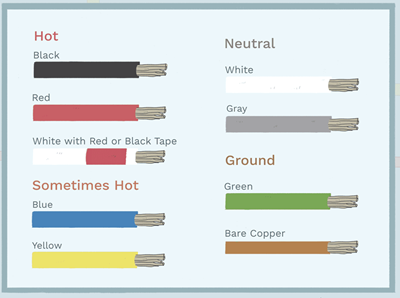
Figure 2. Different Wire Colors
Hot wires carry power from the source to the device. In 10 AWG wiring, hot wires are usually black, red, or blue. Blue is often used in multiwire or three-phase systems. Any color can be hot except white, gray, green, or bare, because those colors are reserved for neutral and ground.
Neutral wires send electricity back to the power source. In 10 AWG, they are always white or gray. These colors are only for neutral and can’t be used as hot unless they are clearly marked at both ends.
Ground wires protect the circuit during faults. For 10 AWG, the ground wire is always green or bare copper. These colors are only for grounding and can’t be used for anything else.
A white wire can sometimes be marked with colored tape to act as a hot wire in certain switch setups, but this marking must be permanent and done on both ends. Ground wires can never be re-marked.
Some electrical systems use extra color patterns to make phase wires easier to identify. For example, orange may mark the high leg in a delta system. Black, red, and blue are common in 120/208V systems, while brown, orange, and yellow are often used in 277/480V systems. These colors help with safety and consistency, but they may vary by region, so it’s always best to check local codes.
What 10 AWG Wire Is Used For?
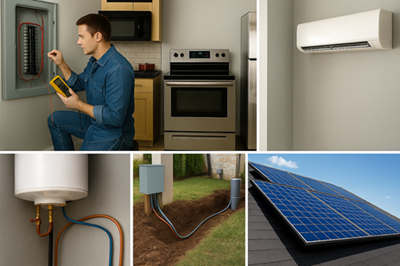
Figure 3. 10 AWG is Commonly Used
Branch Circuits in High-Demand Areas: 10 AWG copper is often used in kitchens, laundry rooms, garages, and workshops where appliances draw more power than standard 15 or 20 amp circuits can support.
Large Household Appliances: Many appliances list a 30 amp maximum breaker on their nameplate. Common examples include certain electric dryers, ovens, and water heaters. Always match wire size to the manufacturer’s requirements.
Small Air Conditioning Units: Mini split systems and small air conditioners often fall within 10 AWG ampacity. Always size according to MCA and MOCP on the equipment label.
Electric Water Heaters: Some smaller or single-element electric water heaters can use 10 AWG wire as long as their amp draw is within what the wire can handle.
Outdoor and Underground Feeds: UF-B cable allows direct burial for yard lights, outbuildings, and pumps. THWN-2 conductors in conduit work well in wet or exposed areas.
Solar and Renewable Energy: 10 AWG PV wire is common for connecting solar panels to combiner boxes and inverters in smaller residential systems. USE-2 is often used outdoors due to sunlight resistance and durability.
Stranded vs. Solid 10 AWG
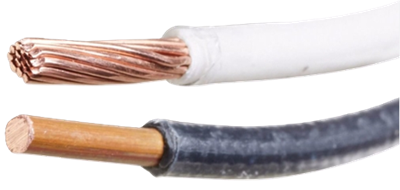
Figure 4. Stranded Copper Wire vs. Solid Copper Wire
|
Feature |
Stranded
10 AWG |
Solid
10 AWG |
|
Flexibility |
Flexible and easy to pull |
Rigid and holds shape |
|
Ideal Uses |
Long conduit runs,
vibration-prone equipment |
Fixed indoor wiring, screw
terminals |
|
Handling |
Good for tight bends |
Harder to bend in confined spaces |
|
Terminations |
May require stranded-rated
terminals |
Works with standard screw
terminals |
Advantages and Disadvantages of 10 Gauge Wire
Advantages
Higher ampacity than smaller gauges
Lower voltage drop over distance
Works with many cable types for indoor, outdoor, and underground use
Available in flexible or solid versions
Disadvantages
More expensive and harder to bend than smaller gauges
Can be challenging to pull through long conduit runs
Requires the correct terminations, especially for stranded or aluminum conductors
Solid wire is stiff, which can slow installation
Proper Steps for Installing 10 AWG
1. Plan the Circuit: Confirm the load, voltage, and whether the equipment will operate continuously. Check the manufacturer’s label for minimum wire size, breaker rating, and terminal temperature limits.
2. Select the Right Cable Type: Choose a cable suited for the installation environment. Use NM-B for dry indoor runs, THHN or THWN-2 for conduit, UF-B or USE-2 for wet or underground areas, and MC or TECK90 where mechanical protection is required.
3. Measure and Route the Wire: Plan a clean path from panel to device. Avoid sharp bends and maintain the minimum bend radius to protect the insulation. Follow box-fill and conduit-fill limits to prevent overheating and ensure easy pulling.
4. Protect Against Voltage Drop: For long distances, check voltage drop and upsize the conductor if necessary. Keeping voltage drop below 3 percent helps maintain equipment performance.
5. Prepare the Wire for Termination: Strip insulation carefully without nicking the copper or aluminum. For stranded wire, use terminals rated for stranded conductors. For aluminum, use CU/AL-rated lugs and apply antioxidant compound if required.
6. Make Secure Connections: Insert the conductor fully into the terminal and tighten it to the manufacturer’s torque specification. Proper torque prevents loose connections that can lead to overheating.
7. Install the Correct Breaker: Choose a breaker that matches the adjusted ampacity and equipment rating. For most copper installations, this will be a 30 amp breaker; aluminum is typically limited to 25 amps unless otherwise specified.
8. Label and Test the Circuit: Label both ends of the wire for future identification. Once installed, test the circuit under load to confirm proper voltage and stable operation.
Conclusion
Understanding the amp limits of 10 gauge wire makes it easier to choose the right cable and breaker for any project. With the right conditions and proper handling, 10 AWG can safely power many everyday circuits. Use this knowledge to plan better, avoid overheating, and keep your wiring reliable.
 ABOUT US
Customer satisfaction every time. Mutual trust and common interests.
ABOUT US
Customer satisfaction every time. Mutual trust and common interests.
function test. The highest cost-effective products and the best service is our eternal commitment.
Hot Article
- LM358 Dual Operational Amplifier Comprehensive Guide: Pinouts, Circuit Diagrams, Equivalents, Useful Examples
- Are CR2032 and CR2016 Interchangeable?
- Understanding the Differences ESP32 and ESP32-S3 Technical and Performance Analysis
- Choosing the Right Battery: A Guide to AG4, LR626, LR66, 177/376/377, SR626, and SR626SW Equivalents
- BC547 Transistor Basics: Pinout, Application Circuits, Alternative/Complementary Models
- NPN vs. PNP: What's the Difference?
- esp32 vs stm32: which microcontroller is better for you?
- What Is a MOSFET and How It Works?
- Electrical Relay Basic: Working Operation, Types and Uses
- PNP Transistors: Structure, Working Principle and Application
 Delta vs. Wye: What’s the Differences?
2025-11-11
 NTC Thermistors: Basics, Features, Symbol, and Applications
2025-11-11
Frequently Asked Questions [FAQ]
1. Can 10 gauge wire run on a 35 amp breaker?
No. Even if the insulation is rated for higher temperatures, code rules limit 10 AWG copper to a 30 amp breaker and aluminum to 25 amps for most circuits.
2. How far can I run 10 gauge wire before voltage drop becomes a problem?
Voltage drop starts to matter around 75–100 feet depending on the load. For long runs, you may need to upsize the wire.
3. Is 10 gauge wire OK for outdoor circuits?
Yes, as long as you use the right cable type such as UF-B or THWN-2 in conduit. The insulation must be rated for wet locations.
4. Can 10 AWG wire handle 240 volts?
Yes. Voltage does not change the wire size; amp load does. Many 240-volt appliances use 10 AWG on 30 amp circuits.
5. Is solid or stranded 10 AWG better for home wiring?
Solid is more common for standard indoor circuits, while stranded is easier to pull through conduit and handles vibration better.
6. Can I mix 10 gauge copper and aluminum on the same circuit?
Only if the connections use CU/AL-rated lugs. Mixing metals without proper terminals can cause overheating.
7. Does 10 gauge wire work for RV or generator hookups?
Yes for many 30 amp RV or generator outlets, but always check the exact plug type and breaker size required.
8. What happens if 10 AWG wire overheats?
Overheating can soften insulation, cause arcing, and damage equipment. This usually comes from oversizing the breaker or poor connections.
Hot Part Number
 CX0805MRX7R8BB223
 CGA2B2X8R1H152M050BE
 08055U101KAT4A
 CC0603JRX7R8BB224
- 08055U5R6BAT2A
 06035U5R6CAT2A
 12065C105JAT2A
 GRM1886S1HR90CD01D
 TBJD476K016LSSB0023
 BDW84C
- X1205S8I
- VE-220-IY
- VI-JWB-MZ
- KP236N6165XTMA1
- MCC40-10I08
- T491D336K025ATAUTO7280
- TRSF3243CPWR
- AM5728BABCXEA
- LC75833W-TBM-E
- UCC2892PWR
- CDC337DWR
- T491C475K025AT2478
- TPS2044BD
- STM32L071RBT6TR
- TPS5410MDREP
- TS5A22364DGSR
- ADT7421ARMZ
- AK4340ET
- ATD97SC3202-X1AC
- CS5532ASZ
- CY14E256LA-SZ25X
- HD155141
- LM4880MX
- M60089H-0201Y
- MB89615-150
- S-93C56BD0I-T8T1GE
- VT261WFQR-ADJ
- MIP2K40MSSCF
- IC41C16100S-50K
- LV1605ML-MPB-E
- PSN76025A0
- BQ40Z80RSMT
- VT1622AG
- ANA37326B
- AND0241RM27Q7
- CXD2913AQ
- CY7C1382D-200BZXC
- GD25Q64CFIG
- RGTVX6TS65DGC11