What Is an Electro-Optic Infrared (EO/IR) System and How Does It Work?
2026-03-10
1728
Catalog
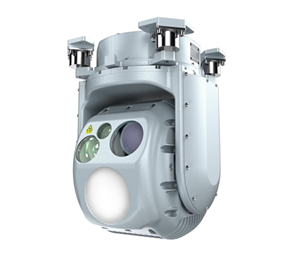
Figure 1. Electro-Optic Infrared System
What Is an Electro-Optic Infrared System?
An Electro-Optic Infrared (EO/IR) system is a type of sensor system that uses light and heat to detect and view objects. It combines optical parts (like lenses and cameras) with electronic parts (like signal processors and displays) to create images or collect information.
The electro-optic part means the system uses light and electronic technology to capture and process images. The infrared part means it can detect heat energy that objects give off. As of this, EO/IR systems can see things even when it is dark, foggy, smoky, or hard to see with normal cameras.
An EO/IR system usually includes lenses, infrared sensors, image processors, and a display screen. The lenses collect light or heat from objects, the sensors detect it, and the electronics convert it into an image or data that people can see and use.
Since all objects produce some heat, EO/IR systems can find and track objects by detecting their heat differences from the surrounding area. This makes them suitable for surveillance, security, navigation, and military systems, especially when visibility is poor.
How EO/IR Systems Work
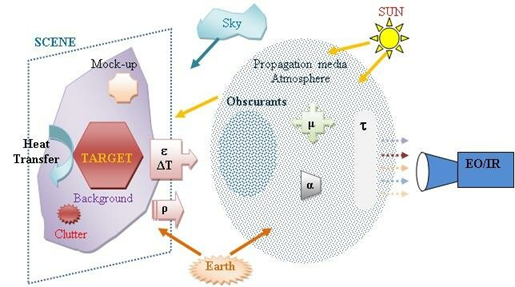
Figure 2. EO/IR Detection Process
Electro-Optic Infrared (EO/IR) systems work by detecting light and heat from objects and turning it into images. These systems help people see objects even when it is dark or hard to see.
First, a lens collects light or heat energy from objects in the environment. This energy can be visible light or infrared heat that objects naturally produce.
Next, a sensor detects the light or heat collected by the lens. The sensor then changes this energy into electrical signals.
After that, an electronic processor reads the signals and converts them into an image. The system may also improve the image so that objects are clearer.
Finally, the image appears on a screen or monitor. This allows you to observe the area, detect objects, or track movement even in darkness, smoke, fog, or other low-visibility conditions.
Main Components of EO/IR Systems
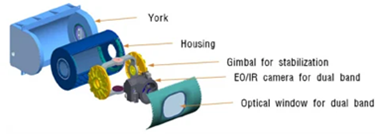
Figure 3. EO/IR Gimbal Camera Components
An Electro-Optic Infrared (EO/IR) system is made of several parts that work together to detect light or heat and create images. Each part has a specific role in capturing and processing information from the environment.
Optical Lens
The optical lens collects visible light and infrared energy from objects. Optical lens focuses this energy onto the sensor so the system can clearly detect the target.
Infrared Detector or Sensor
The infrared detector senses the heat energy emitted by objects. Infrared detector converts the detected infrared radiation into electrical signals that the system can process.
Signal Processor
The signal processor receives the electrical signals from the detector. Signal processor processes these signals and converts them into images or useful data.
Image Display or Output System
The display system shows the final image to you. It can present thermal images, visible images, or combined images on a screen or monitoring device.
Control and Processing Unit
The control unit manages how the system operates. It controls settings, processes system data, and helps perform tasks such as object detection and tracking.
Design Challenges of EO/IR Technology
There are some challenges that you must consider when designing Electro-Optic Infrared (EO/IR) systems:
Performance optimization - The system must work well in different weather conditions, at different times of the day, and in different environments. It should still detect and show objects clearly even in fog, smoke, darkness, or other difficult conditions.
Size, weight, and power (SWaP) limits - EO/IR systems are used in aircraft, drones, or satellites where space and power are limited. You must keep the system small, lightweight, and energy efficient while still maintaining good performance.
Cost considerations - Developing and producing EO/IR systems can be expensive. You must design the system carefully so that it performs well while keeping the cost reasonable.
System complexity - EO/IR systems contain many parts, such as sensors, lenses, processors, and control units. All these parts must work together correctly, which can make the system complex to design and test.
Manufacturing challenges - Building EO/IR systems may require special manufacturing methods and accurate assembly. This can make production more difficult and require strict quality control.
Simulation and Modeling of EO/IR Systems
Simulation and modeling are required steps in designing Electro-Optic Infrared (EO/IR) systems. These methods allow you to test and study how the system will work before building the actual hardware.
In simulation, you can create a virtual model of the EO/IR system using computer software. This model can include parts such as the optical lens, infrared detector, electronics, and environmental conditions. By using these models, you can observe how the system detects light or heat and how the image will appear.
Simulation also helps you predict system performance. They can test how the EO/IR system works in different situations, such as daytime, nighttime, fog, or long-distance detection. This helps improve the design and fix problems early.
Another advantage of simulation is that it reduces development time and cost. Instead of building many physical prototypes, you can test different designs using computer models.
EO/IR systems are complex, simulation and modeling help you optimize the design, improve image quality, and ensure reliable operation before the system is manufactured.
Ansys Tools for EO/IR Development
To solve the design challenges of Electro-Optic Infrared (EO/IR) systems, Ansys provides several simulation tools that help you study and improve system performance before building the actual hardware. By using these tools together, you can simulate optical behavior, environmental effects, and system performance.
Ansys Zemax OpticStudio is applied to design and analyze optical systems such as lenses, mirrors, and imaging components. It helps you study how light and infrared radiation travel through the system and how they focus on the detector.
Ansys Speos helps simulate how EO/IR systems perform in actual environments. You can study the effects of weather conditions such as fog, rain, smoke, and different lighting conditions. This helps improve system visibility and detection performance.
Ansys Lumerical is used to simulate photonic and opto-electronic components. It helps you understand how light interacts with materials and devices at a detailed level.
Ansys AVxcelerate Sensors helps model and test sensor behavior in virtual environments. It let you evaluate how sensors perform in different driving or operating scenarios.
Ansys Systems Tool Kit (STK) is made to analyze EO/IR sensor performance on platforms such as satellites, aircraft, and other moving systems. STK helps you simulate missions and evaluate system coverage and detection capability.
Applications of EO/IR Systems
Electro-Optic Infrared (EO/IR) systems are applied in many fields since they can detect objects using light and heat, even in darkness or poor visibility.
Military and Defense - Used for target detection, surveillance, tracking, and night vision in military operations.
Aerospace and Aviation - Found in aircraft and satellites to observe the environment, track objects, and improve navigation and safety.
Security and Surveillance - In cameras to monitor buildings, borders, and public areas. They help detect people or vehicles even in low light or bad weather.
Autonomous Vehicles and Robotics - To detect obstacles, recognize objects, and help machines move safely.
Search and Rescue Operations - To locate people in darkness, smoke, or disaster areas by detecting body heat.
Industrial Monitoring - Used for thermal inspection of machines and electrical equipment to detect overheating or faults.
Environmental Monitoring – Applied to observe wildlife, study natural environments, and detect changes in temperature or heat patterns.
Future Trends in EO/IR Technology
Electro-Optic Infrared (EO/IR) technology continues to advance as new sensors, processing methods, and system designs are developed. Future EO/IR systems are expected to use higher-resolution infrared detectors to produce clearer and more detailed thermal images. These systems are also becoming smaller and lighter, making them easier to use in drones, vehicles, and portable devices.
New designs aim to reduce power consumption while maintaining strong performance. Artificial intelligence and machine learning are also being integrated to help automatically detect, identify, and track objects in EO/IR images. Improved image processing techniques are helping reduce noise and enhance image quality. Many modern EO/IR systems are also combined with other sensing technologies such as radar, LiDAR, and GPS to provide better detection and situational awareness. These changes are making EO/IR systems more efficient, reliable, and suitable in areas such as defense, aerospace, security, robotics, and environmental monitoring.
Conclusion
Electro-Optic Infrared (EO/IR) systems help detect and observe objects using light and heat. They can work in difficult conditions where normal cameras cannot. With better sensors, simulation tools, and new technologies, EO/IR systems continue to improve. These systems will remain required in many fields such as defense, aerospace, security, and environmental monitoring.
 ABOUT US
Customer satisfaction every time. Mutual trust and common interests.
ABOUT US
Customer satisfaction every time. Mutual trust and common interests.
function test. The highest cost-effective products and the best service is our eternal commitment.
Hot Article
- LM358 Dual Operational Amplifier Comprehensive Guide: Pinouts, Circuit Diagrams, Equivalents, Useful Examples
- Are CR2032 and CR2016 Interchangeable?
- Understanding the Differences ESP32 and ESP32-S3 Technical and Performance Analysis
- Choosing the Right Battery: A Guide to AG4, LR626, LR66, 177/376/377, SR626, and SR626SW Equivalents
- BC547 Transistor Basics: Pinout, Application Circuits, Alternative/Complementary Models
- NPN vs. PNP: What's the Difference?
- esp32 vs stm32: which microcontroller is better for you?
- What Is a MOSFET and How It Works?
- Electrical Relay Basic: Working Operation, Types and Uses
- PNP Transistors: Structure, Working Principle and Application
 A Guide to Silicon Photonics and How It Works
2026-03-11
 Why Drop Testing Matters for Safer Products and Packaging
2026-03-10
Frequently Asked Questions [FAQ]
1. What is the difference between EO systems and IR systems?
EO systems detect visible light, while IR systems detect heat energy (infrared radiation). EO/IR systems combine both technologies to capture images in both light and thermal conditions.
2. Are EO/IR systems the same as thermal cameras?
Not exactly. Thermal cameras detect only infrared heat, while EO/IR systems may include both visible cameras and thermal sensors in one integrated system.
3. How far can an EO/IR system detect objects?
Detection range depends on the sensor resolution, lens quality, and environment. Some systems can detect targets from hundreds of meters to several kilometers away.
4. Can EO/IR systems see through walls?
No. EO/IR systems detect heat and light, but they cannot see through solid objects like walls. They can only detect heat from surfaces.
5. Do EO/IR systems work during daytime?
Yes. EO/IR systems work both during the day and at night. The EO camera captures visible images in daylight, while the IR sensor detects heat when visibility is low.
6. What types of infrared sensors are used in EO/IR systems?
Common infrared sensors include cooled infrared detectors and uncooled microbolometers, which are popular in thermal imaging devices.
Hot Part Number
 C1608X7R1E474K080AB
 C2012X5R0J225K085AA
 GRM0225C1E4R1CDAEL
 CC0603ZRY5V6BB474
 UMK316B7474ML-T
 08051U150GAT2A
 GRM1886S1H1R1CZ01D
 T495D476K010ATE080
 TPSE106M050R0500
 APA600-PQ208
- MT47H64M8CF-25E:G
- MC9S12XA512VAL
- IS42S16160B-6TL
- SI8233AD-D-IS
- RT0402DRD072K49L
- CY8C20140-SX2I
- VLF4012AT-100MR79
- SKM150GAL128D
- MC100ELT21DR2G
- MC14040BDTR2G
- LT3971AIMSE#PBF
- T491D107K006ZT7280
- UCC3818N
- INA240A2PW
- IXFP22N65X2M
- LT1999CMS8-50F#PBF
- SN74LVC32ADR
- AD5262BRUZ20-RL7
- ATMXT1666T2-C2U
- BU20360-48L
- ICS950218AFT
- MAX1779EUE+TG104
- MAX202ECWE-T
- MAX8860EUA27
- G5LA-1A4-12V
- HN29V256AOBBP-30
- M66445M1FA
- NFP-2200-A3
- PCD8010H/E31/4
- PEAD22653AFV1QH14NAR
- 6MBP150RTM060
- S29GL032A90FAIR43
- TMR3-1211
- T6TD7XBG-0001
- CS242C001PZ-TRSV
- IBMPPCBWY-GES72914
- SDINBDG4-8G-XI1
- XFL4020-332MEC
- GMOV-14D500K