What Is an Accelerometer Sensor and How Does It Work?
2025-10-30
4843
Catalog

Understanding Accelerometer Sensor
An accelerometer is an electromechanical device that measures acceleration the rate of change of velocity over time. In simple terms, it detects how quickly an object speeds up, slows down, or changes direction.
Accelerometers measure proper acceleration the acceleration a body actually experiences relative to free fall. This differs from coordinate acceleration, which depends on the observer’s frame of reference. Proper acceleration is what a person or device physically feels, and it’s what the accelerometer detects.
A small proof mass (also called a seismic mass) shifts slightly when the device accelerates, changing an electrical property such as capacitance or resistance. This change is converted into a measurable output, typically in meters per second squared (m/s²) or g units.
Accelerometers detect both static acceleration, such as gravity (used for tilt and orientation), and dynamic acceleration, such as motion, vibration, or impact.
Operating Principle of Accelerometer Sensor

Figure 2. 3-Axis MEMS Capacitive Accelerometer Works
The core principle is similar to a mass attached to a spring. A proof mass is suspended by flexible beams or springs inside the sensor. When the device accelerates, the mass resists motion and moves slightly relative to the sensor frame. The amount of displacement is proportional to the applied acceleration.
Modern accelerometers use MEMS technology to integrate this structure on a silicon chip. Depending on design, motion changes capacitance, resistance, or generates a piezoelectric charge. Electronics then amplify and condition the signal, producing an output value that represents acceleration.
Main Functions of Accelerometer Sensor
• Measure linear acceleration along one, two, or three axes.
• Detect orientation and tilt by sensing gravity.
• Monitor vibration and shock for fault detection and predictive maintenance.
• Enable motion-based control in games, drones, and gesture interfaces.
• Support power management with wake-on-motion and interrupt features.
• Assist navigation by working with gyroscopes and magnetometers in sensor fusion.
• Support calibration and compensation for consistent readings across conditions.
Different Types of Accelerometer Sensor

Figure 3. Capacitive Accelerometer Sensor
Capacitive: Measure changes in capacitance between plates. Ideal for low-frequency motion, orientation, and low-power applications; common in smartphones and wearables.
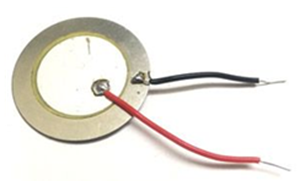
Figure 4. Piezoelectric Vibration Sensor
Piezoelectric: Generate charge under stress. Best for high-frequency vibration and impact measurement.
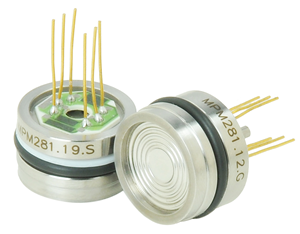
Figure 5. Piezoresistive Pressure Sensors
Piezoresistive: Change resistance under strain. Suitable for both static and dynamic acceleration, often used in crash testing and rugged environments.

Figure 6. Servo (Force-Balance) Angular Accelerometer
Servo (force-balance): Use feedback control to hold a mass stationary and measure the balancing force. Provide high accuracy and low drift; used in navigation and seismic monitoring.
Frequency-change: Detect acceleration through shifts in the resonant frequency of a sensing element. Offer high resolution and long-term stability for structural monitoring.
Accelerometer Block Diagram

Figure 7. Block Diagram of the ADXL335, a 3-Axis Analog MEMS Accelerometer
The ADXL335 is a 3-axis analog MEMS accelerometer known for simplicity, low power use, and clear signal flow.
The power and decoupling circuit stabilizes voltage and filters noise. The MEMS sensing element contains tiny movable masses that shift when acceleration occurs, producing small capacitance changes. These signals are amplified, demodulated, and filtered to produce clean DC voltages proportional to acceleration. Output amplifiers buffer and scale the analog X, Y, and Z signals for external reading.
Filter capacitors smooth the signals, reducing high-frequency noise. A self-test pin applies a known electrostatic force to verify that the sensor is functioning correctly. Outputs rest near mid-supply at zero g and shift proportionally with acceleration.
Accelerometer Specifications
|
Specification |
Description |
|
Dynamic Range |
Maximum measurable acceleration
before distortion, usually expressed in ±g. |
|
Frequency Response |
Range of frequencies where the
output remains accurate. |
|
High-Frequency Limit |
Point where accuracy drops due to
resonance. |
|
Low-Frequency Cutoff |
Frequency below which sensitivity
decreases. |
|
Noise |
Smallest detectable signal,
defined as noise density or total noise over a frequency range. |
|
Sensitivity |
Change in output per unit
acceleration (mV/g or LSB/g). |
|
Bias and Stability |
Output offset at zero
acceleration and its drift over time or temperature. |
|
Cross-Axis Sensitivity |
Motion detected on one axis that
appears as error on another. |
|
Temperature Coefficients |
How sensitivity and bias vary
with temperature. |
|
Grounding |
Whether the case is grounded or
isolated, affecting noise performance. |
|
Shock Rating |
Maximum acceleration the sensor
can withstand without damage. |
|
Output Type |
Analog or digital, and supported
interfaces. |
|
Sample Rate & Anti-Aliasing |
Defines data sampling speed and
filtering relative to bandwidth. |
Pros and Cons of Accelerometer Sensor
Pros
• Accurate motion and vibration measurement.
• Compact, lightweight, and low power.
• High sensitivity and scalable for mass production.
• Useful in predictive maintenance, navigation, and safety systems.
• Applicable across diverse industries.
Cons
• Subject to noise, drift, and range limitations, especially in low-cost models.
• Cannot directly measure position; double integration introduces errors.
• Frequency range varies by sensor type.
• Requires calibration and stable mounting for best accuracy.
• Performance may degrade in extreme environments.
Applications Accelerometer Sensor

Figure 8. Accelerometer Sensor in Mobile Phone
Accelerometers are used in many fields to measure motion, vibration, and tilt. They convert physical movement into electrical signals for analysis and control.
Inertial Navigation: Work with gyroscopes in IMUs to estimate position and orientation when GPS is unavailable.
Vibration Monitoring: Detect imbalance, misalignment, or bearing wear in motors and turbines for predictive maintenance.
Consumer Electronics: Enable screen rotation, gesture control, step counting, and drop detection.
Aerospace and Drones: Support stability control and navigation.
Structural Monitoring: Measure vibrations from wind, traffic, or earthquakes to assess structural stability.
Medical and Biomechanics: Track activity, rehabilitation, and chest compression depth during CPR training.
Environmental and Seismic Monitoring: Record ground motion for earthquake detection and early warning systems.
Accelerometers track how much the ground or structure moves during an earthquake. Three-axis sensors measure vibrations in all directions to show intensity and direction. When installed in buildings or bridges, they help assess safety, detect damage, and support early warning systems. Continuous or event-based monitoring can show early signs of damage such as cracks, loose parts, or weakened materials, helping you spot problems before they become serious.
Sensor Comparison
|
Feature |
Accelerometer |
Gyroscope |
Vibration
Sensor |
|
Measures |
Linear acceleration |
Angular velocity |
Vibration amplitude/frequency |
|
Use Case |
Tilt, orientation, impact
detection |
Rotation, stability, navigation |
Machine health, resonance
analysis |
|
Typical Apps |
Smartphones, wearables, robotics |
Drones, gimbals, vehicles |
Motors, bridges, industrial
systems |
|
Strength |
Compact, low power |
Accurate rotational data |
High sensitivity to frequency |
|
Limitation |
Cannot measure rotation directly |
Higher power, can drift |
Limited to specific frequency
bands |
Choosing an Accelerometer
1. Measurement range: Leave margin above expected acceleration peaks.
2. Sensitivity and resolution: Choose higher sensitivity for small signals.
3. Bandwidth: Low bandwidth for tilt, wide for vibration.
4. Power consumption: Use low-power modes for battery devices.
5. Size and mounting: Ensure mechanical fit and alignment.
6. Environmental ratings: Temperature, shock, and humidity tolerance.
7. Output/interface: Analog vs. digital, and communication protocols.
8. Calibration and diagnostics: Look for self-test and compensation features.
9. Cost and availability: Balance performance with production needs.
Conclusion
Accelerometers may be small, but they have a major impact on modern technology. They make systems smarter, safer, and more responsive by sensing motion accurately. With the right choice and setup, they help improve performance, safety, and reliability across many industries.
 ABOUT US
Customer satisfaction every time. Mutual trust and common interests.
ABOUT US
Customer satisfaction every time. Mutual trust and common interests.
function test. The highest cost-effective products and the best service is our eternal commitment.
Hot Article
- LM358 Dual Operational Amplifier Comprehensive Guide: Pinouts, Circuit Diagrams, Equivalents, Useful Examples
- Are CR2032 and CR2016 Interchangeable?
- Understanding the Differences ESP32 and ESP32-S3 Technical and Performance Analysis
- BC547 Transistor Basics: Pinout, Application Circuits, Alternative/Complementary Models
- Choosing the Right Battery: A Guide to AG4, LR626, LR66, 177/376/377, SR626, and SR626SW Equivalents
- NPN vs. PNP: What's the Difference?
- esp32 vs stm32: which microcontroller is better for you?
- What Is a MOSFET and How It Works?
- Electrical Relay Basic: Working Operation, Types and Uses
- PNP Transistors: Structure, Working Principle and Application
 Three-Phase Inverters Explained: Working, Design, Features and Uses
2025-10-31
 Direct Online Starter: Working, Structure, Advantages and Uses
2025-10-30
Frequently Asked Questions [FAQ]
1. What is the main purpose of an accelerometer sensor?
An accelerometer measures how quickly an object changes speed or direction. It’s used to detect motion, tilt, vibration, and impact in devices and machines.
2. Can an accelerometer detect orientation or tilt?
Yes. Accelerometers sense gravity to determine the angle or tilt of a device, which is how phones know when to rotate their screens.
3. What is a MEMS accelerometer?
A MEMS (Micro-Electro-Mechanical Systems) accelerometer is a tiny chip that combines mechanical parts and electronics to measure acceleration accurately in small devices.
4. Why do smartphones use accelerometers?
Smartphones use accelerometers to detect screen rotation, track steps, recognize gestures, and enable gaming motion controls.
5. How do accelerometers help in vehicle safety?
They detect rapid deceleration or impact, triggering airbags and stability control systems to protect you during accidents.
6. What affects the accuracy of an accelerometer?
Accuracy can be influenced by noise, temperature changes, mounting position, and calibration quality. Proper setup improves reliability.
7. Can accelerometers measure vibration in machines?
Yes. Accelerometers are widely used to monitor machine vibration, helping detect imbalance or wear before failures occur.
8. How do I choose the right accelerometer for my project?
Select one based on your needed range, sensitivity, power use, size, and environmental tolerance. Always test it in real conditions before final use.
Hot Part Number
 CGA5L2X5R1E475K160AA
 CL21B475KQQNNNG
 06035U2R4BAT2A
 08051C183JAT4A
 GRM1555C1H7R6CA01D
 CGA4J3X8R2A683M125AD
- 08055A330DAT9A
 LD061C103JAB2A
 LD035A300FAB2A
- 1206YA560FAT2A
- T494A155K025AT
- TAP225J016SCS
- TRJC226M016RRJ
- TAP686M025BRW
- 632723300011
- DH2X61-18A
- 9UMS9633BFILF
- XRD8785AIDTR-F
- AT27LV010A-12JC
- XE164FM72F80LRABKXUMA1
- XR88C681CJ-F
- BKO-CA1425-H03
- QM150E3Y-H
- MJD44H11G
- ISL9R1560P2
- TPS630251YFFR
- ESDA25P35-1U1M
- ADS1216Y/2KG4
- TLV3502AIDR
- AD7865ASZ-3REEL
- CY7C199-15DMB
- IPD80R1K4CE
- K4S513233F-EL75
- LTC4224IMS-1
- LV5652T-TLM-H
- MAX7311ATG
- MT48H32M16LFBF-75:B
- PI6C2410LX
- PVZ2A502C04R00
- RQA180N03FD5TB
- SAF3560HV/100
- SC29262VK
- D135211B3
- FP6795MSGTR
- UAA3515HL/C1
- UPC5022GA-131-9EU
- H8ACS0CE0BAR-56M-C
- B39252-B9430-M410-S06
- MAX4717EBC+TG