Raspberry Pi 3 Model B Review: Specs, Benefits, Features and Applications
2025-09-16
11801
Catalog
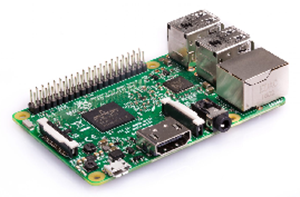
RASPBERRY PI 3 MODEL B Overview
The Raspberry Pi 3 Model B is a powerful third-generation single-board computer designed in a compact, credit-card-sized format. It builds on the success of earlier Raspberry Pi versions, offering a processor up to 10x faster than the first generation while maintaining the familiar board layout. This makes it an ideal platform for you looking for performance and reliability.
One of its standout features is built-in wireless LAN and Bluetooth connectivity, which allows for seamless integration into modern connected projects. Whether used for IoT applications, media centers, educational tools, or home automation, the Raspberry Pi 3 Model B provides versatility, cost-effectiveness, and robust performance.
If you are interested in purchasing the RASPBERRY PI 3 MODEL B, feel free to contact us for pricing and availability.
RASPBERRY PI 3 MODEL B Alternatives
|
Model |
CPU
/ Cores / Clock |
RAM |
Wireless
/ Bluetooth |
Storage
Options |
|
Orange Pi 3 |
Allwinner H6, quad-core
Cortex-A53 @ 1.8 GHz |
1-2 GB LPDDR3 |
WiFi + Bluetooth built in; 2.4/5
GHz support depending on variant |
microSD; some models include eMMC
flash (e.g. 8 GB) |
|
Orange Pi 3 LTS |
Same SoC (Allwinner H6, quad-core
A53 1.8 GHz) |
2 GB LPDDR3 |
WiFi + BT; onboard network
(Gigabit Ethernet) |
8 GB eMMC + microSD; multiple USB
ports including USB 3.0 in some variants |
|
Banana Pi M3 |
Octa-core (8 cores) that gives
more parallelism than Pi3’s quad core; cores are Cortex-A53 etc. |
~2 GB RAM in many versions |
WiFi 802.11n, Bluetooth 4.0 in
many models |
Onboard eMMC (8 GB in many cases)
+ microSD |
|
ASUS Tinker Board |
Rockchip RK3288, quad-core 1.8
GHz (Cortex-A17) |
2 GB RAM |
WiFi + Bluetooth included;
Ethernet is generally fast; note that wireless components may have different
performance than Pi3 in practice |
microSD; some variants come with
onboard eMMC depending on version (like Tinker Board S) |
RASPBERRY PI 3 MODEL B Board Layout Diagram

The Raspberry Pi 3 Model B is powered by a Broadcom BCM2837 processor, a 1.2 GHz quad-core ARM CPU, paired with 1GB of LPDDR2 RAM. This combination provides solid performance for lightweight computing, multimedia tasks, and embedded applications.
The board features multiple connectivity options, including USB 2.0 ports, a 10/100 Ethernet port, and a chip antenna for wireless LAN and Bluetooth. These interfaces enable the Raspberry Pi to integrate easily into both wired and wireless networks, supporting a wide range of projects.
For multimedia and expansion, the board provides HDMI output for display, a CSI camera connector, and a DSI display connector. It also includes an RCA video/audio jack, making it compatible with both modern and legacy devices. Storage is handled through a microSD card slot, while a 40-pin GPIO header allows for direct connection to sensors, modules, and other hardware.
RASPBERRY PI 3 MODEL B Specifications
|
Category |
Details |
|
Processor |
Broadcom BCM2837 chipset, 1.2GHz
Quad-Core ARM Cortex-A53 |
|
GPU |
Dual-Core VideoCore IV Multimedia
Co-Processor; supports OpenGL ES 2.0, hardware-accelerated OpenVG, and
1080p30 H.264 high-profile decode; capable of 1 Gpixel/s, 1.5 Gtexel/s, or 24
GFLOPs with texture filtering and DMA infrastructure |
|
Memory |
1GB LPDDR2 |
|
Wireless |
802.11 b/g/n Wireless LAN,
Bluetooth 4.1 (Classic and Low Energy) |
|
Operating System |
Boots from microSD card; supports
Linux distributions and Windows 10 IoT |
|
Dimensions |
85 × 56 × 17 mm |
|
Power Supply |
Micro USB socket, 5V / 2.5A |
RASPBERRY PI 3 MODEL B Features
• Quad-Core Processor: Powered by a 1.2GHz ARM Cortex-A53 CPU for smooth multitasking and faster performance.
• Graphics Support: Dual-core VideoCore IV GPU supporting OpenGL ES 2.0, OpenVG, and 1080p30 H.264 video decoding.
• Wireless Connectivity: Built-in 802.11 b/g/n Wi-Fi and Bluetooth 4.1 (Classic & Low Energy) for seamless connections.
• Memory: Equipped with 1GB LPDDR2 RAM to support a wide range of applications.
• Expandable Storage: Boots from microSD card, allowing flexible storage options and easy OS installation.
• HDMI Output: Full-size HDMI port for high-definition video and audio output.
• Camera & Display Support: Includes CSI camera connector and DSI display connector for multimedia projects.
• GPIO Header: 40-pin GPIO connector for sensors, modules, and hardware interfacing.
• USB Ports: Four USB 2.0 ports for peripherals such as keyboard, mouse, and storage devices.
• Ethernet Port: 10/100 Ethernet connectivity for reliable wired networking.
• Compact Design: Small form factor (85 × 56 × 17 mm) suitable for embedded and portable projects.
• Power Supply: Operates via 5V/2.5A micro USB power input for efficient energy usage.
RASPBERRY PI 3 MODEL B Benefits
• Low Cost: Affordable single-board computer.
• 10x Faster Processing: Quad-core ARM Cortex-A53 processor provides big performance improvement over the first-generation Raspberry Pi.
• Consistent Board Format: Maintains the standard Raspberry Pi form factor, ensuring compatibility with existing cases and accessories.
• Added Connectivity: Built-in wireless LAN and Bluetooth 4.1 for seamless integration into modern projects.
• Strong Community Support: Backed by a large global community offering tutorials, forums, and open-source resources.
• Extensive I/O Options: Includes GPIO pins, HDMI, CSI/DSI connectors, USB, and Ethernet for flexible expansion.
• Energy Efficient: Optimized power consumption for 24/7 operations and embedded systems.
• Educational Value: Widely used in schools and universities to teach computing, coding, and electronics.
RASPBERRY PI 3 MODEL B Applications
• IoT Projects – Connect and control smart devices wirelessly.
• Home Automation – Manage lights, appliances, and security systems.
• Media Center – Stream movies, music, and videos in HD.
• Retro Gaming – Play classic console games with emulators.
• Education – Teach coding, electronics, and computing basics.
• Robotics – Power and control robots and sensors.
• Network Server – Host lightweight web, file, or VPN servers.
• AI & ML – Run small-scale AI and voice/image recognition.
• Digital Signage – Display ads and information on screens.
• Camera Systems – Build CCTV or live-streaming setups.
• Portable Desktop – Use as a compact Linux/Windows PC.
• Industrial Monitoring – Collect and process sensor data.
• Weather Stations – Track and display live weather.
• DIY Projects – Create custom electronics and prototypes.
RASPBERRY PI 3 MODEL B Issues and Solution
• Overheating. The board may get hot under heavy use, so adding a heatsink or fan helps maintain stable performance.
• Insufficient Power Supply. Low-quality adapters can cause reboots, so always use a reliable 5V/2.5A power source.
• Limited RAM. With only 1GB of memory, multitasking can slow down, so lightweight OS or optimized apps are recommended.
• SD Card Corruption. Power loss may damage the card, so using quality Class 10 microSDs and backups prevents issues.
• Slow Storage Speed. MicroSD cards can be sluggish, so high-speed cards or USB boot options improve performance.
• Wi-Fi Connectivity Issues. Weak signals may cause dropouts, so positioning near the router or using Ethernet ensures stability.
• Limited Processing Power. Demanding tasks can overwhelm the CPU, so optimized software or upgrading to Pi 4 is better.
• Peripheral Compatibility. Some USB devices may fail, so powered hubs or supported software should be used.
RASPBERRY PI 3 MODEL B vs. Orange Pi 3 Comparison
|
Feature |
Raspberry
Pi 3 Model B |
Orange
Pi 3 |
|
CPU / Cores / Clock |
Broadcom BCM2837, Quad-core ARM
Cortex-A53 @ 1.2 GHz |
Allwinner H6, Quad-core ARM
Cortex-A53 @ 1.8 GHz |
|
RAM |
1 GB LPDDR2 |
Options: 1 GB or 2 GB DDR3 |
|
Wireless / Bluetooth |
WiFi 802.11 b/g/n (2.4 GHz),
Bluetooth 4.1 + BLE |
More modern Wi-Fi (802.11
a/b/g/n/ac), Bluetooth 5.0 in many variants |
|
Ethernet |
10/100 Mbps Ethernet (RJ-45) |
Gigabit Ethernet (GbE) ports in
some versions |
|
USB Ports |
4 × USB 2.0 ports |
Some USB 3.0 ports (e.g. 1 × USB
3.0 + others USB 2.0) in newer/or certain Orange Pi 3 versions |
|
Storage / Expansion |
MicroSD slot for OS and storage;
no onboard eMMC by default; support for camera (CSI) & display (DSI)
ports; 40-pin GPIO header |
MicroSD + optional eMMC storage
in some variants; M.2 / PCIe (in certain Orange Pi 3 or 3B versions) for
SSD/NVMe in newer models; 40-pin header in some versions; HDMI etc. |
|
GPU / Multimedia |
Broadcom VideoCore IV; supports
1080p video, HDMI output; composite video/audio; camera / display interface |
GPU: Mali-series (Mali-T720 etc
in Orange Pi 3), better support in some variants for higher resolution video;
hardware acceleration may vary |
|
Power Supply |
5V via micro-USB, 2.5A
recommended depending on peripherals |
Some versions use DC barrel or
USB / OTG power; power requirements may be higher if using USB3, SSD, etc. |
|
Size / Form Factor |
Approx. 85.6 mm × 56.5 mm;
standard Raspberry Pi layout |
Slightly larger in some variants;
layout differences; header pin count may differ (some Orange Pi 3 use 26-pin
or full 40-pin depending variant) |
|
Community / Software Support |
Very strong, broad OS support
(Raspberry Pi OS, many Linux distros), many tutorials, accessories etc. |
Decent support especially via
Armbian and community projects, but sometimes more fragmentation; driver
support and multimedia acceleration may need setup; certain hardware
revisions create compatibility issues. |
RASPBERRY PI 3 MODEL B Manufacturer
The Raspberry Pi 3 Model B, developed by the UK-based Raspberry Pi Foundation, is designed to make affordable computing accessible and promote computer science education. Manufactured through partners like Sony UK Technology Centre, it combines low-cost hardware with strong community support. This has enabled millions worldwide to learn programming, build projects, and innovate with technology.
Conclusion
The Raspberry Pi 3 Model B continues to stand out as an affordable, efficient, and widely supported computing platform. Its balance of performance, connectivity, and expandability makes it suitable for you. While alternatives exist with stronger hardware in some areas, the Raspberry Pi 3 Model B remains a dependable option thanks to its stability, community ecosystem, and broad range of applications.
 ABOUT US
Customer satisfaction every time. Mutual trust and common interests.
ABOUT US
Customer satisfaction every time. Mutual trust and common interests.
function test. The highest cost-effective products and the best service is our eternal commitment.
Hot Article
- LM358 Dual Operational Amplifier Comprehensive Guide: Pinouts, Circuit Diagrams, Equivalents, Useful Examples
- Are CR2032 and CR2016 Interchangeable?
- Understanding the Differences ESP32 and ESP32-S3 Technical and Performance Analysis
- Choosing the Right Battery: A Guide to AG4, LR626, LR66, 177/376/377, SR626, and SR626SW Equivalents
- BC547 Transistor Basics: Pinout, Application Circuits, Alternative/Complementary Models
- NPN vs. PNP: What's the Difference?
- esp32 vs stm32: which microcontroller is better for you?
- What Is a MOSFET and How It Works?
- Electrical Relay Basic: Working Operation, Types and Uses
- PNP Transistors: Structure, Working Principle and Application
 EUPEC T308N2400TOC Press-Pack Thyristor: Features, Specs and Uses
2025-09-16
 SB3100EB-G Datasheet, Alternatives, Applications & Features
2025-09-15
Frequently Asked Questions [FAQ]
1. Can the Raspberry Pi 3 Model B run Windows?
Yes, it supports Windows 10 IoT Core, but not the full desktop version of Windows.
2. Does Raspberry Pi 3 Model B support 4K video playback?
No, it supports up to 1080p video output, so 4K playback isn’t possible natively.
3. Can Raspberry Pi 3 Model B boot from USB?
Yes, with a firmware update, it can boot directly from a USB drive or USB hard disk.
4. How much power does Raspberry Pi 3 Model B consume?
On average, it consumes around 2.5–5 watts, making it very energy-efficient for 24/7 use.
5. Can Raspberry Pi 3 Model B run Android?
Yes, Android builds such as LineageOS are available, though performance varies by version.
Hot Part Number
 TPS5410MDREP
 08055U5R6BAT2A
 UCC2892PWR
 STM32L071RBT6TR
 CDC337DWR
 VI-JWB-MZ
 TRSF3243CPWR
 KP236N6165XTMA1
 TBJD476K016LSSB0023
 VT261WFQR-ADJ
- CC0603JRX7R8BB224
- GRM1886S1HR90CD01D
- LC75833W-TBM-E
- GRM1556S1H6R5DZ01D
- BDW84C
- 06035U5R6CAT2A
- BQ40Z80RSMT
- AM5728BABCXEA
- T491C475K025AT2478
- RGTVX6TS65DGC11
- TPS2044BD
- 12065C105JAT2A
- T491D336K025ATAUTO7280
- TS5A22364DGSR
- CGA2B2X8R1H152M050BE
- VE-220-IY
- X1205S8I
- CX0805MRX7R8BB223
- 08055U101KAT4A
- MCC40-10I08
- ADT7421ARMZ
- AK4340ET
- ATD97SC3202-X1AC
- CS5532ASZ
- CY14E256LA-SZ25X
- HD155141
- LM4880MX
- M60089H-0201Y
- MB89615-150
- S-93C56BD0I-T8T1GE
- MIP2K40MSSCF
- IC41C16100S-50K
- LV1605ML-MPB-E
- PSN76025A0
- VT1622AG
- ANA37326B
- AND0241RM27Q7
- CXD2913AQ
- CY7C1382D-200BZXC