4-Way Light Switches: A Simple Guide to Types and Applications
2025-11-20
4236
Catalog

What a 4-Way Switch Does?
A 4-way switch is a device that lets you control one light from three or more locations. It works together with two 3-way switches and installs between them. The 3-way switches handle the incoming power and the connection to the light, while the 4-way switch redirects the traveler wires that run between the two ends of the circuit.
Inside the switch, two travelers enter and two leave. The internal mechanism either keeps the travelers straight or crosses them. That’s the only function of a 4-way switch.
How a 4-Way Switch Circuit Operates?

Figure 2. The Switching Action Changes the Electrical Path
A multi-location lighting circuit works by changing the electrical path through the traveler wires. The 4-way switch is part of that path, but it never connects directly to the power source or the light fixture. It only affects how the travelers pass between the two 3-way switches.
How the circuit behaves:
• The first 3-way switch chooses which traveler carries power.
• That traveler pair reaches the 4-way switch.
• The 4-way keeps the pair aligned or crosses them.
• The travelers continue to the second 3-way switch.
• The second 3-way either passes power to the light or stops it.
Each switch in the chain can alter the path, which is why any one of them can turn the light on or off.
Comparing 4 Way and 3 Way Switches
|
Category |
4-Way
Switch |
3-Way
Switch |
|
Primary function |
Controls one light from three or
more locations |
Controls one light from two
locations |
|
Required components |
Two 3-way switches plus one or
more 4-way switches |
Two 3-way switches only |
|
Internal mechanism |
Switches between straight-through
or crossed traveler connections |
Selects which traveler receives
power from the common terminal |
|
Terminal count |
4 terminals + ground |
3 terminals + ground |
|
Terminal arrangement |
Traveler pairs grouped on
opposite sides |
Common on one side, travelers
opposite |
|
Traveler wires used |
Four traveler wires (two in, two
out) |
Two traveler wires |
|
Connection to power |
Never connects to power or the
light directly |
Connects to hot feed or light
load |
|
Electrical ratings |
15A or 20A; 120–277V AC |
15A or 20A; 120–277V AC |
|
Compatibility with smart systems |
Usually replaced by an auxiliary
or remote smart switch |
Often replaced by a “master”
smart switch |
|
Common terminal behavior |
Redirects traveler pairs; no
common terminal |
Sends power to one traveler at a
time |
|
Internal switching action |
DPDT |
SPDT |
|
Cable required |
4-conductor cable |
3-conductor cable |
|
Role in multi-location circuits |
Must sit between the two 3-way
switches |
Starts or ends the circuit |
|
Typical installation location |
Anywhere between the end switches |
Either end of the circuit |
|
Box size needs |
Often needs a deeper box for more
conductors |
Standard box usually fine |
|
Code considerations |
Same rules, but more conductors
affect box fill |
Must be grounded; box-fill rules
apply |
|
Common physical styles |
Toggle, rocker, push-button |
Toggle, rocker, smart master |
|
Typical cost range |
Slightly higher |
Lower |
|
Installation difficulty |
Higher; traveler grouping is
critical |
Moderate |
|
Maintenance notes |
Replace if traveler routing feels
inconsistent or switch becomes loose |
Replace if warm or intermittent |
Where a 4-Way Switch Makes Sense?
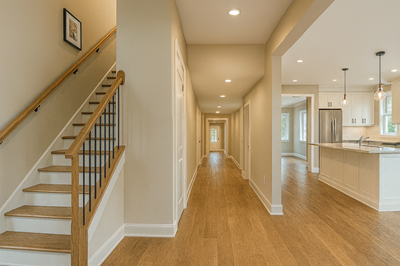
Figure 3. Rooms and a Staircase is ideal for a 4-Way Switch
Use a 4-way switch when a light needs to be controlled from more than two locations. Examples include:
• Multi-level staircases
• Rooms with several doorways
• Long hallways
• Open-concept layouts
• Garages with multiple entry points
This layout keeps you from having to cross a dark room to find a switch.
Benefits of a 4-Way Setup
Better control: You can turn lights on or off from several points, which helps in large or complex spaces.
Energy savings: It encourages people to turn lights off as they leave instead of searching for a single switch. Smart systems add schedules, occupancy sensing, and remote control.
Safety: Multiple access points reduce trips and falls in stairways, long corridors, and nighttime routes.
Smart home options: Many modern systems integrate with apps and voice control, offering dimming, scenes, and automation.
Common Types of 4-Way Switches
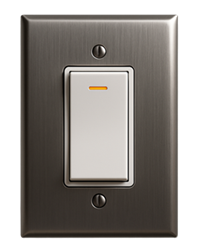
Figure 4. Rocker-Style 4-Way Light Switch
Rocker 4-Way Switch- A rocker switch uses a wide, flat paddle that you press at the top or bottom to turn the light on or off. It has a modern look and works well in updated interiors. Many rocker models include a small indicator light that glows when the switch is off, making them easier to find in dark hallways or large rooms. The smooth surface is also easy to use when your hands are full.
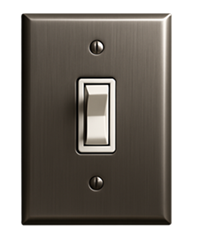
Figure 5. Toggle-Style Light Switch
Toggle 4-Way Switch- A toggle switch features the classic small lever that flips up or down. It is one of the most familiar and durable switch styles in residential spaces. Toggle 4-way switches come in a wide range of colors and grades, which makes them a good choice if you want to match existing switches throughout your home. Their simple design and reliability keep them popular.

Figure 6. Push-Button Style Light Switch
Push-Button 4-Way Switch- A push-button switch turns the light on or off with a press of the button. This style is often chosen for its traditional or decorative look, especially in older homes or period-inspired interiors. Some versions include a rotary dimmer, which lets you adjust brightness while keeping the push-on and push-off function. This combination is useful in rooms where flexible lighting levels are important.
How to Wire a 4 Way Switch?
A 4-way switch has two pairs of traveler terminals plus a ground. It does not connect to the power feed or the light fixture.
1. Turn off power and verify it’s off.
2. Identify the two terminal pairs on the switch (usually color-grouped).
3. Connect the traveler pair coming from the first 3-way switch to one side.
4. Connect the outgoing traveler pair to the other side and continue to the second 3-way switch.
5. Ground the switch.
For more than three control points, add additional 4-way switches between the same two 3-ways.
Common Wiring Mistakes
Not turning off power: Always shut off the breaker and test.
Misidentified wires: Label wires before moving anything and confirm with a meter.
Loose connections: Tighten terminal screws and secure wire nuts.
Mixed traveler pairs: This causes inconsistent behavior. Keep traveler pairs together.
Miswired common terminals on 3-ways: One must connect to the hot feed and the other to the light.
Poor grounding: Every switch and box needs a proper ground.
Troubleshooting a 4-Way Circuit
When a 4-way lighting setup isn’t working right, it usually comes down to a wiring mistake, a loose connection, or a bad switch. Using a simple step-by-step check makes the problem easier to find.
1. Turn off the power first
Go to the breaker and shut off the circuit. Make sure the power is really off before touching anything.
2. Check the 4-way switch wiring
Make sure each traveler wire is on the correct pair of terminals. If the traveler pairs are mixed, the light may flicker or work only sometimes.
3. Check the 3-way switches
Each 3-way switch has a common screw. One common should connect to the incoming hot wire, and the other should connect to the wire going to the light. If either one is wrong, the circuit won’t work the way it should.
4. Look for loose or worn connections
Loose screws, loose wire nuts, or damaged wires can cause the light to act unpredictably. Tighten everything and replace anything that looks worn out.
If a switch feels warm or makes a light buzzing noise, it’s likely going bad and should be replaced.
5. For smart switch setups
Make sure all the switches are made to work together. If they are, try resetting them or updating the software. Sometimes the issue is just communication between the devices.
Conclusion
A 4-way switch setup takes a little learning, but it can make a big difference in how comfortable and safe your home feels. Once you understand the basics, choosing the right switches and solving small issues becomes much simpler. With the right approach, this system gives you reliable lighting control from anywhere you need it.
 ABOUT US
Customer satisfaction every time. Mutual trust and common interests.
ABOUT US
Customer satisfaction every time. Mutual trust and common interests.
function test. The highest cost-effective products and the best service is our eternal commitment.
Hot Article
- LM358 Dual Operational Amplifier Comprehensive Guide: Pinouts, Circuit Diagrams, Equivalents, Useful Examples
- Are CR2032 and CR2016 Interchangeable?
- Understanding the Differences ESP32 and ESP32-S3 Technical and Performance Analysis
- Choosing the Right Battery: A Guide to AG4, LR626, LR66, 177/376/377, SR626, and SR626SW Equivalents
- BC547 Transistor Basics: Pinout, Application Circuits, Alternative/Complementary Models
- NPN vs. PNP: What's the Difference?
- esp32 vs stm32: which microcontroller is better for you?
- What Is a MOSFET and How It Works?
- Electrical Relay Basic: Working Operation, Types and Uses
- PNP Transistors: Structure, Working Principle and Application
 Squirrel Cage Induction Motor: Overview, How It Works, Applications
2025-11-20
 What Is a Synachronous Motor? A Simple Guide
2025-11-19
Frequently Asked Questions [FAQ]
1. Can I use a dimmer with a 4-way switch setup?
Yes, but only one dimmer should be installed, usually in place of one of the 3-way switches, and the dimmer must be rated for multi-location setups.
2. Do I need special wiring for a 4-way switch?
You need traveler wires running between all switches. Most setups require 3-conductor and 4-conductor cable depending on placement.
3. Can a 4-way switch work with LED bulbs?
Yes, as long as the switches and bulbs are compatible. Some LEDs may flicker if the switch or dimmer isn’t rated for them.
4. How can I tell if my home already has a 4-way switch?
A 4-way switch has four terminals plus a ground screw, unlike 3-way switches which have three terminals.
5. Can I replace a 4-way switch with a regular on/off switch?
No. Removing the 4-way switch breaks the traveler path, and the circuit will no longer work correctly from multiple locations.
6. How many 4-way switches can I install in one circuit?
You can add as many as needed. They simply connect in series between the two 3-way switches.
7. How long does it take to install a 4-way switch?
An experienced person might finish in 20–40 minutes. Beginners may take longer because of labeling and checking wires.
8. Is a 4-way switch safer than using plug-in remote controls?
Yes. Hardwired control is more reliable, doesn’t depend on batteries or wireless signals, and works even if power fluctuates.
Hot Part Number
 C1608X7R1E474K080AB
 C2012X5R0J225K085AA
 GRM0225C1E4R1CDAEL
 CC0603ZRY5V6BB474
 UMK316B7474ML-T
 08051U150GAT2A
 GRM1886S1H1R1CZ01D
 T495D476K010ATE080
 TPSE106M050R0500
 APA600-PQ208
- MT47H64M8CF-25E:G
- MC9S12XA512VAL
- IS42S16160B-6TL
- SI8233AD-D-IS
- RT0402DRD072K49L
- CY8C20140-SX2I
- VLF4012AT-100MR79
- SKM150GAL128D
- MC100ELT21DR2G
- MC14040BDTR2G
- LT3971AIMSE#PBF
- T491D107K006ZT7280
- UCC3818N
- INA240A2PW
- IXFP22N65X2M
- LT1999CMS8-50F#PBF
- SN74LVC32ADR
- AD5262BRUZ20-RL7
- ATMXT1666T2-C2U
- BU20360-48L
- ICS950218AFT
- MAX1779EUE+TG104
- MAX202ECWE-T
- MAX8860EUA27
- G5LA-1A4-12V
- HN29V256AOBBP-30
- M66445M1FA
- NFP-2200-A3
- PCD8010H/E31/4
- PEAD22653AFV1QH14NAR
- 6MBP150RTM060
- S29GL032A90FAIR43
- TMR3-1211
- T6TD7XBG-0001
- CS242C001PZ-TRSV
- IBMPPCBWY-GES72914
- SDINBDG4-8G-XI1
- XFL4020-332MEC
- GMOV-14D500K