14 vs 16 Gauge Wire Features, Uses, Advantages, and How to Choose One
2026-01-13
3027
Catalog
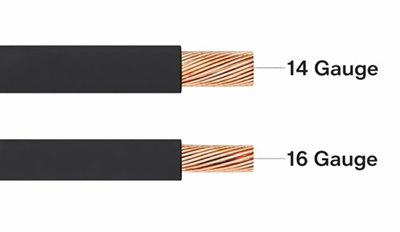
Figure 1. 14 vs 16 Gauge Wire
What Is a Wire Gauge?
Wire gauge is a way to describe how thick a wire is. The thickness is defined by the American Wire Gauge (AWG) standard, which uses numbers to represent wire size. In this system, a lower number means a thicker wire, while a higher number means a thinner one. For example, a 14-gauge wire has a larger diameter than a 16-gauge wire.
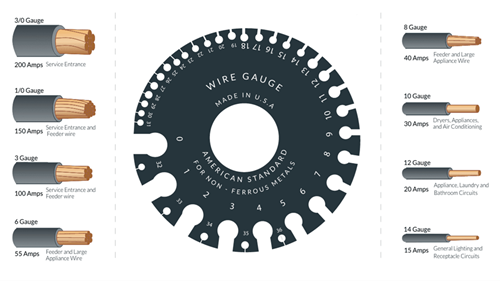
Figure 2. Wire Gauge Chart
The thickness of a wire affects how efficiently it carries electricity. Thicker wires allow current to move with less restriction, which reduces heat buildup and energy loss.
Wire size also influences performance over distance. As electricity travels through a wire, some energy is lost due to resistance. Using a thicker wire helps limit this loss, especially when the cable length increases.
What Is 14 Gauge Wire?
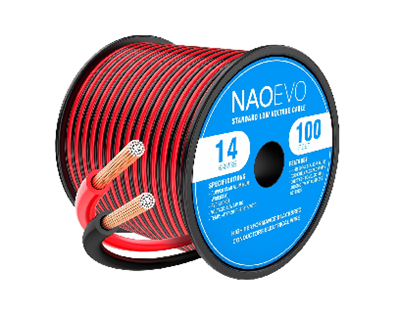
Figure 3. 14 Gauge Wire
14 gauge wire is a wire size used to describe how thick a wire is. It follows the American Wire Gauge (AWG) system, where a smaller number means a thicker wire. This means 14 gauge wire is thicker than 16 gauge wire.
14 gauge wire lets electricity flow more easily. This helps reduce heat and power loss, especially when electricity needs to travel a longer distance. For this reason, 14 gauge wire is chosen for jobs that need strong and steady power.
14 gauge wire is made from copper or copper-clad aluminum and can be found in different forms, such as solid or stranded wire. These options allow it to be used in many electrical and audio projects where safety and reliability are required.
14 gauge wire can carry more electrical current than thinner wires. Its thickness helps prevent overheating and keeps power flowing smoothly. It is a reliable wire for everyday and heavy-use applications. 14 gauge wire is best for long speaker cables, home electrical wiring, extension cords, and higher-power devices.
What Is 16 Gauge Wire?
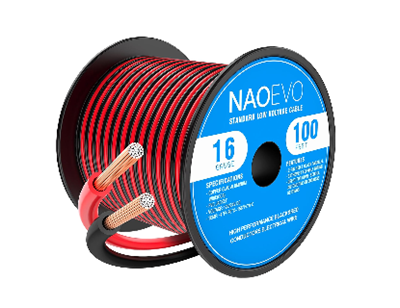
Figure 4. 16 Gauge Wire
16 gauge wire is a thinner and more flexible type of electrical wire that is easy to work with. Due to its smaller diameter, 16 gauge wire bends easily and is simple to route through corners, walls, or tight spaces. This makes it a convenient option for many everyday wiring tasks.
This wire size is designed for short cable runs and lower-power systems, especially in home audio setups. 16 gauge wire works well with speakers that do not require high power and are placed close to the amplifier. For these situations, 16 gauge wire provides enough electrical flow without excess bulk.
Another reason is 16 gauge wire chosen is its affordable cost. It delivers reliable performance while keeping material expenses low, which makes it a good option for budget-friendly projects. Despite being thinner, it still offers dependable conductivity. Its light weight and flexibility also make installation fast and simple.
14 vs 16 Gauge Wire Features
|
Feature |
14
Gauge Wire |
16
Gauge Wire |
|
Wire thickness |
Thicker wire |
Thinner wire |
|
Current capacity |
Carries more current |
Carries less current |
|
Electrical resistance |
Lower resistance |
Higher resistance |
|
Power handling |
Better for high-power
use |
Better for low-power
use |
|
Distance performance |
Works well for long
distances |
Best for short
distances |
|
Flexibility |
Stiffer and less
flexible |
More flexible and
easy to bend |
|
Weight |
Heavier |
Lighter |
|
Cost |
More expensive |
More affordable |
|
Installation |
Slightly harder to
install |
Easier and faster to
install |
14 vs 16 Gauge Wire Applications
14 Gauge Wire Applications
High-power speakers – Handles more power without overheating
Long speaker cable runs – Reduces power loss over long distances
Home theater systems – Provides stable sound for large setups
Home electrical wiring – Ideal for outlets and lighting circuits
Extension cords – Safe for carrying higher electrical loads
Workshop tools – Supports tools that need steady power
Outdoor lighting – Works well for longer outdoor wire runs
Appliances – Suitable for devices with higher power demand
16 Gauge Wire Applications
Small speakers – Works well for low-power audio systems
Short speaker runs – Suitable when the distance is limited
Desktop audio systems – Easy to install behind desks or PCs
Soundbars and TVs – Provides enough power for compact setups
Lamps and light fixtures – Ideal for low-power lighting
DIY projects – Easy to bend and route for small builds
Temporary wiring – Useful for quick or test connections
14 vs 16 Gauge Wire Advantages
14 Gauge Wire Advantages
• Can carry more electrical current safely
• Reduces energy loss and heat buildup
• Performs better over long distances
• Maintains steady power flow
• Suitable for large rooms and extended wiring
• More durable for demanding use
• Reduces risk of overheating
16 Gauge Wire Advantages
• Easier to bend and route through tight spaces
• Simple to handle during installation
• Budget-friendly for small projects
• Faster setup with less effort
• Works well when cable length is limited
• Fits easily in compact setups
• Ideal for low-power applications
Conclusion
Understanding the difference between 14 gauge and 16 gauge wire makes it easier to choose the right wire for your needs. Thicker wire, such as 14 gauge, is better for longer distances and higher power, while 16 gauge wire works well for short runs and low-power systems. By considering distance, power level, and installation needs, you can select a wire gauge that provides safe performance, reliable power delivery, and good sound quality.
 ABOUT US
Customer satisfaction every time. Mutual trust and common interests.
ABOUT US
Customer satisfaction every time. Mutual trust and common interests.
function test. The highest cost-effective products and the best service is our eternal commitment.
Hot Article
- LM358 Dual Operational Amplifier Comprehensive Guide: Pinouts, Circuit Diagrams, Equivalents, Useful Examples
- Are CR2032 and CR2016 Interchangeable?
- Understanding the Differences ESP32 and ESP32-S3 Technical and Performance Analysis
- Choosing the Right Battery: A Guide to AG4, LR626, LR66, 177/376/377, SR626, and SR626SW Equivalents
- BC547 Transistor Basics: Pinout, Application Circuits, Alternative/Complementary Models
- NPN vs. PNP: What's the Difference?
- esp32 vs stm32: which microcontroller is better for you?
- What Is a MOSFET and How It Works?
- Electrical Relay Basic: Working Operation, Types and Uses
- PNP Transistors: Structure, Working Principle and Application
 Choosing Between Lightning and USB-C: What You Need to Know
2026-01-13
 A Practical Guide to IPC-A-610 for PCB Assembly and Quality Control
2026-01-12
Frequently Asked Questions [FAQ]
1. Does thicker speaker wire improve sound quality?
Thicker wire does not change sound quality by itself, but it helps reduce power loss over long distances, which can prevent sound from weakening.
2. How long can speaker wire run before gauge matters?
Gauge becomes requisite when runs exceed about 10–15 meters, where thinner wire can cause noticeable power loss.
3. Is 14 gauge speaker wire overkill?
14 gauge wire can be unnecessary for short distances and low-power speakers, but it is ideal for long runs or high-power systems.
4. Can I mix 14 gauge and 16 gauge speaker wire?
Yes, but it’s best to keep the same gauge for both speaker channels to maintain balanced performance.
5. Is 16 gauge speaker wire safe to use?
Yes, 16 gauge wire is safe when used for short distances and low to medium power audio systems.
6. What happens if speaker wire is too thin?
Using wire that is too thin can cause power loss, heat buildup, and reduced speaker performance over longer distances.
Hot Part Number
 CX0805MRX7R8BB223
 CGA2B2X8R1H152M050BE
 08055U101KAT4A
 CC0603JRX7R8BB224
- 08055U5R6BAT2A
 06035U5R6CAT2A
 12065C105JAT2A
 GRM1886S1HR90CD01D
 TBJD476K016LSSB0023
 BDW84C
- X1205S8I
- VE-220-IY
- VI-JWB-MZ
- KP236N6165XTMA1
- MCC40-10I08
- T491D336K025ATAUTO7280
- TRSF3243CPWR
- AM5728BABCXEA
- LC75833W-TBM-E
- UCC2892PWR
- CDC337DWR
- T491C475K025AT2478
- TPS2044BD
- STM32L071RBT6TR
- TPS5410MDREP
- TS5A22364DGSR
- ADT7421ARMZ
- AK4340ET
- ATD97SC3202-X1AC
- CS5532ASZ
- CY14E256LA-SZ25X
- HD155141
- LM4880MX
- M60089H-0201Y
- MB89615-150
- S-93C56BD0I-T8T1GE
- VT261WFQR-ADJ
- MIP2K40MSSCF
- IC41C16100S-50K
- LV1605ML-MPB-E
- PSN76025A0
- BQ40Z80RSMT
- VT1622AG
- ANA37326B
- AND0241RM27Q7
- CXD2913AQ
- CY7C1382D-200BZXC
- GD25Q64CFIG
- RGTVX6TS65DGC11