Frequently Asked Questions
What are the key electrical characteristics of the ERJ-XGNF9762Y resistor, and how do they influence circuit design decisions for precision analog applications?
The ERJ-XGNF9762Y is a 97.6 kOhms ±1% thick film chip resistor with a temperature coefficient of ±200ppm/°C, operating across -55°C to 125°C. The ±1% tolerance means the actual resistance value will fall within 96.624 kOhms to 98.576 kOhms at 25°C, which is tight enough for many filter networks, biasing circuits, and transimpedance amplifier feedback paths where 1% precision is required. The ±200ppm/°C temperature drift translates to approximately ±19.52 ohms of resistance change across the full operating range, a consideration when the ERJ-XGNF9762Y is used in precision instrumentation or temperature-sensitive analog-to-digital converter front ends. For rail-to-rail applications spanning the full temperature range, designers should verify whether this drift remains acceptable for their gain accuracy or time-constant specifications.
Why is the 0.03W power rating of the ERJ-XGNF9762Y a limiting factor in certain circuit topologies, and how should designers account for thermal dissipation?
The ERJ-XGNF9762Y is rated at 0.03W (1/32W), which constrains current handling to approximately 17.6 mA maximum continuous current at full rated power before thermal derating becomes necessary. In high-impedance signal conditioning circuits, this presents no constraint because bias and feedback currents typically remain in the microampere range. However, when the ERJ-XGNF9762Y is positioned as a series element in signal attenuation networks or in pull-up/pull-down configurations where sustained currents exceed 10–15 mA, thermal derating curves must be consulted. The thick film composition of the ERJ-XGNF9762Y exhibits positive temperature coefficient behavior; resistive drift accelerates at higher ambient temperatures, particularly in confined PCB layouts lacking adequate thermal relief or airflow. Designers should calculate worst-case power dissipation early in the design phase to ensure the ERJ-XGNF9762Y remains within safe operating margins.
Is the ERJ-XGNF9762Y suitable for precision audio frequency filtering and active filter tuning applications?
The ERJ-XGNF9762Y's 1% tolerance and ±200ppm/°C temperature coefficient make it reasonably well-suited for audio-frequency filter design in consumer and professional equipment. For Sallen-Key or multiple-feedback filter topologies centered in the 1 kHz to 100 kHz range, the tolerance and thermal drift of the ERJ-XGNF9762Y will produce cutoff frequency variation of approximately ±1.5–2% across temperature extremes, which is acceptable for most audio applications where 3 dB bandwidth specification is ±10% or wider. However, when the ERJ-XGNF9762Y is used in precision measurement equipment, medical instrumentation, or adaptive filter tuning loops where frequency accuracy must remain within ±0.5%, a lower temperature coefficient resistor (such as ±25ppm/°C or ±50ppm/°C thick film options) should be selected instead. The ERJ-XGNF9762Y is therefore positioned for mainstream audio signal processing rather than precision audio metrology.
What design constraints does the 01005 (0402 Metric) package of the ERJ-XGNF9762Y impose on PCB layout and assembly processes?
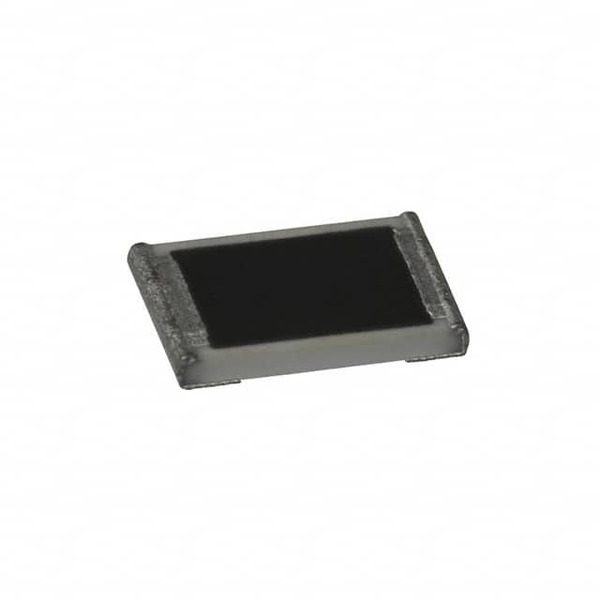
The ERJ-XGNF9762Y measures 0.016" × 0.008" (0.40 mm × 0.20 mm) with a seated height of 0.006" (0.15 mm), making it among the smallest passive components in high-volume production. This extreme miniaturization demands several layout considerations: PCB trace spacing must be tightly controlled to avoid solder bridges during reflow; pick-and-place machines require sub-millimeter placement accuracy; and inspection systems (optical or X-ray) must resolve the ERJ-XGNF9762Y reliably during manufacturing quality assurance. In hand-rework or prototyping scenarios, soldering the ERJ-XGNF9762Y presents difficulty; standard soldering iron tips often exceed component dimensions, raising risk of adjacent solder joint damage or thermal runaway of neighboring components. Assembly partners accustomed only to 0603 or larger packages may require process validation before first production build of boards using the ERJ-XGNF9762Y. For hobbyist or low-volume prototyping, substituting a larger package (0201, 0402, 0603) may improve manufacturability despite space trade-offs.
How does the thick film composition of the ERJ-XGNF9762Y affect its frequency response and high-frequency performance in RF or mixed-signal circuits?
The ERJ-XGNF9762Y employs thick film construction, which combines resistive paste fired onto a ceramic substrate. This approach exhibits excellent stability and tolerance precision but introduces parasitic inductance and capacitance that becomes problematic above approximately 100 MHz. For baseband analog circuits, precision measurement front ends, and low-frequency filtering, the ERJ-XGNF9762Y behaves as a pure resistance to well beyond audio frequencies. However, in RF circuits operating at gigahertz frequencies or mixed-signal circuits with fast transient edges (nanosecond-scale slew rates), the parasitic series inductance of the ERJ-XGNF9762Y can degrade impedance matching, introduce resonance peaks, and cause unexpected phase shift. In 5G baseband applications, millimeter-wave subsystems, or sub-GHz transceiver front ends, thin-film chip resistors (typically ±0.1% tolerance but with lower parasitics) or surface-mount network arrays with integrated termination may be preferred over the ERJ-XGNF9762Y. For DC and low-frequency (<50 MHz) signal paths, the ERJ-XGNF9762Y performs identically to precision alternatives.
Can the ERJ-XGNF9762Y be used as a pull-up or pull-down resistor in digital logic circuits, and what are the relevant design trade-offs?
The ERJ-XGNF9762Y's 97.6 kOhms resistance value positions it in the mid-range for digital pull-up/pull-down applications. In CMOS logic circuits operating at 3.3V or 5V, the ERJ-XGNF9762Y provides moderate current sourcing (approximately 34 µA at 3.3V, 51 µA at 5V) when a logic output drives low. This current level is sufficient for direct connection to microcontroller input pins but insufficient for driving external loads or multiple gate inputs in parallel. For I2C bus pull-ups, however, the ERJ-XGNF9762Y exceeds the typical 10 kOhm recommendation; bus slope-rate performance and noise immunity will degrade, and capacitive loading on the bus may limit I2C clock frequency below 400 kHz standard speed. When the ERJ-XGNF9762Y is used in open-drain or open-collector output applications, the reduced pull-up current necessitates longer settling times and makes the circuit susceptible to crosstalk. For digital applications requiring reliable pull-ups, a lower value (4.7 kOhm to 10 kOhm) is generally preferred; the ERJ-XGNF9762Y is better reserved for bias or precision feedback roles where higher impedance is an advantage.
What is the moisture sensitivity level (MSL) of the ERJ-XGNF9762Y, and does it affect storage, handling, or manufacturing processes?
The ERJ-XGNF9762Y carries an MSL (Moisture Sensitivity Level) rating of 1 (Unlimited), which is the least restrictive category in IPC-A-610 moisture sensitivity classifications. An MSL-1 rating indicates that the ERJ-XGNF9762Y absorbs negligible moisture during storage and handling, requires no dry-pack baking before assembly, and imposes no time-to-reflow constraints. This characteristic stems from the thick film resistor's ceramic substrate and sealed construction, which naturally repel moisture ingress. Unlike MSL-2 and MSL-3 components that demand desiccant storage, humidity monitoring, and timed exposure limits before reflow soldering, the ERJ-XGNF9762Y can be stored in standard ambient warehouse conditions indefinitely without pre-bake requirements. This attribute simplifies supply chain logistics and reduces manufacturing complexity, making the ERJ-XGNF9762Y particularly advantageous in high-volume production environments or contract manufacturing partnerships where stringent moisture control adds cost and scheduling risk.
Is the ERJ-XGNF9762Y compliant with RoHS, REACH, and other regulatory frameworks relevant to consumer and industrial electronics?
The ERJ-XGNF9762Y is RoHS3 Compliant, REACH Unaffected, with ECCN classification EAR99 and HTSUS tariff code 8533.21.0030. RoHS3 compliance confirms that the ERJ-XGNF9762Y contains no lead (Pb), cadmium (Cd), mercury (Hg), hexavalent chromium (Cr6+), polybrominated biphenyls (PBBs), or polybrominated diphenyl ethers (PBDEs) above regulatory thresholds, permitting unrestricted use in European Union markets and equivalent regulatory jurisdictions. REACH Unaffected status means the ERJ-XGNF9762Y falls outside the REACH Candidate List of Substances of Very High Concern, eliminating additional substance-level compliance documentation. EAR99 classification indicates that the ERJ-XGNF9762Y is not subject to U.S. export licensing requirements, simplifying international distribution. For design engineers responsible for product compliance, the ERJ-XGNF9762Y can be directly specified in Bill of Materials without triggering additional regulatory review or redesign cycles related to material content or export control. Manufacturers can confidently incorporate the ERJ-XGNF9762Y into consumer products, medical devices, and industrial control systems destined for global markets.
How does the ±1% tolerance of the ERJ-XGNF9762Y compare to alternative resistor grades, and when should higher-precision options be considered?
The ERJ-XGNF9762Y offers ±1% tolerance, placing it in the mid-precision category between commodity ±5% resistors and high-precision ±0.1% film resistors. For many analog circuits—transimpedance amplifiers, precision gain networks, filter tuning, and sensor signal conditioning—the ±1% accuracy of the ERJ-XGNF9762Y directly translates to ±1% error in gain, attenuation, or frequency response unless calibration or trimming occurs downstream. In 12-bit analog-to-digital converter front ends targeting ±0.02% accuracy (half of LSB error), the ±1% tolerance of the ERJ-XGNF9762Y would consume the entire error budget without margin. In such cases, ±0.5% or ±0.1% thin-film resistors become necessary, accepting higher cost and longer lead times. Conversely, in consumer audio amplifiers, basic filtering, or indicator circuit biasing where ±5–10% accuracy is acceptable, the ERJ-XGNF9762Y provides unnecessary precision; cheaper ±5% alternatives reduce bill of materials cost. The design decision hinges on whether the circuit's output specification requires ±1% or better accuracy; if so, the ERJ-XGNF9762Y is cost-effective. If the circuit tolerates ±5% or wider variation, the ERJ-XGNF9762Y represents overspecification.
What reliability and lifetime considerations apply to the ERJ-XGNF9762Y in automotive, industrial control, or mission-critical applications?
The ERJ-XGNF9762Y, as a passive thick film resistor, exhibits excellent long-term stability and is suitable for harsh industrial and automotive environments within its operating temperature range of -55°C to 125°C. Thick film resistors demonstrate minimal drift over decades when operated within rated power and temperature limits; the ERJ-XGNF9762Y's ±200ppm/°C temperature coefficient is stable and predictable rather than degrading progressively. In automotive underhood applications where sustained temperatures approach 125°C, humidity ingress risk is low due to the ERJ-XGNF9762Y's MSL-1 classification and sealed substrate. However, reliability depends on proper thermal design: if PCB layout concentrates heat-generating components adjacent to the ERJ-XGNF9762Y, localized temperature can exceed specifications, accelerating drift and reducing component lifetime. In safety-critical systems (ABS, airbag controllers, engine control modules), the ERJ-XGNF9762Y is acceptable as a non-critical signal conditioning or filtering element but should not serve as a sole-source protective element without redundancy or monitoring. Extended temperature cycling (-55°C to +125°C) can induce solder joint stress; conformal coating or potting of the ERJ-XGNF9762Y assembly may be warranted if vibration or moisture condensation is expected during storage or field operation.
How should designers approach component substitution or migration when transitioning from other resistor types to the ERJ-XGNF9762Y?
Migration to the ERJ-XGNF9762Y from alternative resistor architectures requires careful verification of three parameters: resistance value tolerance match, temperature coefficient compatibility, and power dissipation headroom. If the design currently uses a ±5% resistor and is being revised to use the ERJ-XGNF9762Y's ±1% tolerance, circuit performance (gain, frequency response, bias accuracy) will improve but may require recalibration of downstream signal chains or firmware constants; thorough bench testing is prudent before production transition. If transitioning from a film resistor with ±25ppm/°C temperature coefficient to the ERJ-XGNF9762Y's ±200ppm/°C thick film specification, temperature-dependent performance (filter Q, amplifier gain drift) will degrade; temperature compensation or tighter temperature control may be necessary. Conversely, if the previous design used a smaller 01005 package that proved difficult to assemble, the ERJ-XGNF9762Y remains equally challenging; package change provides no improvement. Physical footprint compatibility must be verified: the 01005 (0402 Metric) is industry-standard, but legacy designs using 1206 or 0805 packages require complete PCB re-layout. Before committing to ERJ-XGNF9762Y substitution in production, prototype units should be built, tested across full temperature and supply ranges, and verified for signal integrity and thermal performance.
In what signal conditioning and sensor front-end applications is the ERJ-XGNF9762Y most effective, and where are alternative resistor values or types preferable?
The ERJ-XGNF9762Y's 97.6 kOhm value, combined with ±1% tolerance and low power rating, makes it well-suited for high-impedance signal paths such as transimpedance amplifier feedback networks, non-inverting amplifier gain setting, precision current-to-voltage conversion in photodiode circuits, and instrumentation amplifier gain programming. In photodiode transimpedance amplifier designs, the ERJ-XGNF9762Y provides feedback impedance in the 100 kOhm range typical for visible-light photodiodes operating at moderate illumination; the ±1% tolerance ensures predictable transimpedance gain (typically 1–10 MV/A range), and the low power dissipation avoids thermal noise generation from the feedback resistor itself. In precision temperature sensor signal conditioning, where a 100 kOhm thermistor or RTD is linearized via ratiometric measurement, the ERJ-XGNF9762Y serves as a reference or scaling resistor with sufficient accuracy for 0.1–0.5°C temperature resolution. However, in audio microphone preamplifiers where the input impedance often spans 1–10 MOhm and noise performance is critical, a lower resistance value would be preferred to maintain adequate input-referred noise floor; in this scenario, an alternative thin-film resistor with ±0.1% tolerance and superior noise characteristics would outperform the ERJ-XGNF9762Y. For strain-gauge bridge excitation or load-cell signal conditioning, lower resistance pull-ups and excitation loads are typical; the ERJ-XGNF9762Y is unsuitable unless part of a voltage divider network.