Frequently Asked Questions
What are the key design considerations when selecting the RN73H2ETTD3090F50 for precision signal conditioning circuits?
The RN73H2ETTD3090F50 is a metal film resistor with ±1% tolerance and a temperature coefficient of ±50ppm/°C, making it suitable for applications requiring stable voltage dividers, feedback networks, and impedance matching. The 309 Ohm resistance value combined with tight tolerance means the resistor will maintain predictable circuit behavior across temperature variations from -55°C to 155°C. In precision analog circuits—such as sensor signal conditioning or operational amplifier feedback paths—the RN73H2ETTD3090F50 minimizes gain errors and drift that would otherwise accumulate from looser tolerance resistors. The 0.25W power rating requires careful thermal management; circuit designers must verify that actual power dissipation through the RN73H2ETTD3090F50 remains well below its rated capacity to preserve both tolerance accuracy and long-term reliability.
How does the automotive AEC-Q200 qualification of the RN73H2ETTD3090F50 influence component selection for under-hood and high-reliability applications?
The RN73H2ETTD3090F50 carries AEC-Q200 qualification, which certifies the resistor has undergone rigorous thermal cycling, mechanical shock, humidity resistance, and long-term stability testing to automotive industry standards. This qualification is mandatory for components used in safety-critical automotive circuits such as engine control modules, airbag systems, and battery management systems. Beyond automotive, the AEC-Q200 rating on the RN73H2ETTD3090F50 signals reliability suitable for industrial equipment operating in harsh thermal and vibration environments. However, AEC-Q200 qualification does not automatically guarantee suitability for all applications; designers must still verify that the RN73H2ETTD3090F50's operating temperature range (-55°C to 155°C), moisture resistance, and power dissipation limits align with their specific thermal and environmental profiles.
What thermal management strategies are necessary when the RN73H2ETTD3090F50 is used in high-frequency switching or power conversion circuits?
The RN73H2ETTD3090F50 has a 0.25W power rating, which limits its use in high-current or high-frequency applications where continuous power dissipation approaches or exceeds this threshold. In switching power supplies or PWM circuits where the RN73H2ETTD3090F50 might serve as a sense resistor or feedback component, designers must calculate steady-state and transient power dissipation carefully. If dissipation approaches 0.25W, the resistor's junction temperature will rise; since the RN73H2ETTD3090F50 has a temperature coefficient of ±50ppm/°C, elevated operating temperature degrades tolerance accuracy and can introduce nonlinear drift over time. Thermal management practices include mounting the RN73H2ETTD3090F50 on copper planes for heat spreading, ensuring adequate air circulation around the component, and performing transient thermal simulations to predict peak junction temperatures during worst-case operating scenarios.
How does the ±1% tolerance of the RN73H2ETTD3090F50 compare to alternative resistor options in precision current-sensing applications?
The RN73H2ETTD3090F50 provides ±1% tolerance, which is significantly tighter than carbon film resistors (typically ±5–10%) but comparable to other metal film resistors in the same size class. In precision current-sensing circuits—such as load monitoring or battery charging applications—the RN73H2ETTD3090F50's ±1% tolerance directly translates to measurement accuracy. For example, a 309 Ohm sense resistor with ±1% tolerance will exhibit a resistance variation of ±3.09 Ohms, affecting sensed voltage and downstream ADC measurements by approximately ±1%. If the application requires better than ±1% accuracy, designers would need to either use tighter-tolerance resistors (±0.1% or ±0.5%, typically available in larger package sizes) or implement post-calibration and temperature compensation in firmware. The RN73H2ETTD3090F50 represents a practical balance between cost, performance, and thermal stability for mid-range precision applications.
What is the impact of the RN73H2ETTD3090F50's temperature coefficient on circuit performance across automotive operating conditions?
The RN73H2ETTD3090F50 has a temperature coefficient of ±50ppm/°C, meaning its resistance changes by approximately ±50 parts per million for each degree Celsius of temperature change. Across the RN73H2ETTD3090F50's full operating range (-55°C to 155°C, a span of 210°C), the resistor value can drift by up to approximately ±1.05% due to temperature effects alone. In automotive applications operating from -40°C (cold engine start) to +125°C (under-hood ambient), this represents roughly ±0.825% drift. For feedback networks in voltage regulators or precision analog stages, this drift can degrade regulation accuracy and introduce linearity errors. Designers must account for this temperature coefficient when calculating component tolerances and setting calibration margins. In critical circuits, active temperature compensation or selection of resistor pairs with matched temperature coefficients (available from KOA Speer Electronics in specialized series) may be necessary to minimize offset and gain drift in the RN73H2ETTD3090F50-based circuit.
Can the RN73H2ETTD3090F50 be substituted with higher-power alternatives without redesigning the PCB layout?
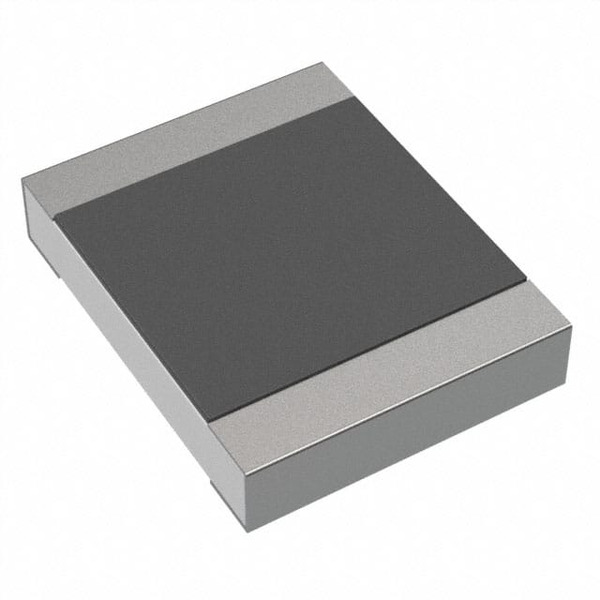
The RN73H2ETTD3090F50 is packaged in a 1210 (3225 Metric) form factor, rated at 0.25W. Higher-power resistors with the same 309 Ohm value are typically available in larger packages (such as 2010 or 2512) that can dissipate 0.5W, 0.75W, or 1W. Direct substitution of a higher-power resistor into a 1210 footprint is not possible without PCB redesign; the RN73H2ETTD3090F50's footprint is geometrically fixed at approximately 3.20mm × 2.50mm. However, if increased power handling is needed, designers can relocate to a larger package footprint, which will occupy additional board real estate. The RN73H2ETTD3090F50's metal film construction and AEC-Q200 rating mean that uprating to a larger package from the same KOA Speer RN73H series typically maintains tolerance, temperature coefficient, and reliability characteristics. Before migrating to higher power ratings, engineers should verify that the larger footprint does not violate space constraints or create thermal management issues elsewhere on the PCB.
How does moisture sensitivity level (MSL 1) of the RN73H2ETTD3090F50 affect storage, handling, and assembly workflows?
The RN73H2ETTD3090F50 has a Moisture Sensitivity Level (MSL) rating of 1, which is the lowest moisture sensitivity category. MSL 1 means the RN73H2ETTD3090F50 can be stored at room temperature and humidity indefinitely without requiring desiccant packaging or bake-out procedures before soldering. This classification significantly reduces supply chain complexity, assembly logistics, and component handling risk compared to higher-MSL components (such as BGA packages rated MSL 3 or 4). The RN73H2ETTD3090F50's low MSL is attributable to its metal film construction and robust 1210 package design, which inherently resist moisture absorption. For manufacturers or contract assembly facilities, this means the RN73H2ETTD3090F50 can be integrated into standard pick-and-place workflows without specialized environmental controls. However, standard moisture protection during shipping and storage is still recommended to preserve solderability and ensure optimal manufacturing yields.
What circuit topologies benefit most from the RN73H2ETTD3090F50's combination of tolerance, temperature stability, and automotive qualification?
The RN73H2ETTD3090F50 is well-suited for analog signal conditioning chains in automotive systems, particularly voltage dividers for sensor interface circuits (such as thermistor linearization networks or pressure sensor bridges) where the RN73H2ETTD3090F50's ±1% tolerance and ±50ppm/°C coefficient maintain predictable gain across temperature. In battery management systems, the RN73H2ETTD3090F50 can serve as feedback resistors in precision voltage monitors or current-sense amplifier circuits; the AEC-Q200 rating ensures reliability under thermal cycling. In infotainment or body control modules, the RN73H2ETTD3090F50 works as pull-up or pull-down resistors in communication networks (CAN, LIN), where stability minimizes signal integrity issues. Conversely, the RN73H2ETTD3090F50's 0.25W power limit makes it unsuitable for high-current load resistors or power dissipation paths; designers would select larger packages for those roles. The RN73H2ETTD3090F50 excels in precision analog front-end applications where stability and reliability are prioritized over power handling.
How do the RN73H2ETTD3090F50's specifications compare to thin-film resistors in precision measurement applications?
The RN73H2ETTD3090F50 is a metal film resistor with ±1% tolerance and ±50ppm/°C temperature coefficient. Thin-film resistors (typically available in 0603 or 0805 packages) often achieve ±0.1% tolerance and ±25ppm/°C or better temperature coefficients but occupy less board area and operate at lower power levels (typically 0.1W or less). In precision measurement systems requiring measurement uncertainty below ±1%, thin-film alternatives may be necessary. However, the RN73H2ETTD3090F50's 1210 package and 0.25W rating make it suitable for applications where moderate precision (±1%) is sufficient and power dissipation must exceed what thin-film resistors can safely handle. The RN73H2ETTD3090F50 also offers lower cost than thin-film alternatives while maintaining automotive-grade reliability. Engineers should select the RN73H2ETTD3090F50 when the application requires a balance of precision, power handling, and cost; if sub-±1% accuracy and extremely low temperature drift are mandatory, thin-film resistors become the better choice despite their smaller size and lower power rating.
What are the long-term reliability considerations when the RN73H2ETTD3090F50 is used in extended temperature cycling automotive environments?
The RN73H2ETTD3090F50's AEC-Q200 qualification certifies it has passed 1000 hours of temperature cycling testing between -40°C and +125°C, demonstrating resistance to thermal fatigue and mechanical stress. However, real-world automotive applications may exceed these test parameters; engine compartment temperatures can reach 155°C (the RN73H2ETTD3090F50's maximum rating) during transient conditions, and thermal cycling frequency in stop-start hybrid vehicles is higher than baseline AEC-Q200 protocols. Over years of service, the RN73H2ETTD3090F50's metal film layer may exhibit cumulative drift due to thermal stress, potentially degrading the resistor's tolerance accuracy from ±1% toward the lower specification limit. Designers should account for aging and design circuits with sufficient margin; for example, in voltage dividers where the RN73H2ETTD3090F50 sets a reference voltage, an additional ±0.5% design margin accounts for long-term drift. System-level diagnostics or calibration firmware can also compensate for RN73H2ETTD3090F50 drift over time. The RN73H2ETTD3090F50 is reliable for automotive use, but end-of-life performance should be explicitly validated in safety-critical circuits.
Does the RN73H2ETTD3090F50's RoHS3 compliance and REACH status affect its use in regulated consumer and industrial markets?
The RN73H2ETTD3090F50 is RoHS3 compliant and REACH unaffected, meaning it does not contain restricted substances (lead, cadmium, mercury, hexavalent chromium, PBBs, PBDEs) beyond permitted thresholds and is not subject to REACH candidate substance restrictions. RoHS3 compliance is mandatory for products sold in the European Union and increasingly expected in North America and Asia-Pacific markets. The RN73H2ETTD3090F50's compliance status simplifies supply chain qualification and eliminates the need for alternative sourcing; the component can be directly integrated into designs targeting regulated markets without substitution or design revision. The REACH unaffected status means no additional substance declarations, safety data sheets, or material composition audits are required beyond standard component qualification. For contract manufacturers and system integrators, the RN73H2ETTD3090F50's regulatory status reduces compliance documentation overhead. Designers should still verify that solder alloys and assembly processes used with the RN73H2ETTD3090F50 also comply with RoHS and REACH requirements, as the component's compliance does not guarantee system-level compliance if other materials are non-conformant.
What parasitic effects should be considered when integrating the RN73H2ETTD3090F50 into high-frequency or wide-bandwidth analog circuits?
The RN73H2ETTD3090F50, as a discrete 1210 resistor, exhibits parasitic inductance and capacitance due to its physical structure and lead geometry. Typical parasitic inductance for 1210 resistors ranges from 0.5 to 1.5 nanohenries (nH), which becomes significant in circuits operating above 10 MHz where the RN73H2ETTD3090F50's inductance begins to create impedance variation across frequency. In feedback networks for high-speed op-amps or transimpedance amplifiers, parasitic inductance on the RN73H2ETTD3090F50 can introduce peaking, stability issues, or bandwidth limitations. Parasitic capacitance (typically 0.1 to 0.5 picofarads) affects the RN73H2ETTD3090F50's high-frequency impedance and can couple noise into sensitive signal paths. For circuits operating below 1 MHz—such as sensor interfaces or battery management systems—the RN73H2ETTD3090F50's parasitic effects are negligible. Designers working with wideband circuits (MHz and above) should consider surface-mount resistor networks or matched pairs with minimized inductance, or account for the RN73H2ETTD3090F50's parasitic impedance in filter and compensation calculations.
How should the RN73H2ETTD3090F50 be selected and validated for applications where resistor tolerance stack-up could affect system performance?
In multi-stage analog circuits, individual component tolerances accumulate to create overall system tolerance uncertainty. For a circuit with ten 309 Ohm resistors from the RN73H2ETTD3090F50 product line—such as a resistor ladder network or precision divider chain—worst-case tolerance stack-up using RSS (root sum square) analysis yields approximately ±3.2% overall error at one sigma. Using worst-case linear analysis yields ±10%, which is overly conservative for most applications. When the RN73H2ETTD3090F50 is selected for such circuits, designers should employ statistical tolerance analysis and component matching strategies to manage cumulative errors. Pairing resistors from the same manufacturing batch or using dual-resistor networks reduces tolerance uncertainty. In precision instrumentation, designers sometimes bin and sort RN73H2ETTD3090F50 components before assembly, selecting only those resistors within a tighter tolerance band (e.g., ±0.5%) to improve stack-up performance. The RN73H2ETTD3090F50's ±1% specification is adequate for most analog circuit design; however, in precision applications with tight tolerance budgets, additional component selection rigor or circuit-level calibration becomes necessary.
What is the failure mechanism and expected lifetime of the RN73H2ETTD3090F50 under continuous high-power operation near its 0.25W rating?
The RN73H2ETTD3090F50 is rated at 0.25W, but continuous operation at full power rating causes junction temperature rise that accelerates resistor degradation mechanisms. Metal film resistors like the RN73H2ETTD3090F50 degrade through thermal diffusion of the metal film layer, causing resistance shift and increased noise. Operating the RN73H2ETTD3090F50 at 80–100% of its power rating generates significant heat; depending on ambient temperature, mounting context, and PCB thermal design, the RN73H2ETTD3090F50's junction temperature could reach 100–130°C even if ambient is 25°C. At elevated junction temperatures, the RN73H2ETTD3090F50's metal film structure experiences accelerated aging, potentially reducing expected lifetime from many years to months or years. Industry reliability models suggest that for every 10°C increase above rated thermal conditions, component lifetime is halved. Designers should operate the RN73H2ETTD3090F50 at 50–70% of its power rating to achieve extended lifetime; if higher power is required, selecting a larger package (0.5W or 1W) from the KOA Speer RN73H series is the appropriate design approach. The RN73H2ETTD3090F50's AEC-Q200 rating assumes operation within thermal limits, and exceeding these limits voids reliability assurances.