Frequently Asked Questions
What makes the RN732BTTD1912C25 suitable for precision analog signal conditioning circuits that require tight tolerance resistors?
The RN732BTTD1912C25 is a thin-film resistor with ±0.25% tolerance and a temperature coefficient of ±25ppm/°C, making it well-suited for analog applications where signal accuracy directly affects system performance. In instrumentation amplifiers, transimpedance stages, and precision voltage dividers, the RN732BTTD1912C25's low tolerance drift ensures that gain errors and reference voltage shifts remain predictable across operating temperature ranges. The 19.1 kOhm resistance value and 0.125W power rating position this component in the mid-impedance, low-power domain typical of sensor interfaces and data acquisition front-end stages.
How does the temperature coefficient of the RN732BTTD1912C25 affect circuit behavior in industrial control systems operating across -55°C to 155°C?
The RN732BTTD1912C25 exhibits a temperature coefficient of ±25ppm/°C, which means its 19.1 kOhm nominal value shifts by approximately ±48 ohms over the full -55°C to 155°C operating range (a 210°C span). In proportional-integral-derivative (PID) feedback networks or threshold detection circuits, such drift can introduce systematic errors in setpoint calibration and response timing. For industrial applications, the RN732BTTD1912C25's temperature behavior requires either active compensation in the signal chain or acceptance of calibration tolerance. In contrast, applications with passive filtering or non-critical impedance matching are less sensitive to this drift.
Why is the moisture-resistant thin-film construction of the RN732BTTD1912C25 relevant for automotive underhood and industrial outdoor installations?
The RN732BTTD1912C25 combines a thin-film resistive element with moisture-resistant coating and carries MSL (Moisture Sensitivity Level) 1, indicating unlimited shelf life and no moisture preconditioning required before assembly. This design choice prevents long-term drift caused by electromigration and corrosion at the resistive film surface—a critical failure mode in high-humidity, salt-air, or thermal-cycling environments typical of automotive engine compartments and outdoor industrial equipment. The RN732BTTD1912C25's thin-film technology also provides superior frequency stability compared to wirewound resistors, reducing parasitic inductance in high-speed signal paths and filtering stages.
How should the 0.125W power rating of the RN732BTTD1912C25 be evaluated when selecting resistors for transducer signal conditioning in 4-20mA current-loop systems?
In a 4-20mA transmitter, the RN732BTTD1912C25 dissipates between 0.003W (at 4mA) and 0.0077W (at 20mA) when the 19.1 kOhm resistor is used as a transducer load or reference element. The 0.125W rating provides a safety margin of roughly 13–40×, ensuring reliable operation without thermal stress and minimizing self-heating effects that could degrade the ±0.25% accuracy specification. However, in harsh automotive or industrial environments where ambient temperature approaches 155°C, the RN732BTTD1912C25's thermal derating curves must be consulted to confirm that actual power dissipation does not exceed derated limits.
What design trade-offs should be considered when choosing between the RN732BTTD1912C25 and wirewound resistors for precision reference networks in data acquisition systems?
The RN732BTTD1912C25 thin-film construction offers lower parasitic inductance (typically <0.5nH), lower frequency-dependent impedance variation, and inherently lower noise than wirewound alternatives at the same power rating. These characteristics make the RN732BTTD1912C25 superior for wideband signal conditioning and high-resolution ADC front-end biasing. Wirewound resistors, by contrast, typically offer lower temperature coefficients (±50–100ppm/°C vs. the RN732BTTD1912C25's ±25ppm/°C) but introduce resonance peaks and frequency-dependent reactance that complicate filter design. For DC and low-frequency (<1MHz) analog signal paths requiring tight tolerance, the RN732BTTD1912C25 is the preferred choice; wirewound designs are seldom justified unless thermal stability across extreme temperature ranges is the dominant requirement.
Is the RN732BTTD1912C25 appropriate for high-frequency filtering and impedance matching networks in RF and microwave circuits?
The RN732BTTD1912C25 is not well-suited for RF and microwave applications above a few hundred megahertz. Although its thin-film construction minimizes parasitic inductance relative to wirewound designs, the 1206 (3216 Metric) package introduces significant lead inductance and package parasitics that cause impedance deviation and phase shift at RF frequencies. Additionally, thin-film resistor frequency response becomes unpredictable in the GHz regime due to distributed RC effects. For precision impedance matching and filtering in RF circuits, specialized thin-film networks or surface-mount chip resistor arrays with controlled layout and lower parasitic inductance are required. The RN732BTTD1912C25 is optimized for sub-100MHz analog signal processing.
How does the 1206 package size and geometry of the RN732BTTD1912C25 affect PCB layout and thermal management in densely populated boards?
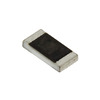
The RN732BTTD1912C25 occupies a 0.126" × 0.063" footprint (3.20mm × 1.60mm) with a maximum seated height of 0.028" (0.70mm), making it compatible with standard surface-mount PCB assembly and allowing tight component spacing. However, in high-density designs where multiple precision resistors are clustered, thermal coupling between components must be considered. If the RN732BTTD1912C25 is placed adjacent to heat-generating elements (switching regulators, power transistors), localized temperature gradients can introduce differential thermal drift across the resistor array. Proper thermal management through controlled airflow, thermal vias, or spacing geometry is necessary to maintain the stated ±25ppm/°C performance. For applications requiring absolute accuracy, the RN732BTTD1912C25 should be thermally isolated or placed in temperature-controlled zones.
What is the practical difference between the RN732BTTD1912C25 and the RN73R2BTTD1912C25 substitute listed in the component datasheet?
The RN73R2BTTD1912C25 substitute is the film-resistor equivalent within the same RN73 series, offering identical tolerance (±0.25%), temperature coefficient (±25ppm/°C), power rating (0.125W), and package (1206). The primary difference lies in the resistive material composition—the RN73R2 variant typically uses a different thin-film material formulation that may exhibit slightly different frequency response, noise floor, or long-term stability characteristics compared to the RN732BTTD1912C25. For analog signal conditioning, either device is generally interchangeable. However, if the original design was optimized for the specific frequency response or noise signature of the RN732BTTD1912C25, substitution with the RN73R2BTTD1912C25 should be validated through bench testing to confirm compatibility.
How should leakage current and insulation resistance of the RN732BTTD1912C25 be considered in high-impedance sensing applications?
Although the RN732BTTD1912C25's specified 19.1 kOhm resistance is relatively moderate, the component's insulation resistance (typically >10^9 ohms) and negligible leakage current make it acceptable for high-impedance signal paths where parasitic current paths must be minimized. In capacitive coupling stages, photodiode transimpedance amplifiers, or ion-selective electrode (ISE) interfaces, the RN732BTTD1912C25 will not introduce significant loading or signal loss. However, in ultra-high-impedance applications (>100 Megohms), dedicated high-resistance films or precision potentiometers are more appropriate. The RN732BTTD1912C25 is best used as feedback, biasing, or termination resistor in the signal chain rather than as a primary sensing element in ultra-sensitive instrumentation.
What role does the RN732BTTD1912C25's RoHS3 compliance play in meeting regulatory requirements for military, aerospace, and industrial equipment procurement?
The RN732BTTD1912C25 carries RoHS3 (Restriction of Hazardous Substances Directive revision 3) compliance and is REACH Unaffected, confirming that the component contains no lead, cadmium, hexavalent chromium, or other restricted substances listed in EU regulations and allied standards. For military and aerospace programs, RoHS3 compliance simplifies supply chain qualification and reduces risk of non-conformance findings during procurement audits. The RN732BTTD1912C25 is also REACH-compliant, meaning it does not trigger additional substance registration requirements under the European REACH program. These regulatory attributes make the RN732BTTD1912C25 suitable for use in equipment destined for EU markets, military applications, and industries subject to environmental compliance mandates.
How should the RN732BTTD1912C25 be evaluated for long-term drift and aging in precision sensor calibration standards and measurement instrumentation?
Thin-film resistors like the RN732BTTD1912C25 typically exhibit very low aging drift (<0.5% per decade of operating hours under normal conditions), making them suitable for calibration reference networks in precision instrumentation. However, in metrology-grade applications where long-term stability must be maintained over decades (e.g., reference standards in tertiary laboratories), the RN732BTTD1912C25's aging performance should be qualified against specific stability requirements and periodic recalibration schedules. In harsh industrial environments with high temperature cycling or contamination exposure, the moisture-resistant thin-film coating on the RN732BTTD1912C25 reduces degradation compared to uncoated resistors. For critical measurement systems, accelerated aging testing or field validation of the RN732BTTD1912C25 over the intended service life is recommended to confirm calibration retention.
What parasitic effects should circuit designers account for when integrating the RN732BTTD1912C25 into high-speed analog-to-digital converter input networks?
The RN732BTTD1912C25 exhibits parasitic series inductance (~0.5–1.0nH typical for 1206 packages) and parasitic capacitance (~0.2–0.5pF) arising from lead geometry and component mounting. In ADC input networks sampling at >10 MHz, these parasitics introduce phase shift and impedance variation that can degrade signal fidelity if not accounted for in filter design. For the 19.1 kOhm resistance value of the RN732BTTD1912C25, series inductance becomes significant when combined with sampling impedance, potentially causing resonance peaks in the 100–500 MHz range. To minimize these effects, the RN732BTTD1912C25 should be placed immediately adjacent to the ADC input pin, with traces kept short (<5mm) and grounded guard traces routed parallel to signal paths. For sampling rates above 20 MHz, alternative resistor selections or dedicated input filter networks may be necessary.
How does the MSL 1 (Unlimited) moisture sensitivity rating of the RN732BTTD1912C25 simplify manufacturing and storage logistics compared to higher-sensitivity components?
The RN732BTTD1912C25 carries MSL 1 (Unlimited), meaning it requires no moisture preconditioning, bake-out, or time-limited shelf-life management before reflow soldering. This eliminates manufacturing process constraints and reduces inventory risk—the RN732BTTD1912C25 can be stored at room temperature indefinitely without performance degradation, and partial reels can be opened, used, and stored without triggering component rejection due to moisture absorption. In contract manufacturing environments where multiple customers share inventory and assembly lines, the MSL 1 rating on the RN732BTTD1912C25 reduces administrative overhead and prevents costly rework due to moisture-induced component failure. For automotive and industrial equipment with long supply chains, the RN732BTTD1912C25's MSL 1 status provides supply-chain resilience and simplifies global procurement logistics.
What failure modes and degradation mechanisms should be monitored in accelerated life testing of circuits using the RN732BTTD1912C25 under thermal and electrical stress?
The primary failure modes in thin-film resistors like the RN732BTTD1912C25 are electromigration (ion drift in the thin-film material under high electric field), thermal cycling-induced micro-cracking in the substrate interface, and moisture-ingress-driven corrosion at resistor terminations despite the moisture-resistant coating. Accelerated life testing of the RN732BTTD1912C25 should include temperature cycling (-55°C to +155°C over multiple cycles), combined with elevated bias voltage stress (to accelerate electromigration), and humidity aging (85°C/85% RH cycles) to validate long-term reliability in field conditions. Resistance drift >±0.5% and insulation resistance degradation <10^7 ohms are typical failure thresholds. For critical applications, statistical analysis of RN732BTTD1912C25 populations from multiple production lots is recommended to establish confidence in long-term performance across supply chain variability.